Policy think tank IMANI Ghana has raised concerns over the proposed Birim River dechemicalisation initiative aimed at restoring polluted rivers, warning that the approach could create significant financial burdens for taxpayers if not carefully evaluated.
In a policy brief titled “The Miracle on the Birim: Ecological Restoration or Procurement Pitfall?”, the organization said the idea of using chemical processes to restore heavily polluted rivers has sparked a national debate about environmental policy, scientific feasibility and public procurement.
The discussion gained traction following a public exchange on The Probe between the Executive Director of the Environmental Protection Authority (EPA), Prof. Nana Ama Klutse, and environmental analyst Dr. Ekpor over the concept of “dechemicalisation.”
According to IMANI, the EPA’s proposal is based on laboratory experiments involving nano liquid particles designed to settle suspended solids and neutralize pollutants in water bodies.
“The EPA maintains that these treatments effectively settle suspended solids and neutralize pollutants,” the brief noted, adding that the real challenge lies in applying the technology in flowing rivers rather than controlled laboratory conditions.
Demonstration on Birim River sparks debate
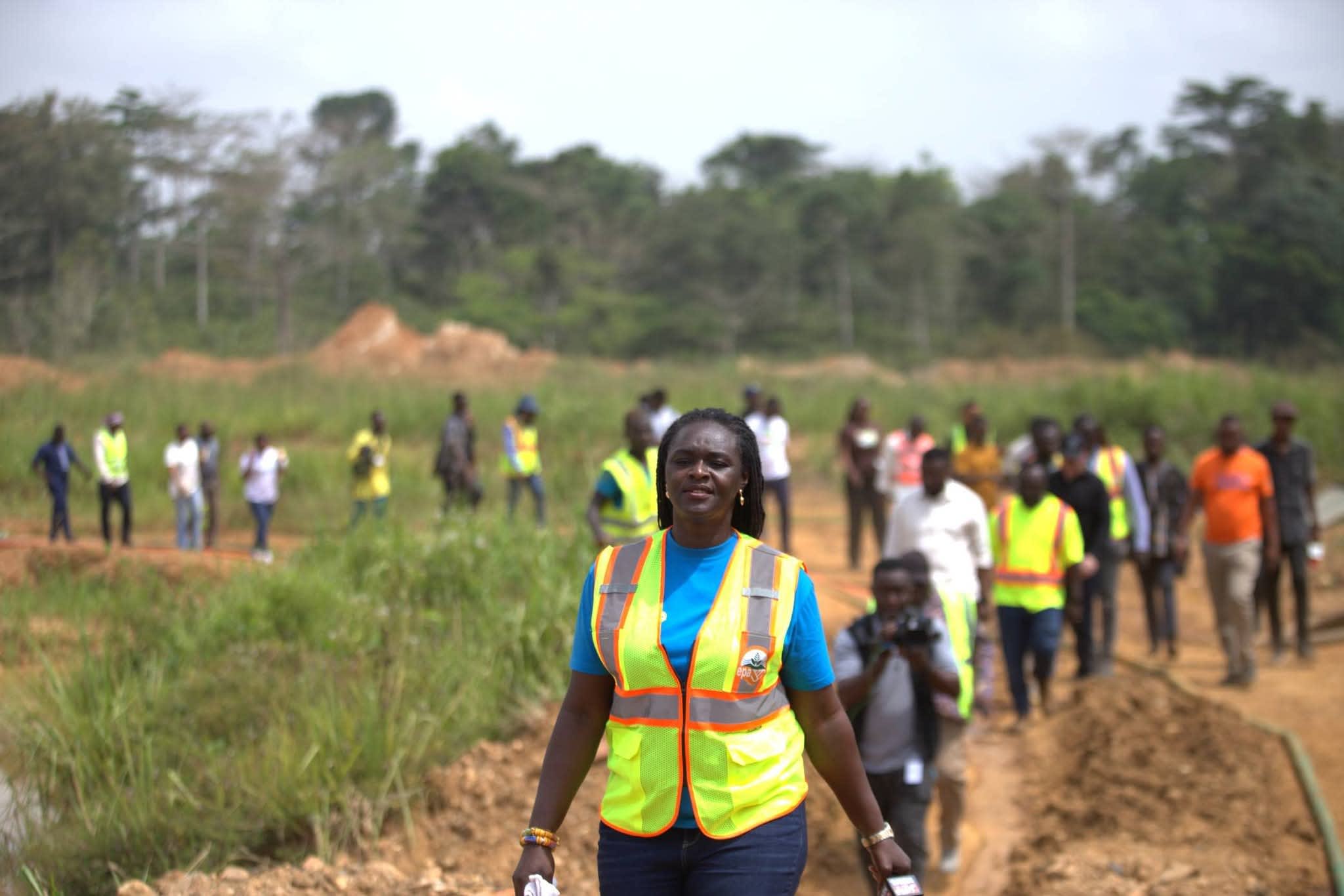
The Birim River, a major tributary of the Pra River, was selected for a public demonstration of the technology. The location carries symbolic significance, as the river flows through areas linked to the political commitment to end illegal mining.
During the experiment, nano-liquid particles were introduced into a contained section of the river. According to observers, the water changed from a muddy ochre color to noticeably clearer within hours.
While the visual transformation impressed many spectators, IMANI cautioned that the demonstration did not replicate real environmental conditions.
“To the casual observer, it was a miracle,” the brief stated, but the test failed to consider “the velocity, sectional depth, and volume of a living, flowing river.”
High restoration costs raise fiscal questions
Beyond the scientific concerns, the think tank also highlighted the potential financial implications of scaling up the project nationwide.
The EPA has reportedly estimated the cost of restoring polluted rivers at about $200,000 per kilometer. IMANI noted that applying the same intervention across several major rivers could push total costs beyond $227 million.
The organization warned that such figures raise important policy questions about whether the initiative represents a strategic environmental investment or the emergence of a new and potentially expensive restoration industry.
Call for broader environmental reforms
IMANI stressed that chemical restoration alone cannot solve the problem of river pollution if illegal mining activities continue.
“Pouring chemicals into rivers while illegal mining remains unchecked is an exercise in futility,” the brief argued, noting that the number of forest reserves affected by illegal mining reportedly increased from 44 to 50 between 2025 and 2026.
The think tank urged the government to prioritize enforcement against illegal mining, restore natural river channels and reclaim degraded lands before pursuing large-scale chemical interventions.
According to IMANI, without addressing the root causes of pollution, any attempt at dechemicalisation risks becoming “an expensive optical illusion.”
READ ALSO: Accra–Tema Motorway Traffic Diversion Announced for Tete-Kwashi Interchange Works