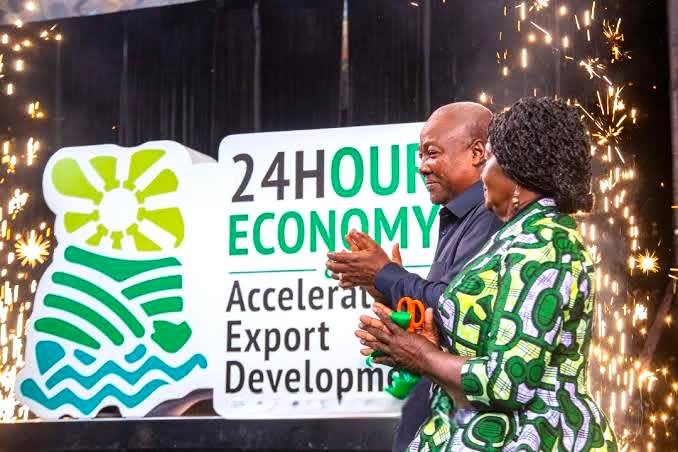
More than three quarters of respondents to the KPMG/UNDP pre-budget survey show some willingness to invest or expand under Ghana’s 24H+ Economy Programme, but most want key business conditions fixed first.
The survey found that 32% would consider participating outright, while another 44% said they would do so subject to suitable incentives or enabling conditions.
A further 14% said they needed more information, while 10% indicated they would not participate.
The numbers present a more nuanced picture than simple support or opposition.
Businesses appear interested in the programme, but much of that interest is conditional on whether the operating environment makes extended production commercially worthwhile.
Finance and electricity lead demands
Access to finance and capital was the leading factor respondents said would encourage participation.
Reliable and affordable utilities followed, with tax incentives and predictable regulation also ranking highly.
The survey identifies reliable energy, lower production costs and access to finance or capital with tax incentives among the interventions expected to have the greatest impact on business growth and job creation.
KPMG and UNDP therefore argue that the programme should be demand-led rather than driven primarily by government targets.
Businesses considering longer operating hours need customers willing to buy additional output, not simply the capacity to stay open.
They also require electricity, logistics, security, workers and working capital that can sustain additional shifts.
Report calls for clearer implementation
The report says government should improve communication around eligibility, incentives, responsible institutions and application procedures.
It recommends distinguishing between incentives that have been announced politically and benefits that businesses can actually access under existing law and administrative arrangements.
The focus group discussions also revealed concerns about weak customer demand.
KPMG and UNDP therefore want infrastructure investment to connect production to markets through transport, storage, certification, export documentation and payment systems.
Public procurement could also create demand for capable domestic firms where competition, price and quality requirements are met.
The survey results arrive as the government prepares to provide further details on its broader New Economy programme in the 2027 Budget.
Both programmes depend heavily on private-sector participation.
The findings suggest that businesses may be willing to respond, but only where investment makes commercial sense.
That creates a fairly direct test for government.
The success of the 24H+ Economy will not simply be determined by how many businesses register or announce longer opening hours. The more important measure will be whether companies actually invest, produce more, find customers and sustain additional jobs after the incentives are removed.
READ ALSO: Ato Forson Presents 2027 'New Economy' Budget Today