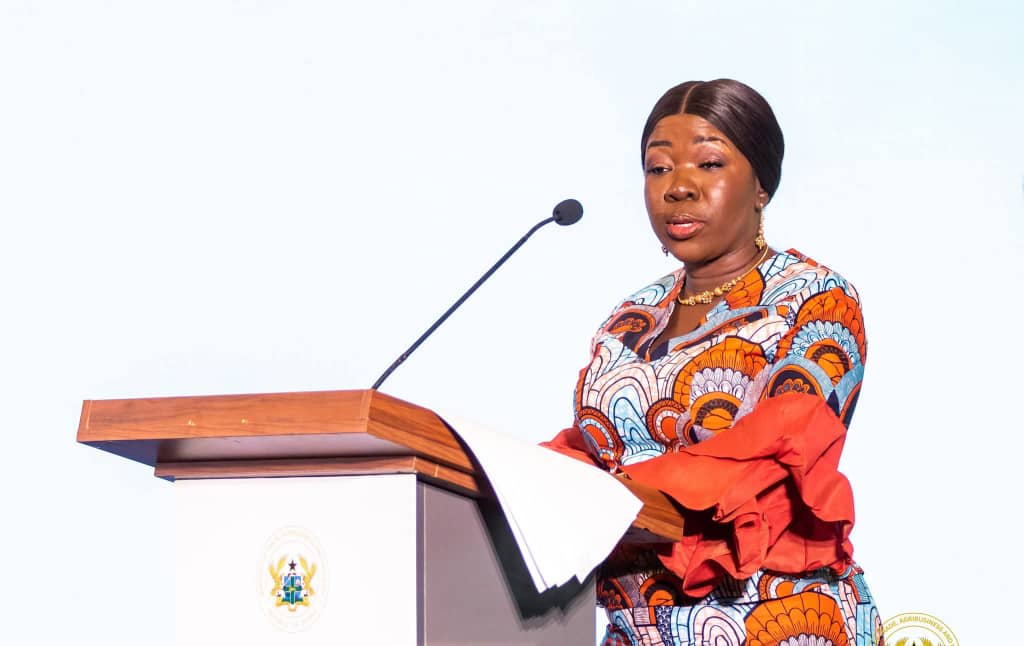
Ghana AfCFTA ambitions must now move beyond diplomacy and deliver measurable trade outcomes, Trade, Agribusiness and Industry Minister Elizabeth Ofosu-Adjare has said, arguing that hosting the African Continental Free Trade Area Secretariat comes with a responsibility to lead by example.
The minister said Ghana can no longer rely solely on the prestige of being home to the AfCFTA Secretariat.
Instead, she said, the country must demonstrate in practical terms that the continental trade agreement can generate real value for businesses, exporters and manufacturers.
“Underpinning all of this is our Africa Continental Free Trade Area Secretariat. Ghana carries a particular responsibility to demonstrate what intra-African trade can deliver in practice." - Trade Minister
Her remarks suggest a shift in emphasis from political symbolism to economic execution, with Ghana expected to become a working model of how continental integration can translate into jobs, exports and industrial growth.
Focus on tools firms need to compete
The minister said government efforts are increasingly centred on ensuring that Ghanaian enterprises are better equipped to take advantage of the African single market.
“We are working to ensure that Ghanaian enterprises have access to rules of origin certification, tariff intelligence, and market linkages necessary to compete and win in the continental market.” - Trade Minister
That focus is significant because many of the barriers to intra-African trade are not only political or diplomatic, but also technical and operational.
Without easier certification processes, better standards support and clearer market information, firms may struggle to convert AfCFTA opportunities into actual business.
Industrial policy tied to trade ambition
Ofosu-Adjare also linked Ghana’s AfCFTA strategy to the revitalisation of special economic zones, which she said are being repositioned as industrial ecosystems for agro-processing and light manufacturing.
The approach signals a broader attempt to connect trade policy with industrial expansion, especially as Ghana seeks to export more value-added goods rather than remain dependent on raw commodities and semi-processed products.
Still, the minister stressed that government policy alone would not be enough to make the agreement work.
“None of these policies will deliver their intended outcome without a private sector that is prepared to meet a government-enabling environment with commensurate investment in technology, skills, governance, and standard compliance.” - Trade Minister
A test of readiness, not rhetoric
Her comments come at a time when AfCFTA’s success is increasingly being judged not by conference declarations, but by how easily businesses can move goods, access markets and compete across borders.
For Ghana, the challenge now is to show that hosting the Secretariat can lead to practical commercial gains.
If it succeeds, Accra could become one of the clearest early examples of AfCFTA in action. If not, the gap between the agreement’s promise and its real impact may become more difficult to ignore.
READ ALSO: Dodowa-Afienya-Dawhenya Road Project hits 35% completion Ahead of Schedule