President John Dramani Mahama has called for urgent business regulatory reforms to improve productivity, attract investment and strengthen Ghana’s position as a competitive and investment-friendly economy.
Speaking at the launch of the CEOs-Government Compact 2026 in Accra on Thursday, May 28, President Mahama said reforming the country’s regulatory environment was essential to reducing the cost of doing business and accelerating economic growth.
According to him, the reforms are aimed at “making the state work better for citizens and businesses” through greater transparency, reduced bureaucracy and faster service delivery.
The President stressed that improving the business climate would help local enterprises expand operations, increase exports and create more decent jobs for Ghanaians.
“Government is ready to work hand-in-hand with the private sector to build a productive, competitive, and inclusive economy,” President Mahama stated as he urged business leaders to invest confidently in the country.
Government and private sector partnership
The launch of the CEOs-Government Compact brought together leading policymakers and private sector executives to strengthen collaboration between government and industry.
Among the participants were Ernest De-Graft Egyir, Founder and Chief Executive Officer of the Chief Executives Network, and Johnson Pandit Asiama, Governor of the Bank of Ghana.
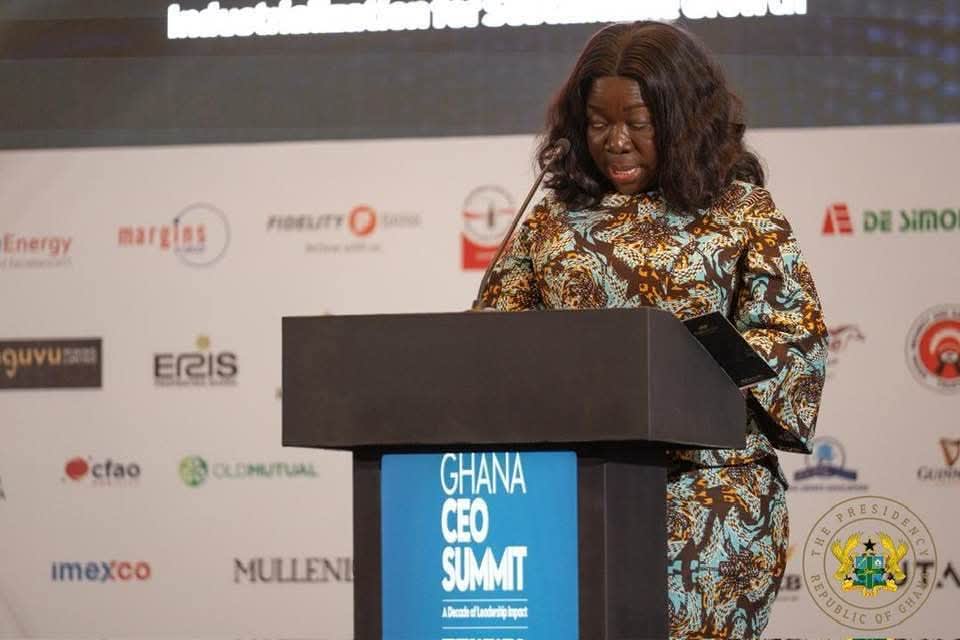
Minister for Trade, Agribusiness and Industry, Elizabeth Ofosu-Adjare, described the compact as a commitment to accountability and cooperation between government and the private sector.
She said leadership, technology and industrialisation would remain central pillars of Ghana’s economic transformation agenda.
Focus on industrialisation and technology
Speaking on the role of technology in economic growth, the Trade Minister noted that digital platforms were opening wider market opportunities for local businesses across the country.
“A good product made in Tamale, Ho, Wa, Kumasi, or Accra can now reach markets across Ghana, Africa, and beyond,” she explained.
Mrs Ofosu-Adjare also underscored the need for Ghana to reduce its dependence on imports by expanding local manufacturing, agro-processing and export competitiveness.
According to her, industrialisation and local content development should no longer be viewed as long-term ambitions but immediate national priorities.
She assured the private sector of government’s support in implementing reforms aimed at improving competitiveness, promoting digital trade and strengthening export development.
The latest push for regulatory reforms comes as Ghana seeks to sustain economic recovery, attract foreign investment and position itself as a regional hub for trade and industrial growth under the African Continental Free Trade Area initiative.
READ ALSO: AI System at Ports are Raising Revenue and Detecting Undervaluation - Ato Forson