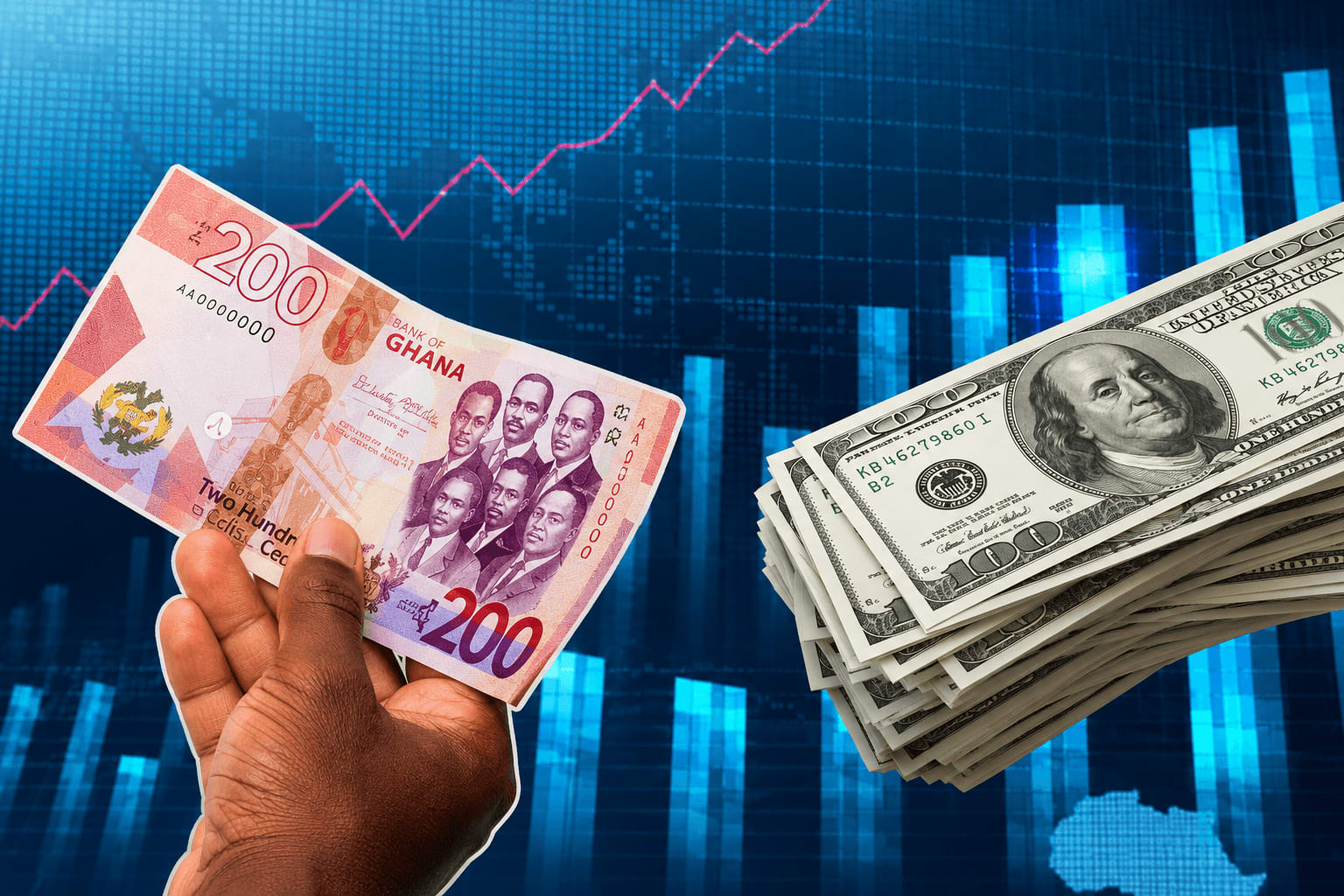
The Ghana cedi has surrendered part of the remarkable gains it posted last year, depreciating by 9.5 percent against the US dollar during the first seven months of 2026 despite strong export earnings and a healthy trade surplus.
Fresh figures from the Bank of Ghana's July 2026 Summary of Economic and Financial Data show the local currency trading at GH¢11.55 to the dollar as of July 17, compared with GH¢10.45 at the close of December 2025.
The reversal follows an exceptional 2025, when the cedi appreciated by 40.7 percent against the dollar on the back of improved foreign exchange liquidity and renewed investor confidence.
A year of mixed currency movements
The cedi did not weaken in a straight line. It opened the year at GH¢10.95 to the dollar before strengthening to GH¢10.69 in February.
Pressure returned in the following months as the exchange rate slipped to GH¢11.00 in March, GH¢11.19 in April and GH¢11.73 in May. June brought a brief recovery to GH¢11.35, but by mid-July the currency had eased again to GH¢11.55.
The trend extended beyond the dollar. Against the British pound, the cedi also depreciated by 9.5 percent, moving from GH¢14.06 at the end of 2025 to GH¢15.53 by July 17. It weakened by 7.1 percent against the euro, which climbed from GH¢12.27 to GH¢13.21 over the same period.
The figures suggest the pressure has been broad based rather than confined to one currency.
Strong exports, weaker currency
What makes the latest exchange rate movement notable is that it comes alongside solid external sector performance.
By June 2026, Ghana had recorded exports worth US$18.29 billion against imports of US$9.48 billion, leaving a trade surplus of US$8.81 billion. Gold remained the country's biggest export earner at US$12.50 billion, followed by cocoa with US$2.29 billion and oil with US$1.71 billion.
Ordinarily, such a surplus would be expected to provide support for the domestic currency through stronger foreign exchange inflows.
The Bank of Ghana report, however, does not assign a specific reason for the depreciation. Market analysts often point to a combination of import demand, external debt payments, corporate foreign currency obligations and the timing of export receipts as factors that can influence exchange rate movements.
Inflation and business costs in focus
The cedi's decline is already drawing attention because of its potential impact on prices.
A weaker currency raises the cost of imported goods, including fuel, pharmaceuticals, machinery and industrial raw materials. Businesses that rely heavily on imports could face higher operating costs, leaving them with the choice of absorbing the increase or passing it on to consumers.
The latest data also show inflation edging higher from 3.7 percent in May to 5.3 percent in June, with non-food inflation rising faster than food inflation.
Meanwhile, Ghana's gross international reserves declined from US$14.16 billion in March to US$12.94 billion in June, although they remained sufficient to cover about five months of imports.
For exporters, the weaker cedi may translate into higher local currency earnings when foreign exchange revenues are converted. For importers and borrowers with foreign currency obligations, the picture is less encouraging.
The latest figures present a mixed outlook. Export performance remains robust and external balances are healthy, yet the cedi has weakened against Ghana's three main trading currencies.
The challenge for policymakers now will be keeping that depreciation orderly while protecting confidence in the local currency and preventing renewed inflationary pressure.
READ ALSO: Gold Fields Invests US$110m to Support Tarkwa Community