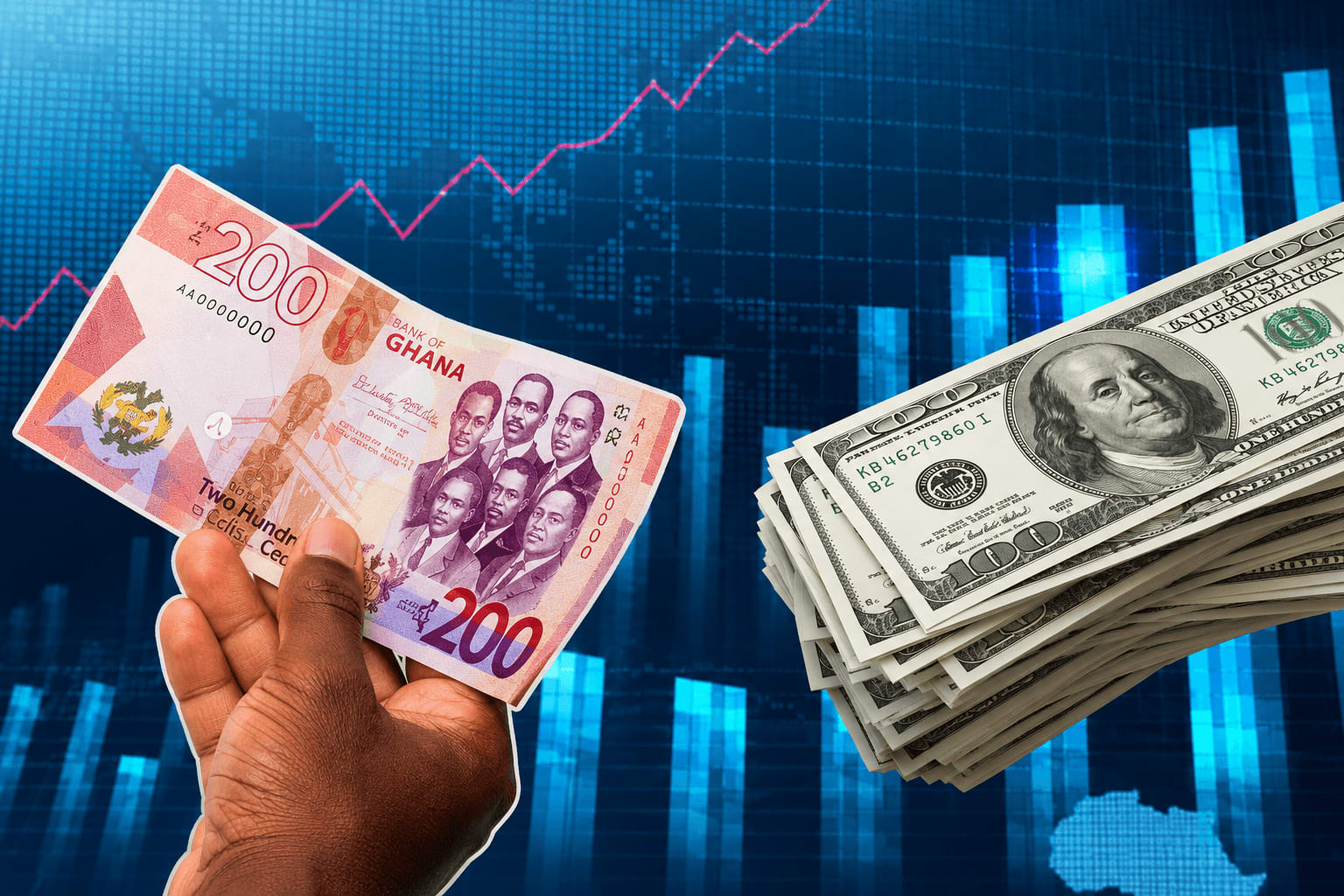
The Ghana cedi exchange rate has weakened further against the US dollar just as Brent crude oil climbs above US$100 a barrel, creating an uncomfortable mix for fuel importers and the wider economy.
Bank of Ghana reference rates for September 9 placed the dollar at GH¢11.4143 buying and GH¢11.4257 selling. The midpoint stood at about GH¢11.42, compared with roughly GH¢11.30 on September 3.
That represents a depreciation of about 1.06% in less than a week. It is not a currency collapse, but the direction has been steady enough to catch attention.
The official selling rate rose from GH¢11.4007 on September 8 to GH¢11.4257 the following day, showing a further daily loss of about 0.22%.
Retail dollar costs remain higher
People buying dollars outside the interbank market faced a much steeper price. Some forex bureaux were selling the currency at about GH¢12.15 on Wednesday.
That was roughly 6.34% above the Bank of Ghana’s selling rate.
The gap reflects transaction costs and tighter dollar availability at the retail level. It does not, by itself, mean Ghana’s foreign exchange market is in disorder. A persistent widening, though, would suggest that households and smaller businesses are finding dollars harder to obtain at rates close to the official benchmark.
Demand had already been building before oil crossed US$100. Importers were purchasing foreign currency to settle commercial obligations, while some investors were repatriating coupon payments.
Oil rally adds another demand risk
Brent crude settled at US$101.21 on September 9 after touching US$101.58, its highest close since May. Renewed attacks involving the United States and Iran have raised fears of deeper supply disruptions around the Strait of Hormuz.
“The move towards and back above $100 Brent is reflecting a market that increasingly has to change its view on how long the Middle East crisis will continue to curb supply from the region,” Saxo Bank commodity strategist Ole Hansen said.
About one fifth of global oil and gas supply traditionally passes through the Strait. Flows that had recovered to between eight million and nine million barrels per day reportedly fell below two million barrels after fighting resumed.
The market is now pricing not only the availability of crude, but the growing difficulty of moving it safely to buyers.
Ghana faces a complicated oil equation
Ghana exports crude oil, so higher prices can increase petroleum export receipts. The country also imports large volumes of refined fuel, including petrol and diesel, which must be paid for in foreign currency.
The final effect on the cedi will depend on whether incoming oil revenue arrives quickly enough to offset the larger dollar requirements of importers and bulk distributors.
If crude remains above US$100 while the cedi continues to weaken, the cost of bringing fuel into Ghana could rise from both directions. Importers would pay more dollars for each shipment and spend more cedis to obtain those dollars.
That pressure could eventually reach filling stations, transport fares and the cost of moving goods. It could also complicate inflation management if businesses begin passing higher energy and logistics costs to consumers.
The Bank of Ghana’s flexible exchange rate framework allows intervention to provide liquidity and calm disorderly trading, but it does not commit the central bank to defend a fixed cedi rate.
For now, the depreciation remains measured. The risk lies in several demands arriving together: corporate dollar purchases, investor outflows and a larger petroleum import bill. If Brent stays above US$100, the cedi will have less room for another bad week.
READ ALSO: iPhone 18 Pro Price Starts at $1,199 as Apple Adds 2TB option