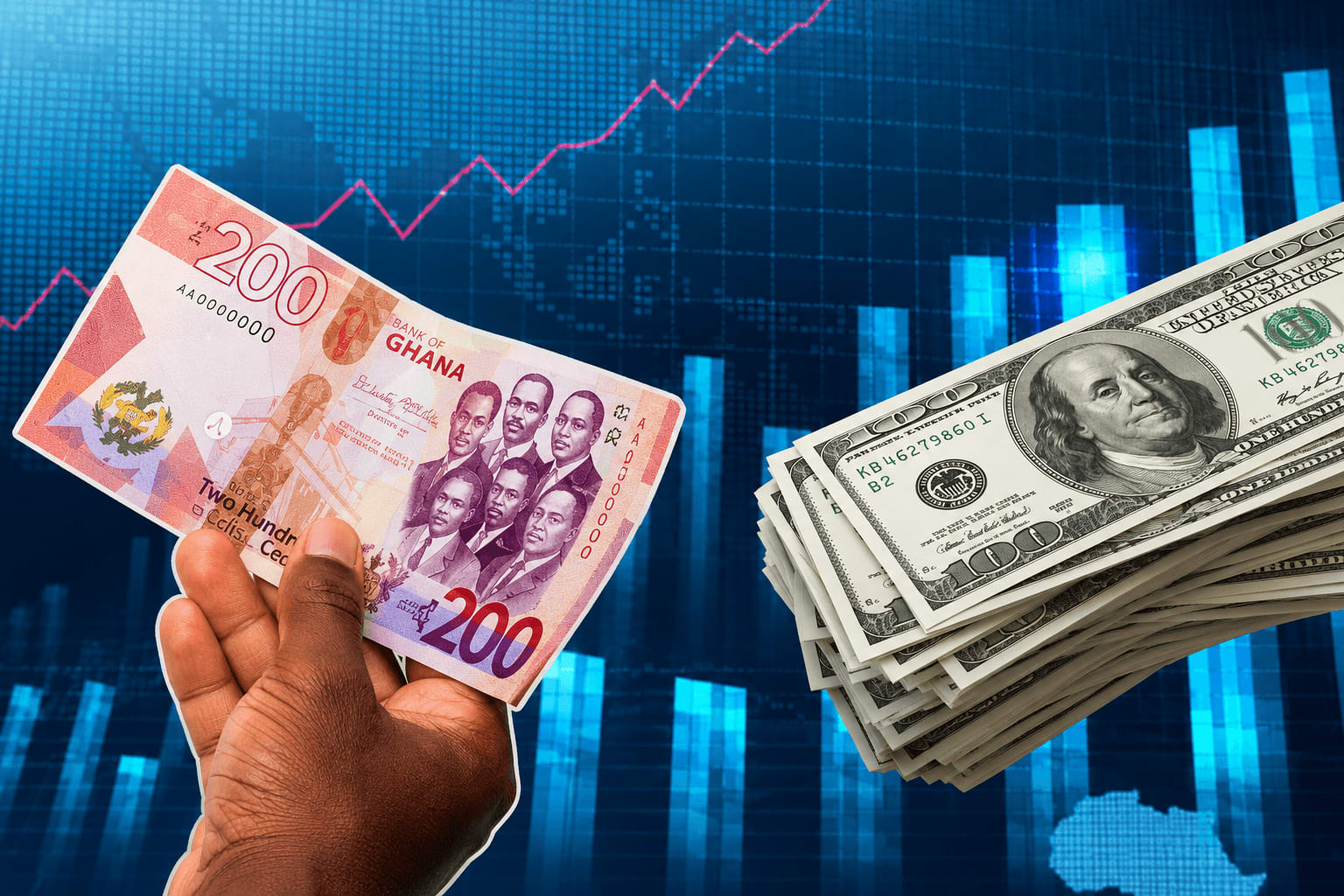
Ghana has officially closed the chapter on its three year rescue programme with the International Monetary Fund after the Fund approved a final disbursement of approximately US$371 million, bringing total support under the arrangement to about US$3 billion.
The decision by the IMF Executive Board completes the sixth and final review of Ghana's 39 month Extended Credit Facility programme and clears the way for the country to move into a new phase defined not by emergency financing, but by close policy oversight.
The Board also concluded Ghana's 2026 Article IV consultation and considered the government's request for a 36 month Policy Coordination Instrument.
The final payment, amounting to SDR265.90 million or roughly US$371 million, is higher than earlier estimates of the outstanding tranche and marks the formal conclusion of a programme launched in May 2023 when Ghana faced one of the most severe economic crises in its recent history.
End of bailout, beginning of tougher discipline
The conclusion of the programme removes uncertainty over the final review and confirms the release of the remaining funds. Yet it also ushers Ghana into a more demanding period where economic credibility will depend less on external financing and more on policy consistency.
Unlike the Extended Credit Facility, the proposed Policy Coordination Instrument does not come with fresh IMF money. Instead, it provides continued monitoring of economic reforms while signalling to investors and development partners that Ghana intends to maintain the standards expected under IMF supported programmes.
The Fund described Ghana's performance under the rescue package as "broadly satisfactory," pointing to stronger macroeconomic stability and significant improvements in debt sustainability over the past three years.
Economic activity has rebounded more strongly than initially anticipated.
According to the IMF, Ghana's economy expanded by 6.00 percent in 2025 before accelerating further to 6.40 percent year on year during the first quarter of 2026, driven by broad based growth across several sectors. Growth is expected to moderate to 4.80 percent this year before stabilising around 5.00 percent over the medium term.
Inflation has also fallen sharply from the elevated levels recorded at the start of the programme. Consumer price growth declined to 5.40 percent at the end of 2025 and eased slightly to 5.30 percent in June 2026, supported by tight monetary policy, the appreciation of the cedi and improved food supply conditions.
External sector indicators have strengthened as well. The current account recorded a surplus equivalent to 7.90 percent of gross domestic product last year, helped by historically high gold prices. Gross international reserves nearly doubled to US$11.91 billion, providing import cover for about four months.
Debt outlook improves after restructuring
One of the programme's biggest achievements has been the improvement in Ghana's debt position.
The IMF noted that the government's primary fiscal balance shifted to a surplus of 2.10 percent of GDP while the country's risk of external and overall debt distress was upgraded to moderate, two years earlier than projected when the programme began.
That progress followed extensive domestic and external debt restructuring. Ghana has already signed debt relief agreements with more than half of its bilateral creditors and has reached agreements in principle with a similar proportion of commercial external creditors. Negotiations with the remaining creditors are still underway.
The Executive Board also approved a waiver relating to a temporary breach of the end December 2025 ceiling on Bank of Ghana financing of the central government and public entities.
According to the Fund, the breach resulted from cost sharing arrangements linked to the Domestic Gold Purchase Programme and was considered "small and temporary." The waiver was granted after authorities implemented corrective measures.
Gold programme and central bank independence remain key concerns
Despite the progress, the IMF cautioned that several structural risks remain.
The Domestic Gold Purchase Programme continues to attract attention as Ghana enters the post bailout era.
The Fund said preserving the independence of the Bank of Ghana would require the complete transfer of the programme to the Ghana Gold Board, the permanent discontinuation of quasi fiscal activities and the implementation of the government's commitment to recapitalise the central bank by 2032.
The IMF also emphasised the importance of sticking to the fiscal responsibility framework introduced under the programme.
Under the 2026 Budget, government is targeting a primary surplus of 1.50 percent of GDP. Looking further ahead, the Fund believes Ghana could reduce that target to 0.50 percent from 2027 without undermining debt sustainability, provided reforms in domestic revenue mobilisation, public financial management, public investment planning and oversight of state owned enterprises continue.
Risks remain despite stronger outlook
The IMF made it clear that the country's economic recovery is not yet beyond risk.
The energy and cocoa sectors remain significant sources of fiscal pressure, with persistent losses, arrears and governance weaknesses capable of reversing gains made through debt restructuring and fiscal consolidation.
The financial sector also requires close attention. The Fund identified vulnerabilities among some state owned and private banks as well as specialised deposit taking institutions, calling for stronger supervision, decisive corrective measures and completion of Ghana's crisis management and bank resolution framework.
Governance reforms are expected to remain central to the post programme agenda. The IMF welcomed the submission of the revised Conduct of Public Officials Bill to Parliament, while stressing that implementation of the new asset declaration framework would be essential for strengthening transparency, accountability and public confidence.
Looking ahead, the Fund projects Ghana's gross public debt at 52.60 percent of GDP in 2026 before falling gradually to 51.70 percent in 2027 and 48.00 percent by 2031. Gross international reserves are forecast to increase to US$14.07 billion this year and US$16.28 billion in 2027, while the current account surplus is expected to remain strong.
For investors, completion of the programme removes one major source of uncertainty. For policymakers, however, the next challenge may prove even more difficult.
The bailout helped pull Ghana back from a period of acute economic distress. Whether those gains can be preserved without regular IMF financing will now depend on disciplined fiscal management, sustained reforms and the ability to generate stronger private sector investment while meeting the country's social and development priorities.
READ ALSO: ICU Ghana Protests Alleged VALCO Sale, Demands Protection of Workers' Jobs