Ghana fixed income market turnover reached GH¢255 billion by the end of July 2026, already surpassing the GH¢245 billion recorded for the whole of 2025 and marking a sharp recovery from the disruption caused by the domestic debt restructuring.
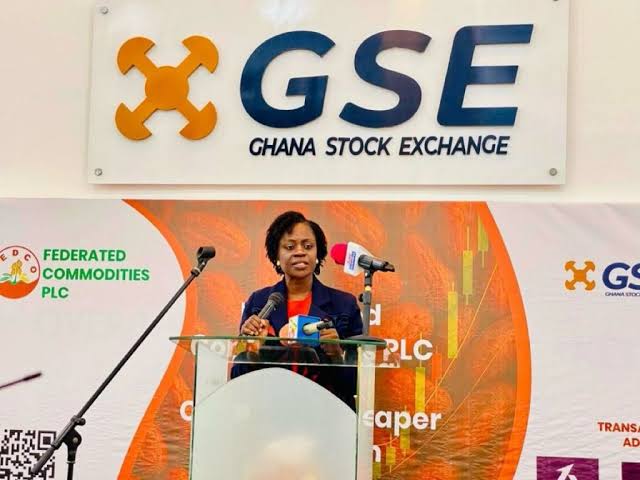
Managing Director of the Ghana Stock Exchange, Abena Amoah, disclosed the figures during the admission of PETROSOL Platinum Energy PLC’s GH¢200 million Note Programme Series 1 and 2 onto the Ghana Fixed Income Market.
“The market has been very resilient, ladies and gentlemen,” Ms Amoah said.
The numbers tell a difficult story in reverse. Fixed income trading reached GH¢283 billion in 2022 before collapsing to GH¢98 billion in 2023 as the Domestic Debt Exchange Programme unsettled investors and altered the structure of Ghana’s sovereign debt market.
Turnover recovered to GH¢174 billion in 2024 and GH¢245 billion in 2025.
By July this year, the market had already gone further.
“And I’m very pleased to share that as at the end of July 2026, we have surpassed all the volume we created in 2025, and we are at GH¢255 billion volume of securities traded on the fixed income market.” - Ms Amoah
The figure refers to the monetary value of securities traded rather than the number of instruments exchanged.
Recovery After the DDEP Shock
The rebound is significant because the DDEP did more than reduce trading activity. It tested investor confidence in government securities after bondholders were required to exchange existing instruments for new ones with different maturities and payment structures.
From the GH¢98 billion low recorded in 2023, turnover has now more than doubled, suggesting that liquidity is returning and investors are again becoming active in the secondary market.
But the recovery is not complete simply because trading volumes have risen.
The bigger question is whether the liquidity circulating through the market can increasingly finance Ghanaian businesses rather than remain concentrated largely in government debt.
That is where the PETROSOL transaction becomes relevant.
Corporate Debt Still a Small Part of Market
PETROSOL’s note programme represents another attempt to deepen the corporate side of Ghana’s debt market and give businesses an alternative to conventional bank borrowing.
“Your note programme, substantially oversubscribed, arrives at the right time,” Ms Amoah told the company.
“Proven Ghanaian businesses can look to Ghana’s capital markets to finance their ambitions, while opening new avenues for investors to share in your growth.” - Ms Amoah
Since Ghana’s corporate bond market was established in 2015, 50 companies have raised a cumulative GH¢24 billion, according to Ms Amoah.
That remains small when placed beside the GH¢255 billion worth of fixed income securities traded in just the first seven months of 2026.
The two figures measure different things, with one representing cumulative primary market fundraising and the other secondary market turnover. Still, the gap illustrates how dominant sovereign securities remain in Ghana’s fixed income ecosystem.
“Whilst we are proud of this progress, we recognise that there is considerable room for growth,” she said.
Her message to businesses was simple: “The market is open. The capital is here.”
Lower Rates Could Open Door for Companies
A lower interest rate environment could make corporate issuance more attractive.
For years, high returns on short term government securities made it difficult for companies to compete for investor funds without paying even higher yields.
If rates continue to decline, strong companies with credible governance, transparent financial reporting and steady cash flows could find it easier to raise longer term capital at viable costs.
Such a shift would give pension funds, insurers and asset managers more alternatives while reducing the private sector’s dependence on commercial bank balance sheets.
Ms Amoah said capital market instruments now extend beyond conventional corporate bonds to equities, commercial paper and green and sustainable bonds.
“We are ready to receive green and sustainable bonds on the market,” she said.
Turning Savings Into Productive Investment
The Ghana Stock Exchange also sees the capital market as a channel for recycling investment returns into new opportunities.
According to Ms Amoah, listed companies distributed roughly GH¢37 billion in dividends over the past 12 months, while corporate bond and commercial paper investors received almost GH¢800 million in coupon payments.
“It shows the importance of our capital market as an important tool to wealth generation. “And these monies paid back come back into the market to invest in other investor ready companies.” - Ms Amoah
The challenge now is quality.
Bringing more companies to the market will require stronger disclosure, governance and repayment capacity. Public market financing may demand more documentation and scrutiny than traditional bank borrowing, but those requirements are also what give investors confidence.
PETROSOL, Ms Amoah argued, provides another example. “Today PETROSOL has not only raised capital,” she said. “It has also demonstrated what is possible.”
The fixed income market has recovered dramatically from its 2023 collapse. Its next test will be whether that recovery can push more domestic savings into productive businesses, infrastructure and investment, rather than simply produce larger trading numbers around government debt.
READ ALSO: IMF Warns Policy Complacency Could Derail Ghana Economic Recovery