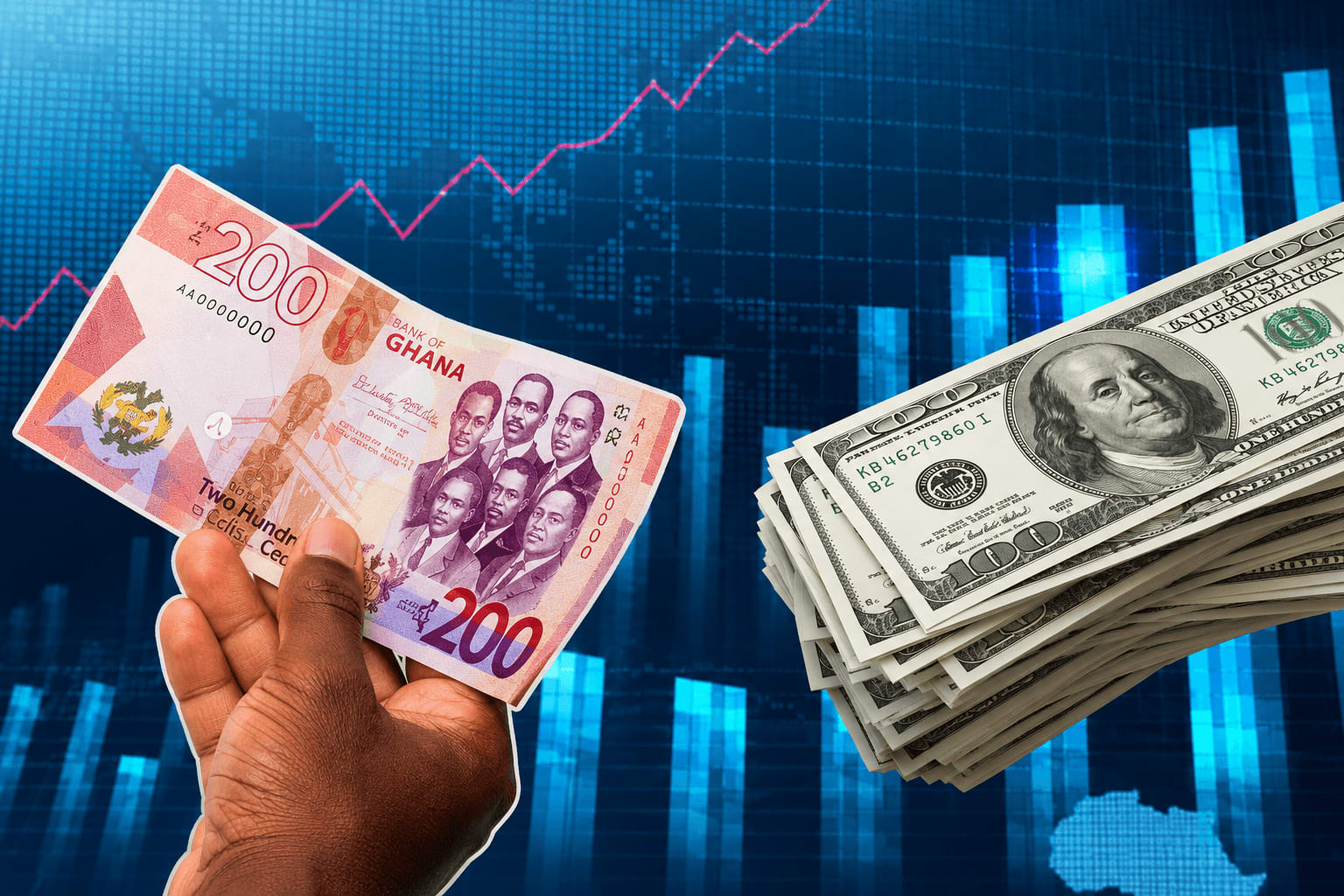
The Ghana Fixed Income Market turnover staged a remarkable comeback on Monday, with trading value climbing to GH¢3.00 billion as investors returned aggressively to restructured government bonds under the Domestic Debt Exchange Programme (DDEP).
Fresh data from the Ghana Fixed Income Market showed total turnover reached GH¢3.004 billion across 1,134 transactions on July 20, a dramatic jump from the GH¢595.82 million recorded in the previous trading session.
That represents a 404.28 percent increase in market value, while the number of trades more than doubled from 499 to 1,134.
The figures tell an interesting story. Treasury bills remained the market's workhorse, generating the overwhelming majority of trades. Yet when it came to money changing hands, DDEP bonds stole the spotlight.
Institutional Investors Drive DDEP Bond Activity
Large-ticket transactions in restructured government securities dominated Monday's session, reinforcing growing institutional interest in longer-dated debt instruments.
The market report noted that "DDEP bonds recorded turnover of GH¢2.21 billion from just 18 trades," accounting for 73.48 percent of the day's total value despite representing only 1.59 percent of all transactions.
At the centre of that activity was the GOG-BD-12/02/30-A6146-1838-8.80 bond, which recorded an impressive GH¢1.02 billion in turnover across four trades. The security closed at a yield of 15.34 percent with a market price of 82.47, making it the single largest trade on the market.
Another restructured bond, GOG-BD-10/02/32-A6148-1838-9.10, attracted GH¢592 million from three transactions before ending the session with a yield of 14.88 percent and a price of 78.56.
The GOG-BD-11/02/31-A6147-1838-8.95 followed with GH¢240.71 million from a single trade, while other medium and long-term DDEP instruments also recorded sizeable transactions, confirming renewed institutional positioning along the government's restructured yield curve.
Treasury Bills Remain the Market's Anchor
Even with DDEP bonds dominating value, Treasury bills continued to underpin everyday market activity.
The short-term instruments generated GH¢741.21 million across 1,108 transactions, accounting for almost 98 percent of all trades executed during the session. In value terms, Treasury bills represented 24.67 percent of total market turnover.
The largest Treasury bill traded was the GOG-BL-19/07/27-A7084-2016-0, which posted GH¢271.20 million from 11 trades before closing at a yield of 12.86 percent.
Another actively traded bill, GOG-BL-19/10/26-A6882-1977-0, recorded GH¢111.89 million across 57 transactions, while the GOG-BL-21/06/27-A7064-2012-0 added GH¢50.01 million.
The contrast was striking. Treasury bills attracted widespread participation from market players, but DDEP bonds carried the weight of overall turnover.
Elsewhere, trading remained relatively subdued.
Government of Ghana notes and bonds outside the DDEP programme generated GH¢46.60 million from a single transaction involving the GOG-BD-29/03/33-A6155-2001-12.50 bond, which closed at a yield of 12.96 percent.
Corporate bonds contributed GH¢8 million through one transaction, while sell and buy back trades in Government of Ghana securities amounted to just GH¢1.11 million across six deals. No transactions were recorded in old Government of Ghana notes and bonds.
Market Signals Renewed Confidence
Monday's performance suggests investors are continuing to rebalance portfolios as interest rate expectations evolve and government securities adjust to changing market conditions.
The trading report observed that "Treasury bills continue to attract broad participation because of their shorter maturities and relative pricing clarity, while DDEP bonds are drawing large institutional trades as investors search for yield."
That combination shaped the day's market. Treasury bills supplied liquidity and activity. DDEP bonds delivered scale.
With restructured bonds accounting for nearly three quarters of total market value, the latest session points to renewed confidence in the DDEP market, even as investors remain sensitive to yields and pricing.
If Monday's trading pattern persists, institutional demand for longer-dated government securities is likely to remain a defining feature of Ghana's fixed income market in the weeks ahead.
READ ALSO: Bank of Ghana Opens 131st Monetary Policy Committee Meeting as Inflation Outlook Takes Centre Stage