Ghana has launched an ambitious tomato sovereignty strategy aimed at ending its long-standing dependence on imports and shielding consumers from supply shocks and rising prices following Burkina Faso’s recent export ban.
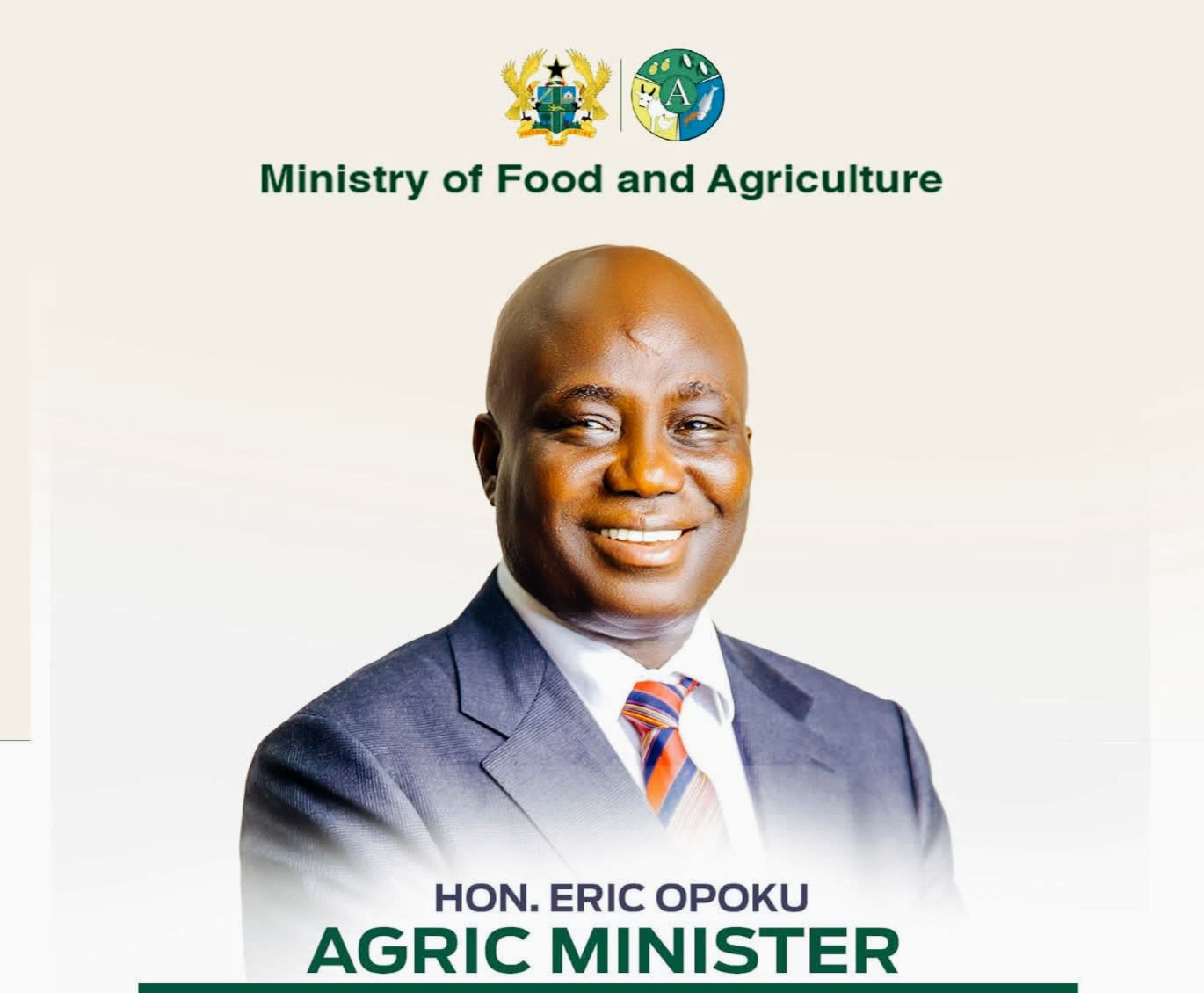
Addressing the growing pressure on local markets, the Minister for Food and Agriculture, Eric Opoku, said the government is rolling out a multi-pronged response under the flagship Feed Ghana Programme to boost local tomato production and strengthen year-round supply.
He said Ghana currently faces an annual tomato supply gap of about 300,000 metric tons, despite cultivating roughly 139,000 hectares of the crop across different seasons. National demand, he noted, stands at about 805,000 metric tons.
Focus Shifts from Land Expansion to Higher Yields
According to the Minister, the key to solving the problem lies not in planting more land but in increasing productivity per hectare.
“In Burkina Faso per hectare production is 18 metric tons, but in Ghana per hectare production is just 8 tons,” Mr. Opoku said, adding that the real solution is “developing the variety that will maximize the output for us.”
To address that challenge, the Ministry of Food and Agriculture is partnering the West Africa Centre for Crop Improvement at the University of Ghana to develop a climate-resilient tomato seed capable of producing at least 15 metric tons per hectare under Ghanaian conditions.
The Ministry says the research intervention is expected to deliver practical results within months, giving local farmers a more competitive seed base.
Irrigation and Backyard Gardens to Support Supply
Beyond seeds, the strategy also includes the revival of dormant irrigation infrastructure and the rollout of a nationwide backyard gardening campaign to expand domestic access to fresh vegetables.
Mr. Opoku said Ghana’s tomato challenge is worsened by weak irrigation coverage and heavy seasonal dependence, which often leaves markets vulnerable during dry periods or when cross-border supply is disrupted.
In response, the government is reclaiming 500 hectares under the Bono Irrigation Scheme for tomato cultivation after reaching an agreement with farmers to switch from rice. Another 100 hectares are also being activated in Akumadan for immediate planting.
In the five northern regions, government is drilling 250 boreholes to support dry-season vegetable farming and reduce seasonal shortages.
Tackling Post-Harvest Losses
The Ministry is also seeking to reduce post-harvest losses, which it estimates at 30 percent—equivalent to about 153,000 tons of wasted produce annually.
Under a vegetable development project, the government plans to link organised farmer clusters directly to buyers, reducing the risk of crops rotting on farms due to poor market access.
Pilot efforts are already underway in the Ahafo and Berekum West areas, where irrigation blocks are being mechanised to support continuous production.
For government, the broader goal is clear: build a resilient domestic tomato industry that can feed the country, stabilise prices and reduce exposure to external supply shocks.
READ ALSO: Vice President Pushes GEXIM to Drive Value Addition and Export Competitiveness