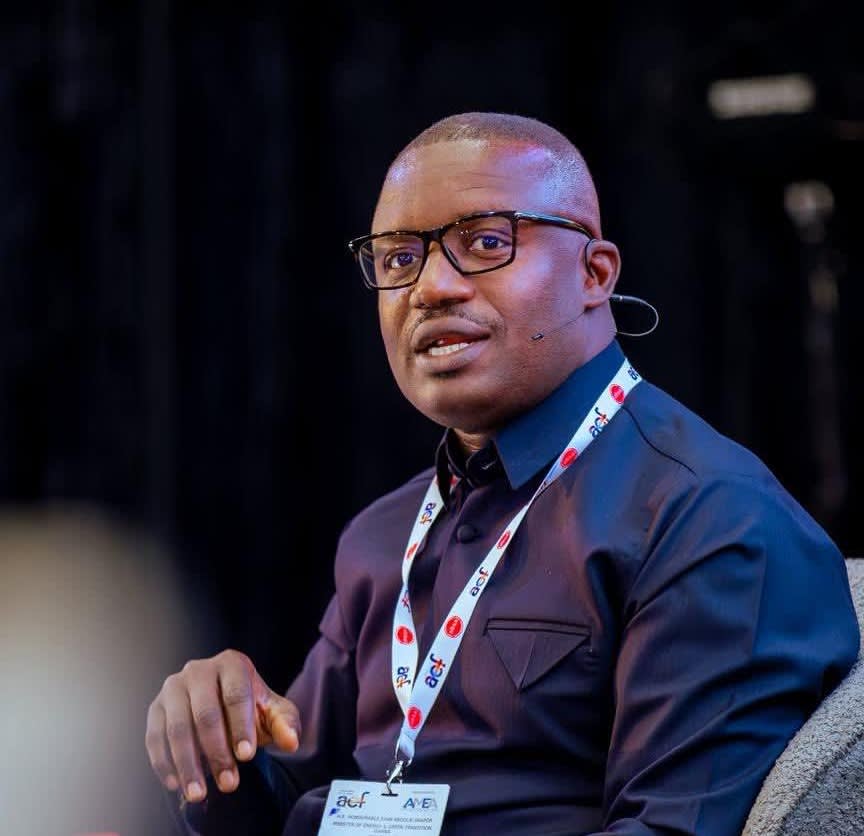
Energy and Green Transition Minister Dr John Abdulai Jinapor has warned that Ghana cannot rely on temporary fuel price interventions to shield the economy from future global energy shocks, calling instead for long-term investment in infrastructure, innovation and policy reforms.
Delivering the keynote address at the 7th Ghana International Petroleum Conference in Accra, the minister said recent geopolitical conflicts, supply chain disruptions and volatile crude oil prices have exposed weaknesses in global energy systems.
"Resilience cannot be achieved through temporary interventions but through deliberate policy decisions, strategic investments, innovation and strong collaboration." - Dr Jinapor
Subsidies bought time, not a solution
Dr Jinapor revealed that government absorbed part of rising fuel costs for eight consecutive weeks, at one stage subsidising diesel by as much as GH¢2 per litre, equivalent to GH¢9.50 per gallon.
He praised oil marketing companies, bulk distributors, transport operators and regulators for maintaining uninterrupted fuel supplies during a difficult period but stressed that subsidies cannot become a permanent strategy.
Instead, he advocated greater investment in strategic petroleum reserves, modern storage infrastructure, stronger transportation networks and diversified fuel supply chains.
According to the minister, a predictable regulatory environment remains essential to attracting investment and improving efficiency within the downstream petroleum industry.
Technology and cleaner energy
Dr Jinapor also urged the sector to embrace digitalisation, automation and data-driven regulation to improve operational efficiency and transparency.
He called for increased participation by indigenous Ghanaian companies, stronger technology transfer and sustained investment in developing the skilled workforce needed for the future energy industry.
While reaffirming Ghana's commitment to cleaner energy, the minister said petroleum products would continue to play a vital role in the country's energy mix for years to come.
"Our objective is a just transition," he said, explaining that Ghana intends to balance current energy needs with investments in cleaner fuels and emerging technologies rather than abandoning conventional energy sources abruptly.
He expressed confidence that the right combination of policy, innovation and investment could transform Ghana into West Africa's leading energy and petroleum hub.
READ ALSO: GDP rebasing: Ghana Targets 2027 Completion of GDP and CPI Update