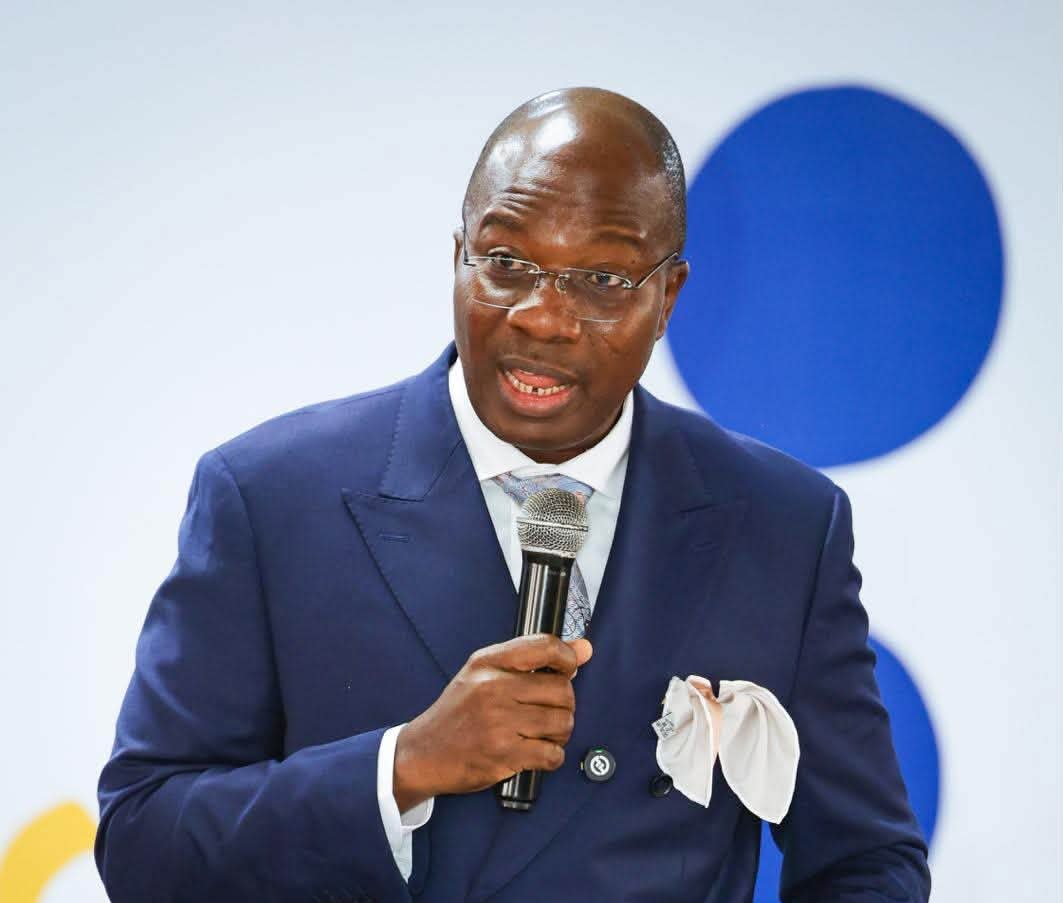
Bank of Ghana Second Deputy Governor Matilda Asante-Asiedu has challenged institutions to turn public commitments to women leadership in Ghana into senior assignments, succession opportunities and measurable access to decision-making positions.
Speaking at the Executive Women Network’s 10th Anniversary Conference in Accra, Mrs Asante-Asiedu said Ghana’s first major representation milestone under the Affirmative Action Gender Equity Act would not be achieved simply because legislation exists.
The law provides for progressive female representation in decision-making, with a 30% target applying through 2026, rising to 35% for 2027 to 2028 and 50% by 2034.
“The first milestone falls due this year,” she said. “But that future will not arrive by accident.”
‘Who Gets the Important Assignments?’
Mrs Asante-Asiedu said organisations should be judged less by statements supporting women and more by what happens when consequential opportunities become available.
“It is easy for an organisation to say it supports women in leadership.
“The real test comes when opportunities arise: who gets the important assignments, the visibility, a place on the succession plan?” - Matilda Asante-Asiedu
Her argument places attention on the leadership pipeline rather than appointments alone.
Women, she said, need opportunities to manage commercially important work, gain exposure to decision-makers and build the experience required for executive and board roles.
She also drew a distinction between mentorship and sponsorship.
“Mentors give guidance; sponsors give access, and without access, talent remains unseen,” she said. “Advice is helpful, but advocacy is transformative.”
Her remarks at the EWN conference were consistent with a wider call for institutions to create the visibility and access required for capable women to advance.
Mrs Asante-Asiedu also warned that artificial intelligence and cybersecurity are rapidly changing the skills demanded in banking and other industries.
“The skills that brought us this far may not carry us through the next 10 years,” she said.
That shift, she argued, makes continuous learning critical for senior executives and emerging leaders.
For institutions trying to improve gender representation, the challenge extends beyond filling conventional leadership roles.
Women must also gain experience in technology, operations, finance, risk and revenue-generating functions that frequently feed into executive positions. “Preparation builds confidence, and confidence amplifies voice,” she said.
Leadership Must Also Translate Into Ownership
The Second Deputy Governor pushed the discussion beyond corporate titles, urging professional women to think seriously about investment, business ownership and long-term financial security.
“We speak often about careers, but not enough about assets,” she said.
She encouraged women to consider whether they were investing, building businesses and creating wealth that could be passed to another generation.
Mrs Asante-Asiedu also rejected suggestions that stronger female representation should be viewed as tokenism. “Elevating women is not tokenism. It is an economic imperative,” she said.
McKinsey’s 2023 diversity research found that companies in the top quartile for gender diversity on executive teams were 39% more likely to financially outperform bottom-quartile peers, although the research establishes an association rather than proving that gender diversity alone causes higher profitability.
Mrs Asante-Asiedu ended with a practical challenge to members of the Executive Women Network.
She urged each participant to identify one woman whose career, business or confidence they could advance within 30 days.
“Make the introduction. Put her name forward. Give her the assignment,” she said.
For Ghana, the approaching statutory targets put the spotlight squarely on implementation. The percentages are now written into law.
Whether they produce lasting change will depend on what happens inside boardrooms, promotion discussions, succession planning meetings and the assignments that prepare the next generation of women leaders.
READ ALSO: No Indiscriminate Demolition in Osu for Coastal Road, Roads Minister Agbodza Assures