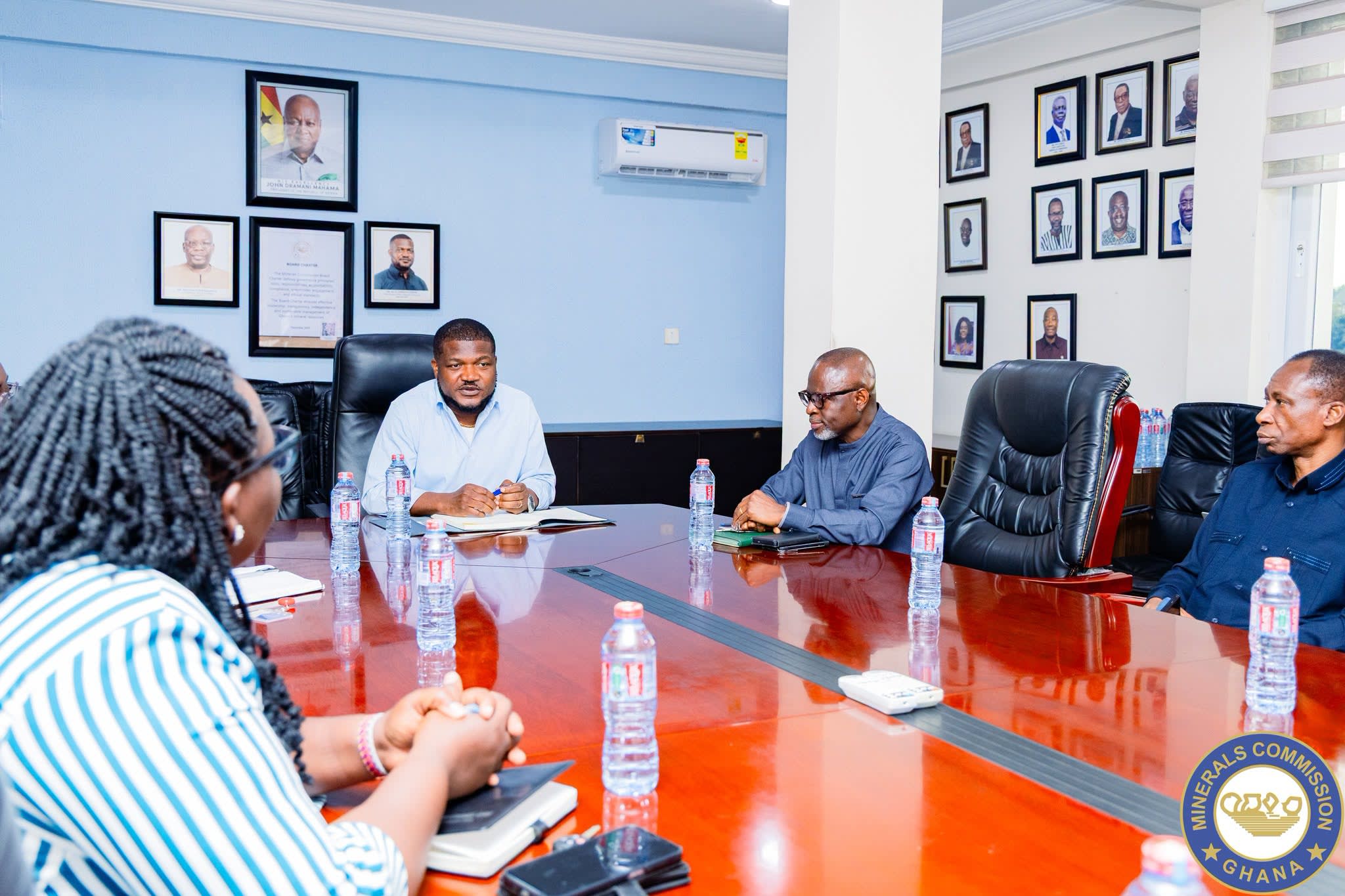
The Minerals Commission has opened discussions with local mining contractors on a new remuneration framework as concerns grow over wages, statutory benefits and job security under the expanding local contract mining system in Ghana.
Chief Executive Officer of the Commission, Isaac Tandoh, said local participation in mining should not result in Ghanaian workers accepting poorer conditions simply because operations have shifted from owner mining to contractors.
The engagement follows concerns raised by the Mine Workers Union over the impact of the transition on employees.
“We need to build a firm but workable baseline for remunerations. Workers cannot be made worse off in their conditions of service when employed by local contractors.” - Mr Tandoh
Contractors Warned Against Price Undercutting
The Commission wants local contractors to develop a transparent framework that establishes realistic standards for wages and other employment benefits.
Mr Tandoh said one challenge is aggressive underpricing during contract bidding, which can eventually place pressure on employee compensation.
He warned contractors to submit realistic bids, saying government could intervene where business practices undermine workers’ welfare.
The Commission has received complaints involving unpaid provident fund contributions, bonuses, Social Security and National Insurance Trust contributions and other statutory obligations.
“Remuneration in our industry Ghana is not standardised,” Mr Tandoh said, adding that the regulator wants to help address the problem.
He encouraged contractors to seek professional advice when structuring their operations, particularly in human resources, legal matters, mining engineering and corporate governance.
Commission Wants Stronger Local Mining Companies
Beyond wages, the Commission is pushing for greater organisation among Ghanaian contract miners.
Mr Tandoh advised operators to formalise their collective representation, similar to the structure available to mining lease holders.
A recognised association or chamber, he argued, could give local contractors stronger bargaining power when dealing with mining companies and government agencies.
“We want to see collaboration, realistic rates and numbers, and motivation for Ghanaian workers without them being short-changed,” he said.
The broader policy objective is to develop Ghanaian companies capable of eventually taking on larger roles in large-scale mining operations.
Mr Tandoh encouraged smaller contractors to establish joint ventures and strategic alliances, allowing them to combine technical expertise, financing and equipment when competing for major contracts.
Import Taxes Also Under Discussion
Cost pressures facing local mining firms are also under review.
Mr Tandoh disclosed that the Minerals Commission is engaging the Ministry of Finance and the Ghana Revenue Authority over import tariffs and other taxes applied to mining equipment.
Contractors have raised concerns that these costs affect their competitiveness and ability to invest in equipment.
The Commission said the discussions around employment conditions, stronger local firms and equipment costs form part of a wider effort to deepen localisation without sacrificing workers’ rights.
For the regulator, increasing Ghanaian participation will mean little if locally owned contractors grow while the employees behind their operations lose wages, benefits or job security.
READ ALSO: PURC Replaces 10 Transformers to Ease Central Region Power Outages