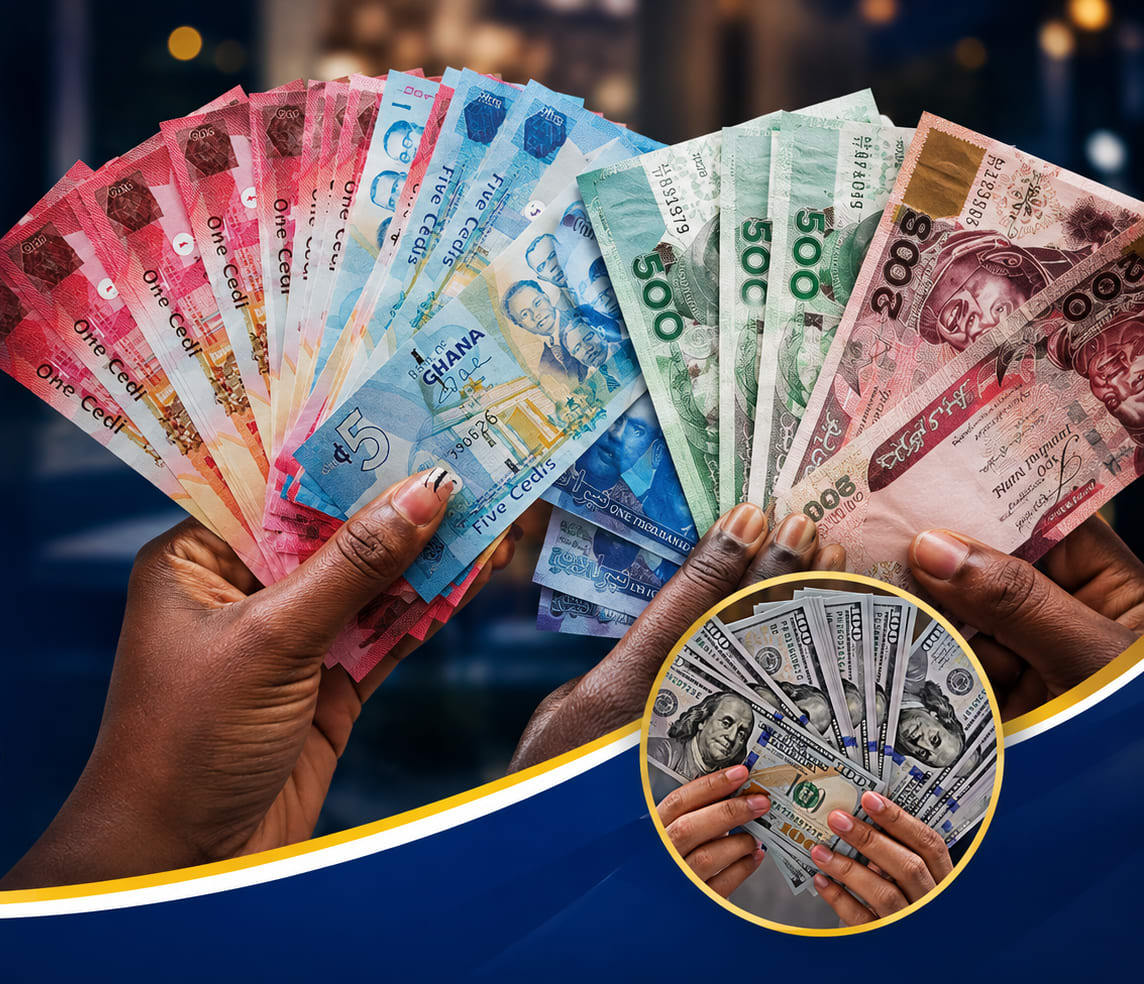
Nigeria’s naira and Ghana’s cedi are sending different signals across West Africa’s foreign exchange market, with the naira gaining ground while Ghana’s currency remains relatively contained through substantial central bank support.
The naira strengthened to about ₦1,329 to the US dollar on September 1, appreciating 0.49 percent from ₦1,335.50 in the previous session.
The move pushed the currency below the psychologically important ₦1,330 mark and delivered its strongest official market closing rate since May 29, 2024, according to market data cited by Nairametrics.
The latest gain extended the naira’s improvement during the latter part of August. It also placed the currency marginally above the previous May 2024 closing level of ₦1,329.65.
Ghana’s Cedi Holds, But at a Cost
Ghana’s cedi ended August at about GH¢11.25 to the dollar on the interbank market, although it depreciated 2.67 percent during the final two week review period.
The Bank of Ghana is estimated to have supplied US$912 million to the market during August. That represents 91.20 percent of its planned US$1 billion monthly foreign exchange intermediation programme.
Analysts cited by Business Post attributed part of the cedi’s relative stability to the intervention, which helped ease market pressure and speculative demand.
The scale of the support matters more than a single day’s exchange rate movement. A currency held steady through heavy central bank dollar sales presents a different picture from one supported mainly by private sector foreign exchange inflows.
That does not automatically make Ghana’s position unsustainable. Central banks intervene routinely to smooth volatility, provide liquidity and prevent disorderly market conditions, particularly in shallow markets.
The concern is whether the BoG is addressing a temporary imbalance or repeatedly covering a persistent gap between private demand and supply.
Official and Retail Rates Show a Wider Gap
Official Bank of Ghana data put the end August interbank rate at about GH¢11.25 to the dollar, compared with GH¢11.69 at the end of July.
The cedi’s movement during the month was uneven, however. Period end figures and shorter review periods therefore tell different stories.
The retail market offers another warning sign. A licensed forex bureau in Tema was quoting the dollar at GH¢11.90 buying and GH¢12.20 selling on September 2.
Compared with an interbank selling rate of GH¢11.2781, the bureau’s selling quote implied a premium of approximately 8.17 percent.
That difference is not conclusive evidence of systemic foreign exchange stress. Retail rates reflect transaction size, liquidity, margins and customer demand.
Still, a persistent gap between interbank and retail rates would suggest that access to dollars is becoming more expensive outside the formal market. Importers, households and small businesses would feel that pressure first.
BoG Tightens Formal Market Rules
Recent Bank of Ghana actions also point to efforts to improve the functioning of the formal foreign exchange market.
The central bank announced sanctions against Fidelity Bank Ghana and First National Bank Ghana for breaches of the Interbank Forex Market Conduct rules.
It also issued notices concerning the new foreign exchange market reference rate methodology and authorised brokers.
The measures come as the cedi enters the final quarter, a period when seasonal import demand could increase pressure on the currency.
Different Currency Signals
Nigeria is currently producing the stronger outright appreciation signal. The naira’s move below ₦1,330 is significant because it marks a level the official market had not seen in more than two years.
Whether the rally lasts will depend on the quality of foreign exchange supply, reserve dynamics, oil receipts, portfolio flows and confidence in Nigeria’s exchange rate framework.
Ghana faces a different test. The cedi has avoided a disorderly sell off, but the estimated US$912 million in August intervention raises questions about how much official support will be required in the months ahead.
Stronger exports, remittances, portfolio flows and other private foreign exchange receipts would reduce that burden.
For now, Nigeria is testing how far its naira recovery can run. Ghana is testing how much central bank dollar supply is needed to keep the cedi stable.
READ ALSO: Foreign Affairs Ministry Sanctions Alleged Attestation Middleman, Bans Him From Premises


