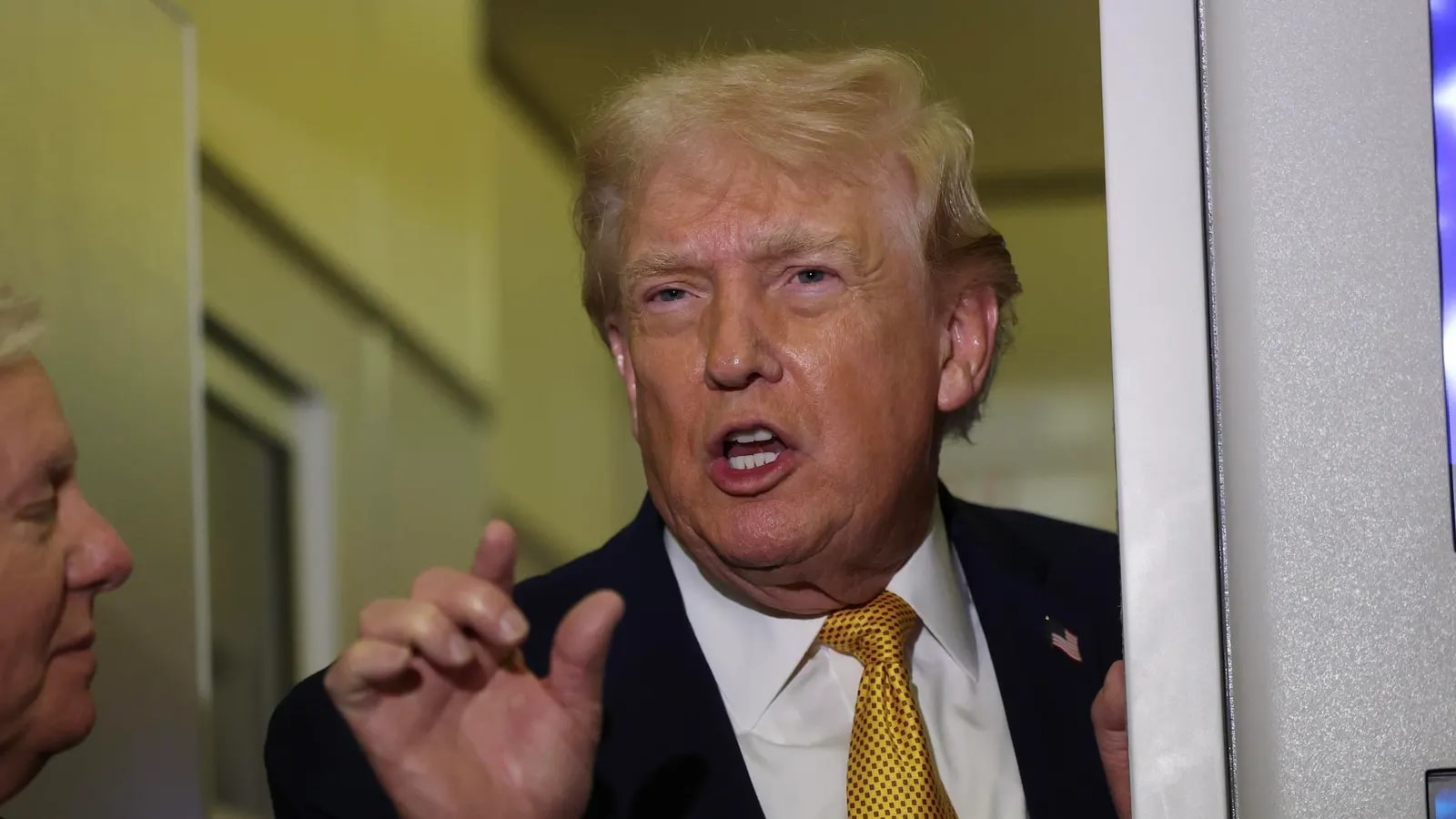
U.S. President Donald Trump has warned the European Union of heavy retaliatory tariffs and potential trade restrictions if Washington deems Brussels’ proposal to grant Canada "associate member" status a hostile act aimed at undermining American commercial interests.
The warning followed European Commission President Ursula von der Leyen’s proposal for Canada to become the bloc’s first “associate member,” an arrangement that could deepen cooperation in trade, defence, technology and energy.
“If it’s a good intention, that’s fine. If it’s a bad intention, we’ll put very heavy tariffs on Europe, which is a possibility,” Trump told reporters on Wednesday.
He also dismissed the proposed status as “laughable,” opening another front in Washington’s increasingly strained trade relationships with traditional allies.
Canada looks beyond US market
Canada’s interest in Europe has gathered pace as its trade dispute with the United States deepens. Roughly 70% of Canadian exports currently go to the US, leaving the country heavily exposed when relations between Ottawa and Washington deteriorate.
Prime Minister Mark Carney, who attended von der Leyen’s State of the European Union address in Strasbourg, has described the emerging relationship as a “unique alliance.”
Von der Leyen said Europe and Canada needed to rethink their partnerships in a changing world.
“In short, we want to bring the relationship with Canada to the highest level possible,” she said. She insisted the proposal was “not a partnership against anyone else, but for our common strength.”
The planned relationship could cover advanced manufacturing, artificial intelligence, cybersecurity, defence production, energy, critical minerals and batteries. Discussions have also reportedly touched on reducing trade barriers and improving physical and digital connections across the Atlantic.
Canada has already joined the European Union’s €150 billion SAFE defence procurement programme, giving the two sides a practical foundation for closer security cooperation.
Associate status remains undefined
There is one rather large complication. “Associate membership” is not an established category within the EU’s current legal structure.
Countries such as Norway and Switzerland maintain close economic relationships with the bloc without becoming members. Other states have association agreements requiring varying degrees of alignment with EU rules. None provides a ready-made model for Canada.
Full membership is also unlikely. EU accession is open to European states and requires a lengthy process supported unanimously by all 27 members.
The details of Canada’s proposed status, including whether citizens could receive expanded rights to live or work in Europe, have not been settled. European governments would also need to agree on how far the arrangement should go.
More clarity is expected when Canada and the EU hold further talks, including a summit planned for October.
For Ottawa, the attraction is obvious: wider markets, stronger defence ties and less dependence on the United States. Europe, meanwhile, gains a resource-rich democratic partner with energy, minerals and technology to offer.
Trump’s response shows the political cost may arrive before the agreement itself. The proposal remains sketchy, but Washington is already treating it as something worth watching closely.
READ ALSO: Diesel Would Have Hit GH¢28 Without Govt Intervention - NPA Boss