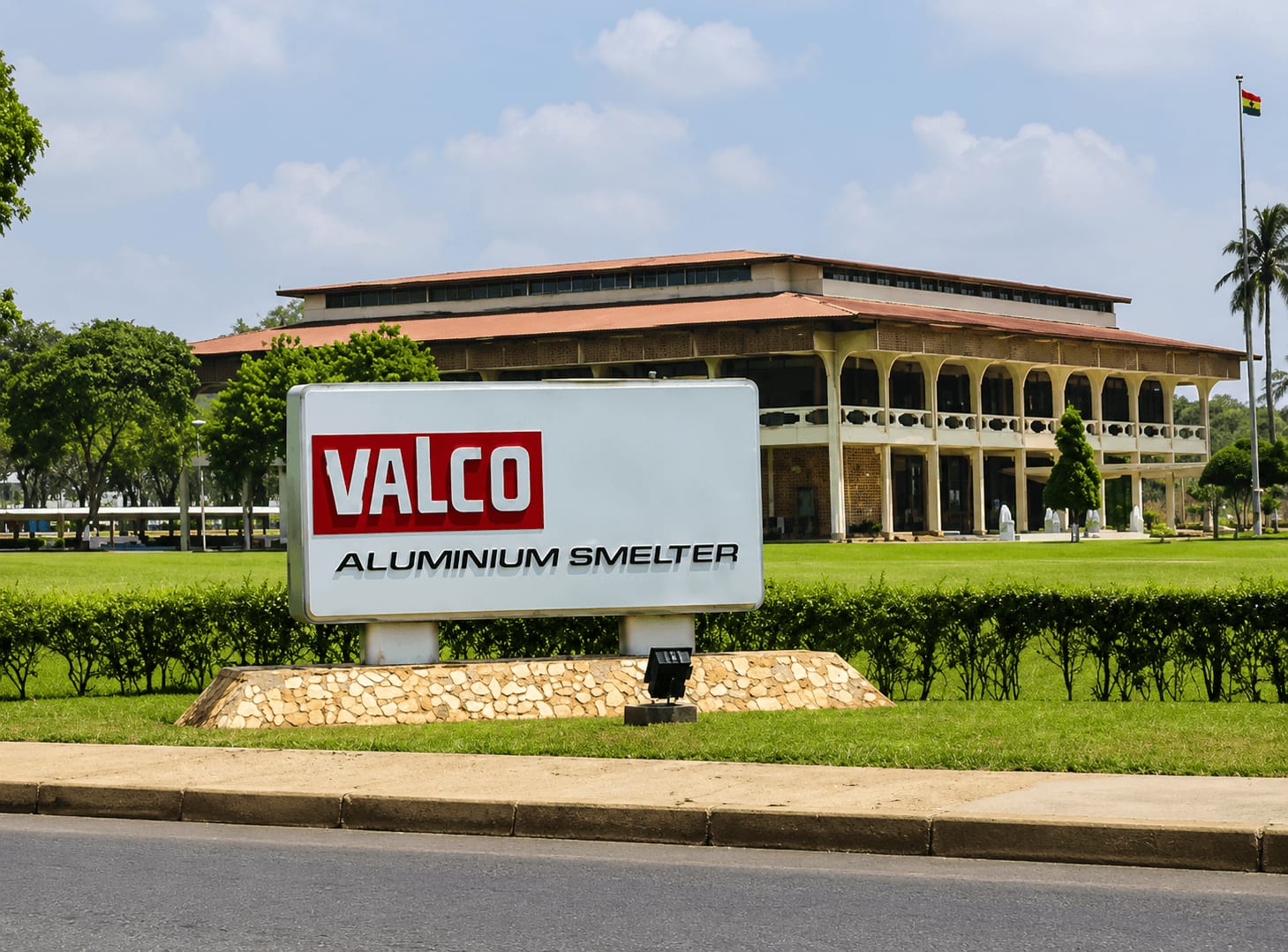
Ghana's Volta Aluminium Company will need more than US$700 million to return to competitive production, according to its Professional and Management Staff Union, which says the amount currently being discussed for rehabilitation falls far short of what is required to rescue the ageing smelter.
The union insists a proposed US$60 million rehabilitation package would do little more than keep parts of the plant running for a while, without addressing decades of deterioration that have steadily eroded the company's productive capacity.
"Restoring VALCO to efficient, competitive operation is not a repair exercise. It is a rebuild," the union said in a statement issued on Monday.
The intervention adds fresh tension to the national conversation over the future of one of Ghana's most strategic industrial assets, with organised labour now divided over how the smelter should be revived.
Union backs strategic investor
While another labour group has resisted government efforts to bring in private capital, the Professional and Management Staff Union has thrown its support behind the search for a strategic investor, arguing that the company can no longer survive on limited public funding alone.
The union, which represents assistant managers, managers and area managers, said its assessment reflects the experience of employees who operate and maintain the facility every day.
According to the statement, many of the plant's critical production systems have deteriorated beyond the point where routine maintenance or selective rehabilitation can restore efficient operations.
A US$60 million investment, it argued, may repair isolated equipment or keep sections of the smelter functioning temporarily, but it would not modernise the facility or make it competitive in today's aluminium industry.
The union also warned that spending relatively small amounts on obsolete infrastructure could eventually increase the burden on taxpayers if deeper structural problems remain unresolved.
Split emerges among labour unions
The position differs sharply from that of the Industrial and Commercial Workers' Union, which recently organised a demonstration urging President John Dramani Mahama to keep VALCO entirely under Ghanaian ownership.
The Professional and Management Staff Union distanced itself from that protest, saying it neither participated in nor endorsed the demonstration. It added that its members were not consulted before the action was organised and rejected suggestions that the march reflected the views of VALCO's management workforce.
Instead, the union believes attracting a strategic investor has become unavoidable.
Beyond financing, it said the company needs access to modern production technology, dependable electricity, secure alumina supplies and the technical expertise required to rebuild the smelter from the ground up.
Bigger questions for government
Electricity remains one of VALCO's biggest challenges. Aluminium smelting ranks among the world's most energy intensive industrial activities, making reliable and competitively priced power essential to any long term recovery plan.
Stable access to alumina is equally important. Without dependable raw material supplies, the union argues, even a significant capital injection would struggle to produce sustainable commercial returns.
The search for an investor has already stretched beyond five years. During that period, the union said, the condition of the smelter has continued to deteriorate, increasing the scale of investment now required while narrowing the options available to government.
That leaves policymakers facing difficult choices.
Retaining full state ownership would preserve direct public control over an industry regarded as central to Ghana's industrial ambitions.
Financing a reconstruction estimated at more than US$700 million, however, would place additional pressure on public finances already competing with demands for health, education, infrastructure and debt management.
Bringing in a strategic investor could shift part of the financial and operational burden to private capital, although questions over ownership, governance, employment and national control would inevitably follow.
The union believes the debate has now moved beyond whether VALCO should receive another round of repairs.
"If more than US$700 million is required, the question is no longer whether VALCO can be kept operating with a modest rehabilitation package," it said. "It is whether Ghana is prepared to finance a near total industrial reconstruction or offer terms capable of attracting an investor willing to do so."
The union is also calling for an independent technical and financial assessment of the smelter to establish the true condition of its production lines, the cost of replacing obsolete equipment and the investment needed to restore commercially viable output.
Its message is clear. National ownership alone will not preserve VALCO if the plant remains technologically outdated and financially uncompetitive. Restoring the smelter, the union argues, will demand far more capital than the amount currently on the table.
READ ALSO: Savannah Climate Governance Consultations Shape Ghana’s Climate Action Agenda