West African nations must urgently build fair and efficient domestic revenue mobilization systems to bridge a severe regional financing gap exceeding $100 billion annually, Ghana Revenue Authority (GRA) Commissioner-General Anthony Sarpong has urged.
He warned that continued dependence on external financing would leave governments struggling to fund roads, healthcare, education, climate adaptation and the digital infrastructure their economies increasingly require.
“The answer to our development financing question does not lie primarily beyond our borders.
"It lies within them in our capacity to mobilise our own domestic resources fairly, efficiently, and sustainably.” - Mr Sarpong
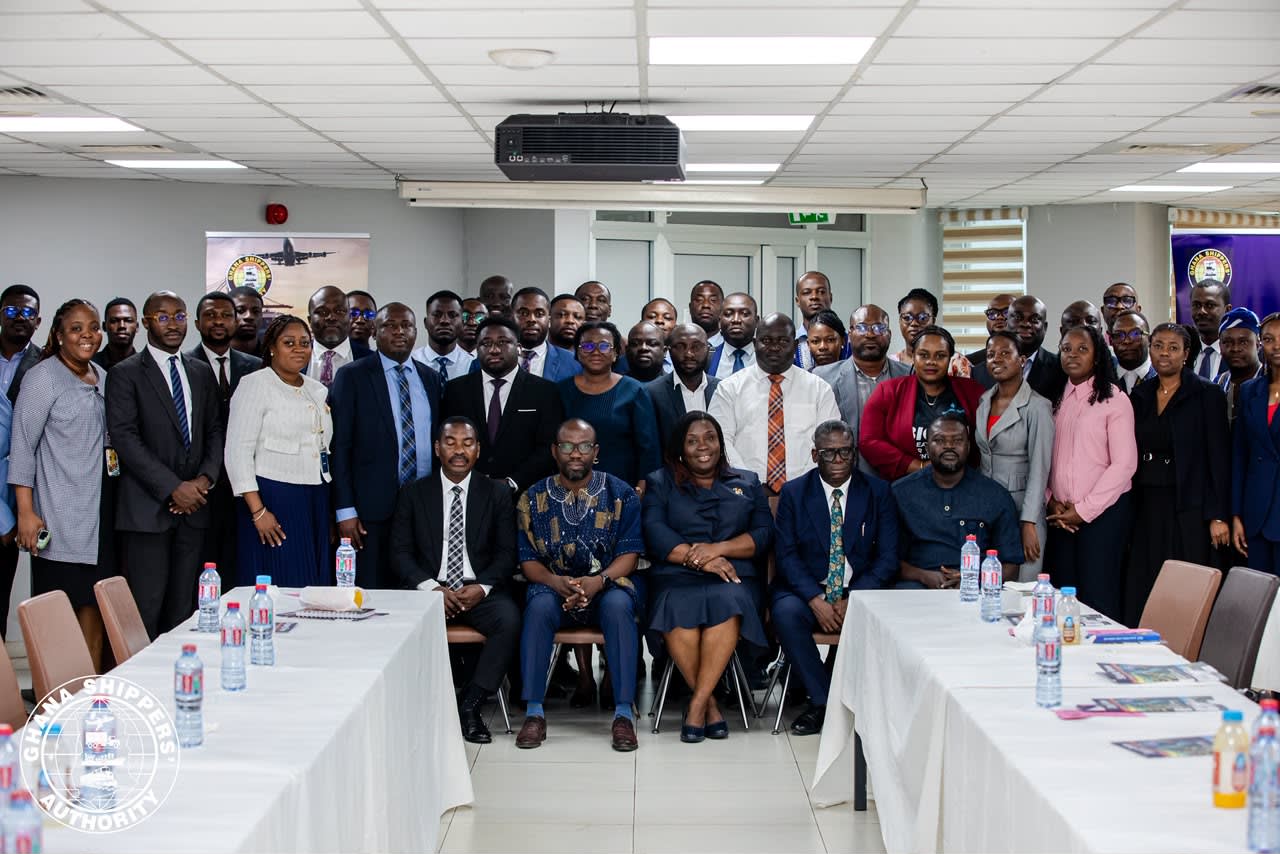
He was speaking in Accra at the 8th High-Level Policy Dialogue and 23rd General Assembly of the West Africa Tax Administration Forum, a regional gathering of tax officials, policymakers and development partners.
Region collects less tax than peers
Mr Sarpong cited African Development Bank estimates showing that the sub-region’s annual financing deficit had crossed the $100 billion mark.
Yet West Africa’s average tax-to-GDP ratio stands at about 13.5%. That trails the African average of 16.1% and sits well below the roughly 20% convergence benchmark for the West African Economic and Monetary Union.
The numbers tell an uncomfortable story. Governments require more money for development, but the economies from which that money must be collected remain heavily informal and difficult to tax.
Mr Sarpong said part of the answer was to broaden national tax bases, bring more informal activity into the formal economy and improve the management of revenue from natural resources.
“This gap can be closed through our own effort, that is, raising domestic revenue,” he said.
The approach, he stressed, should not mean repeatedly increasing the burden on the same small group of compliant businesses and salaried workers. Tax systems must remain fair and predictable enough to support entrepreneurship, investment and private-sector growth.
Tax agencies must build state capacity
Mr Sarpong urged revenue authorities to see their role as larger than chasing annual collection targets.
“Tax systems are not mere instruments for collecting revenue. They are the architecture of state capacity,” he said.
Better domestic revenue performance could give governments more room to fund public services while reducing exposure to costly borrowing, volatile aid flows and external economic shocks.
It will require stronger institutions, credible enforcement and public confidence that taxes are being collected fairly and used responsibly.
Digital tools and regional action
Cross-border tax avoidance presents another problem. Illicit financial flows, transfer pricing, digital commerce and increasingly complex regional trade make it harder for individual tax authorities to work alone.
“No tax administration, however well-resourced, can modernise in isolation,” Mr Sarpong said.
He called for deeper information sharing among West African revenue agencies and wider use of electronic filing, digital payments, electronic invoicing, data analytics and artificial intelligence.
Those tools could help authorities detect unusual transactions, reduce revenue leakages and make compliance less cumbersome for taxpayers.
Still, technology cannot repair weak tax systems by itself. Countries will also have to simplify rules, strengthen accountability and persuade citizens that compliance is worth it.
Mr Sarpong said closing the financing gap must be treated as a shared responsibility involving governments, businesses, researchers, civil society and citizens. The money, in his view, exists within the region. Collecting it fairly is the harder job.
READ ALSO: Fuel Prices Rise as Star Oil Adjusts Petrol to GH¢16.77, Diesel to GH¢17.77