Ghana has stepped up its export proceeds repatriation drive as the Bank of Ghana and Ghana Shippers’ Authority take revised Letter of Commitment guidelines to businesses and institutions across the export chain.
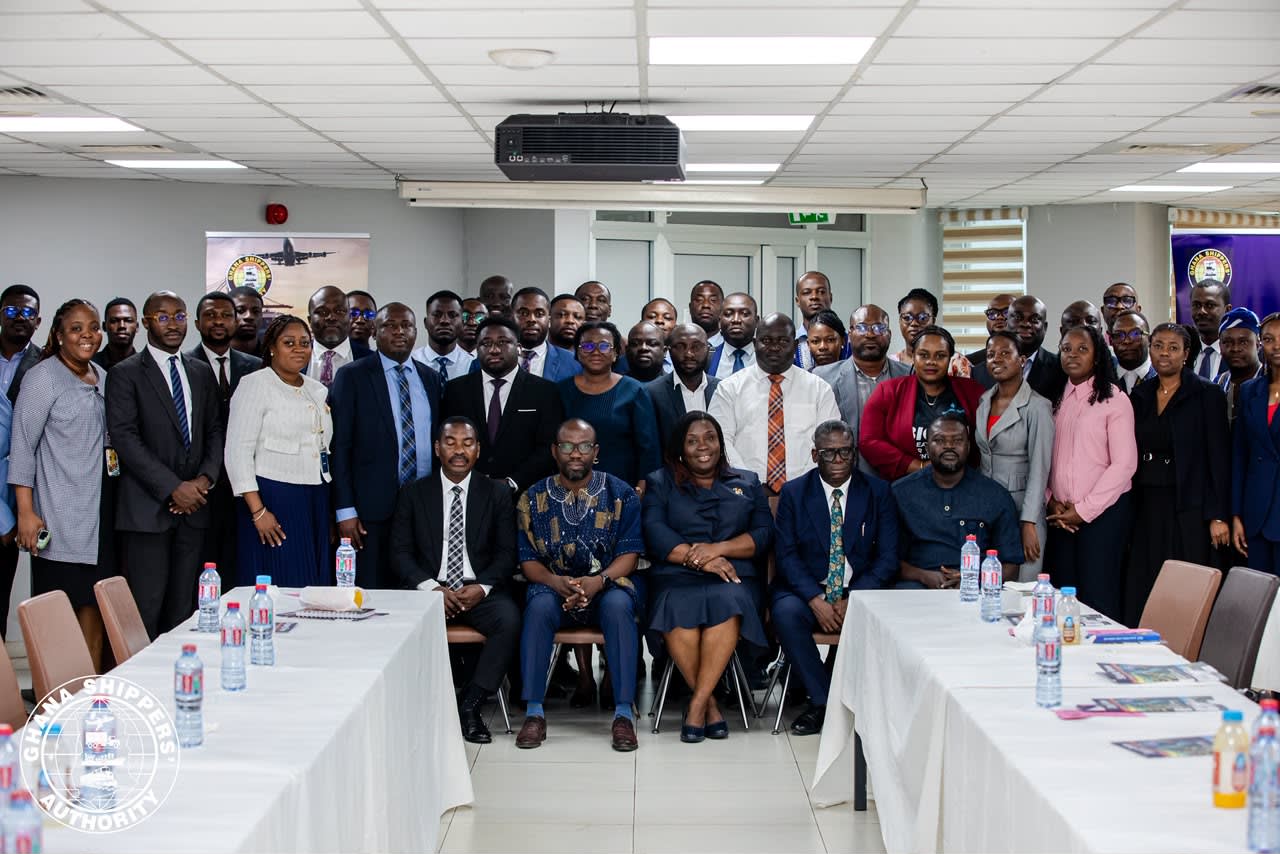
The two institutions held four days of sensitisation sessions from September 8 to 11, bringing together government agencies, commercial banks, freight forwarders and companies operating under the Free Zones regime.
The campaign was designed to explain the revised requirements, address operational problems and make clear who is responsible when foreign exchange earned from Ghanaian exports does not return through the formal financial system.
Three sessions were held at Shippers’ House in Accra. The final engagement took place at the Ghana Free Zones Authority’s offices and focused on Free Zone enterprises.
For the Bank of Ghana, the issue is tied directly to foreign exchange management. For the Shippers’ Authority, it sits inside the daily movement of goods, documents and payments involving exporters, freight forwarders and shipping companies.
What the Letter of Commitment does
The Letter of Commitment, commonly called the LOC, is generated through the Integrated Customs Management System for formal merchandise exports from Ghana.
It applies to qualifying resident exporters who receive proceeds in foreign currency, possess valid Tax Identification Numbers and are registered or licensed by the appropriate state agencies.
The document allows regulators to connect an exported consignment to the foreign currency payment expected from the transaction. That trail matters. Without it, goods can leave Ghana while the corresponding export earnings remain outside the country or become difficult to trace.
Eric Kwaku Hammond, an adviser to the Governor of the Bank of Ghana, said concerns over foreign exchange inflows and the return of export proceeds led to wider consultations and changes to the LOC regime.
“We must all own the LOC regime, because if the forex does not come in, we shall all bear the brunt,” he said.
Export earnings provide liquidity for businesses that need dollars, euros and other currencies to pay overseas suppliers. They also support reserve accumulation and can reduce pressure on the cedi when demand for foreign currency rises.
Agencies asked to work from the same rulebook
The opening session brought together officials from the ministries of Finance, Transport, Trade, Agribusiness and Industry, and Food and Agriculture.
Representatives from the Ghana Export Promotion Authority, Customs Division of the Ghana Revenue Authority, Ghana Free Zones Authority and other agencies also participated.
Monica Josiah, Head of Shipper Services and Trade Facilitation at the GSA, said institutions involved in trade must understand their separate responsibilities if the revised rules are to work.
The conversation quickly moved beyond forms and procedures. Participants raised concerns about false invoicing, incorrect classification of goods and weaknesses in trade data submitted through ICUMS.
Those practices can distort Ghana’s export records and make it harder to establish how much money should return to the country.
Kofi Baidoo, Head of Revenue Assurance at the Ministry of Finance, told participants that approximately US$3 billion in export proceeds had been lost through the Free Zones. The figure was presented during the engagement and would require supporting data to establish the period covered and how the loss was calculated.
“It is imperative that we all get involved. We must fix our country,” Mr Baidoo said.
He called for enforcement that can distinguish genuine commercial difficulties from deliberate refusal to return export earnings. An exporter facing delayed payment from an overseas buyer, for instance, does not present the same case as one intentionally keeping proceeds abroad.
Banks flag delays and payment challenges
Commercial banks joined the exercise on September 9. Participants included representatives from Zenith Bank, Consolidated Bank Ghana, Absa Bank, GCB Bank, Republic Bank, Access Bank, First Bank, National Investment Bank and GT Bank.
Banks raised practical concerns about delays in restoring suspended accounts, challenges involving the SWIFT payment system and weak coordination among institutions implementing the rules.
They also discussed the misuse of LOC identification numbers. Such abuse can break the link between the actual exporter, the goods declared and the foreign exchange payment being monitored.
Resolving those problems will be important because banks sit at the point where export proceeds enter Ghana’s formal financial market. A rule may be clear on paper and still fail if account restrictions, payment messages or identification records do not match.
Freight forwarders and Free Zones brought in
The September 10 session focused on freight forwarder associations and customs house agents.
Under the revised guidelines, service providers are cautioned against using a client’s credentials without consent to generate an LOC for another trader. The warning addresses a practice that can leave businesses connected to export transactions they did not authorise.
Free Zone enterprises were engaged on September 11 in collaboration with the GFZA. Companies used the session to seek clarification on compliance obligations and how the revised framework would affect their operations.
The sensitisation phase has now put the rules before most of the institutions that handle exports. The harder part begins with enforcement.
Ghana’s success will not be measured by the number of workshops held. It will be measured by whether export records can be reconciled with bank inflows, whether deliberate defaults attract sanctions and whether genuine exporters can comply without being trapped by avoidable bureaucracy.
READ ALSO: Ministry of Education to Review CSSPS After 2026 Placements