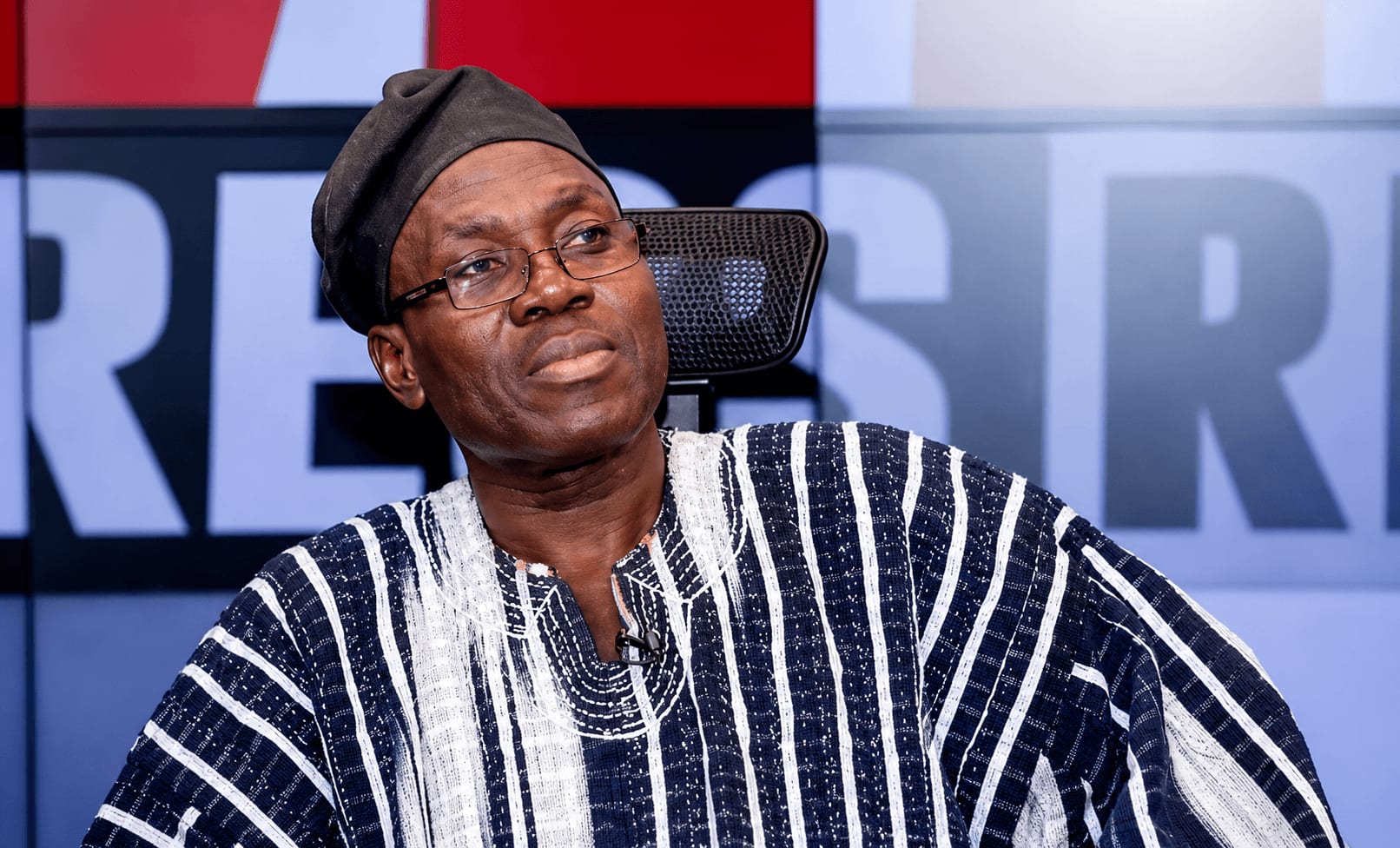
Former Tamale Central Member of Parliament Inusah Fuseini has rejected the description of Wontumi as a political prisoner, insisting that the Ashanti Regional Chairman of the New Patriotic Party is serving a sentence for breaking Ghana’s laws, not for expressing a political belief.
Speaking on JoyNews’ Newsfile on Saturday, July 25, Mr Fuseini described Bernard Antwi Boasiako, popularly known as Chairman Wontumi, as “a common convict” following his conviction in an illegal mining case.
He argued that disagreement with a court’s judgment does not automatically transform a convicted political figure into a political prisoner.
“First of all, let me state that Wontumi is not a political prisoner. Everybody should disabuse their minds of that notion. He is not a political prisoner; he is a common convict,” Mr Fuseini said.
Judgment Open to Public Discussion
The former lawmaker said the High Court had already delivered its decision, making the case open to public scrutiny until the defence formally files an appeal.
“My difficulty is that the senior lawyer who was involved in the case has offered himself to discuss the matter on television. The judgment has been rendered,” he stated.
“He has indicated his intention to appeal, but until that appeal is filed, the matter is open for public discussion.” - Mr Fuseini
Mr Fuseini said a political prisoner is generally someone jailed because of an ideological position or opposition to an existing political order. He maintained that Wontumi’s circumstances did not meet that description.
“How can you say somebody who has been found by a court of competent jurisdiction to have violated the laws of the country is a political prisoner?” he asked.
“What political beliefs was he fighting for that sent him to prison? What ideological persuasion was contrary to the existing constitutional order?” - Mr Fuseini
Fuseini Calls for Respect for Facts
Mr Fuseini urged political actors and the public to separate objections to the judgment from claims of political persecution.
“As a country governed by laws, we should ensure honesty in the way we relate to facts and issues.
"You may disagree with the judgment, but that does not mean we should label a common convict a political prisoner.” Mr Fuseini
He also touched on the legal requirement to establish criminal intent, recalling arguments previously made over the interpretation of Section 179 of the Criminal Offences Act.
“Intentionality is an essential element in proving a crime. The law requires that the act be wilful,” he said.
His broader point was that legal disputes must be tested through the courts, particularly through an appeal, rather than settled through political labels.
NPP Rejects Wontumi’s Conviction
The NPP has maintained that Wontumi’s prosecution and sentence were politically motivated.
At a press conference following the ruling, General Secretary Justin Frimpong Kodua described him as a political prisoner and announced that the party had begun processes to challenge the judgment.
Chairman Wontumi was sentenced to 20 years in prison after the High Court found him guilty over illegal mining activities linked to Akonta Mining Limited.
Prosecutors said he unlawfully authorised third parties to operate on the company’s concession without the ministerial approval required under Ghanaian law.
The NPP has accused the governing National Democratic Congress of selective prosecution, arguing that individuals associated with the ruling party who have faced illegal mining allegations have not received similar treatment.
Mr Fuseini is unconvinced. Until a higher court overturns the conviction, he says, Wontumi remains a convicted person rather than a prisoner of political conscience.
READ ALSO: Economist Highlights Fiscal Reforms and Infrastructure Drive as Ghana Eyes Next Growth Phase