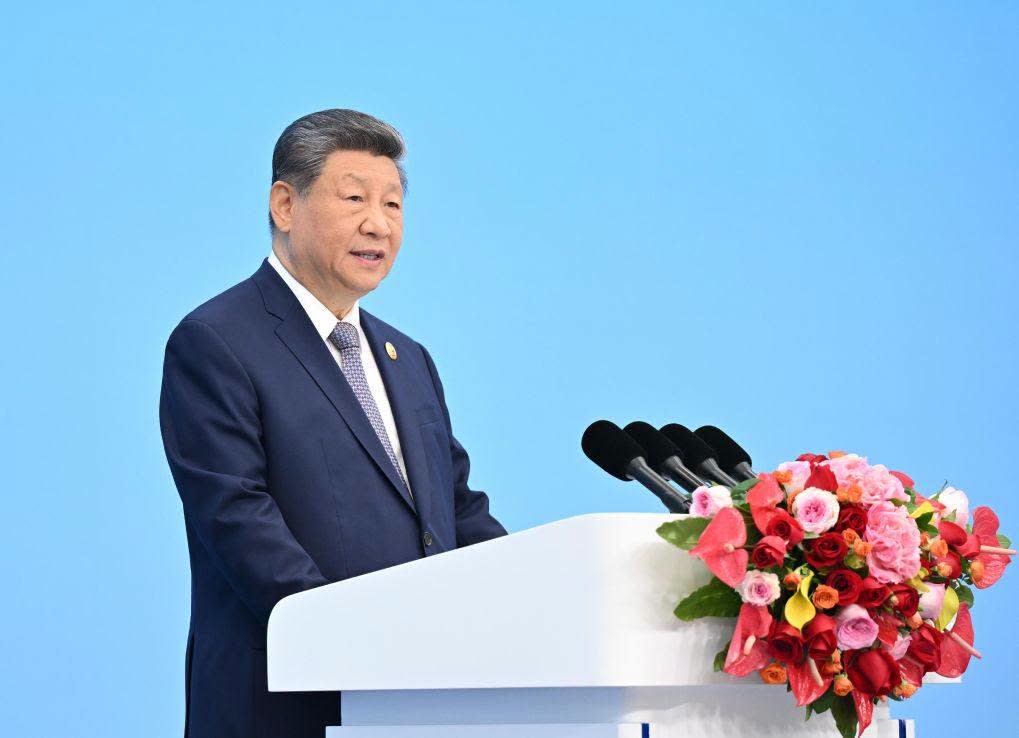
Chinese President Xi Jinping has called on Asia-Pacific economies to defend open trade and deepen cooperation, warning that growing protectionism and unilateralism could undermine the region’s role as a major engine of global growth.
Addressing the APEC CEO Summit in Shenzhen on Wednesday, November 18, President Xi said the Asia-Pacific trade system must remain open, connected and anchored in multilateral rules as the global economy faces slower growth and mounting geopolitical pressures.
He said governments were confronted with a choice between greater openness and economic fragmentation at a time when emerging technologies were rapidly changing global production and trade.
“History tells us that opening doors brings progress while closing doors leaves one behind,” President Xi said.
China is hosting APEC for the third time, with the 2026 summit taking place under a broader push for deeper economic integration and cooperation across the region.
Xi backs WTO-centred trading system
Mr Xi said APEC members should defend what he described as a WTO-centred, rules-based multilateral trading system and keep industrial and supply chains stable.
He also called for progress towards a Free Trade Area of the Asia-Pacific, alongside improved transport links and greater cooperation in digital trade, cross-border e-commerce and smart customs.
The Chinese leader argued that stronger connectivity would make it easier for businesses to move goods, services and capital across the region.
“We should firmly safeguard the WTO-centered, rules-based multilateral trading system, support free and open trade and investment, and keep global industrial and supply chains stable and unimpeded.” - President Xi
His remarks come at a time of heightened tensions over tariffs, technology restrictions and industrial policy between the world’s largest economies.
Reuters reported that Mr Xi used the summit to present China as a defender of free trade and multilateralism while criticising protectionism, amid continued tensions with the United States over advanced technology and trade restrictions.
Innovation and AI placed at centre of growth
Mr Xi also pushed for deeper cooperation in artificial intelligence, the digital economy and green technology.
He said APEC economies were already responsible for a significant share of global technological innovation, with new AI models and other technologies spreading quickly across industries.
“We should forge science, technology and innovation partnerships, deepen cooperation in the digital economy and AI, and promote green and low-carbon transition,” he said.
The Chinese leader argued that the region should turn its technological strengths into broader economic growth rather than allow competition over emerging technologies to create new barriers.
He also called for closer cooperation in transportation, energy, food security, public health and anti-corruption.
China proposes global bay areas group
Mr Xi used the summit to propose the creation of a World Association for Bay Areas Economic Cooperation.
He said major bay areas had become important centres of trade, investment and innovation because of their strong links between ports, cities and industrial clusters.
Shenzhen forms part of the Guangdong-Hong Kong-Macao Greater Bay Area, which China has promoted as one of its major economic and technological hubs.
President Xi said closer cooperation among bay areas could provide another platform for expanding trade and investment links.
China promises wider market access
The President also sought to reassure international businesses that China would continue opening its economy.
He described China as the world’s second-largest consumer market with a large middle-income population and said sectors including electric vehicles, smart homes and tourism were generating new business opportunities.
China would continue expanding imports of goods and services while using initiatives such as its “Export to China” programme to help foreign businesses enter the domestic market, he said.
President Xi also promised further work on market access, regulation and standards, particularly in manufacturing and services.
“No matter how the international landscape may evolve, China will not waver in its pursuit of win-win cooperation with all other countries,” he said.
The message is aimed partly at foreign investors who have raised concerns over policy predictability and market access in China.
Peace and stability remain economic issues
President Xi also linked economic growth to regional security.
“There can be no prosperity without security, and no security without stability,” he told business leaders.
He called for differences among countries to be handled through dialogue and consultation rather than confrontation.
The speech came as several major geopolitical disputes remain active across the region, including tensions over Taiwan, the South China Sea and strategic competition between China and the United States.
For Beijing, however, the immediate economic message was clear: Asia-Pacific growth will depend on whether governments keep trade routes open, allow supply chains to function and avoid turning technology and commerce into wider political battlegrounds.
READ ALSO: Replacing Ageing Hostel Roofs Will Cost GH¢20 Million — UGEL CEO