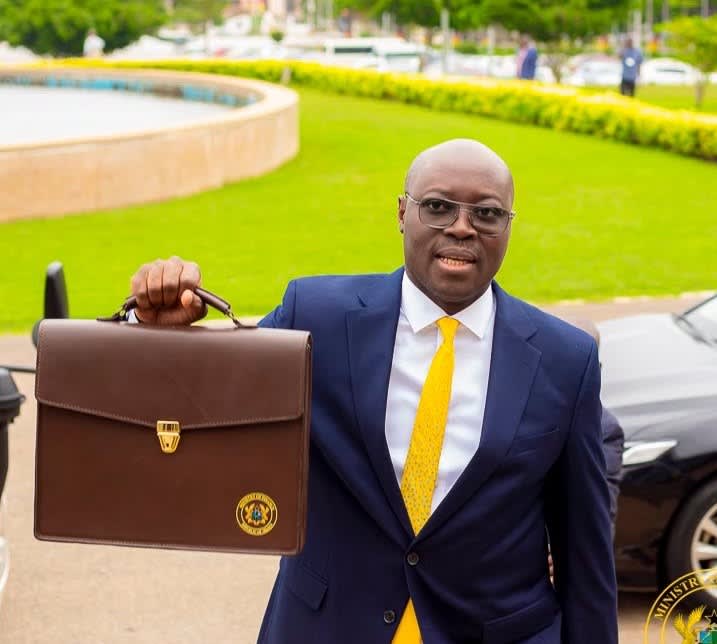
Finance Minister Dr. Cassiel Ato Forson is expected to present the 2026 Mid-Year Budget Review to Parliament today, Thursday, July 23, setting out the government’s economic direction for the rest of the year.
The review will test the claims made in the November 2025 Budget against what has actually happened over the past six months.
It will also show whether the government intends to adjust its growth, revenue, expenditure and financing assumptions as domestic and global conditions shift.
This is not just an accounting exercise. Businesses, investors and households will be listening for signs of where government spending is headed and whether the recent gains in inflation and fiscal stability can hold.
Economy Appears Ahead of Early Projections
When the 2026 Budget was presented, the government said the economy was moving from stabilisation into sustained expansion.
The budget targeted real gross domestic product growth of at least 4.8 per cent, non-oil growth of 4.9 per cent, an overall fiscal deficit of 2 per cent of GDP and a primary surplus of 1.5 per cent.
International reserves were also expected to cover at least three months of imports. Available indicators suggest the economy has broadly performed better than expected.
Inflation has declined to 5.3 per cent, placing it below the government’s medium-term target band of 8 per cent, plus or minus two percentage points.
Recent data have also pointed to improvements in fiscal consolidation, the external sector and debt sustainability. The real question is whether these gains are deep enough to last.
The Finance Minister is expected to provide fresh details on revenue mobilisation, expenditure performance, debt management and government financing for the second half of the year.
There are strong indications that the review will not introduce new taxes. That would allow the government to focus on enforcing existing measures rather than reopening another tax debate.
Any changes to expenditure allocations will attract close attention, particularly from sectors waiting for delayed projects, arrears payments or new public investment.
IMF Transition to Feature Prominently
Ghana’s relationship with the International Monetary Fund is also expected to feature heavily. The review is likely to provide an update on the completion of the Extended Credit Facility programme and Ghana’s planned transition to the IMF’s Policy Coordination Instrument.
That arrangement is expected to support policy credibility after the bailout programme ends and reassure investors that fiscal discipline will not disappear with the programme.
For the market, today’s presentation will offer clues on inflation, interest rates, the cedi, borrowing and the wider business environment.
Dr. Forson’s task is straightforward on paper, but less so in practice. He must show that the economy is improving without pretending the difficult work is over.
READ ALSO: Middle East Oil Market Faces Growing Uncertainty as Conflict Clouds Supply Outlook