The Bank of Ghana AI drive is moving deeper into monetary policy and financial supervision, with the central bank deploying artificial intelligence, Big Data and machine learning to detect inflation pressures, economic shifts and risks in the banking sector much earlier.
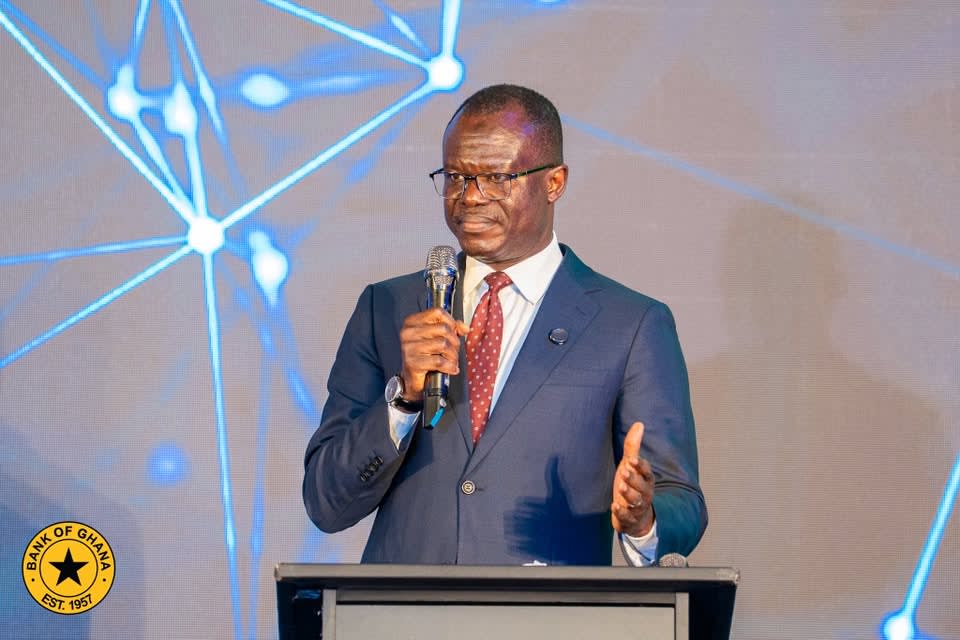
First Deputy Governor Dr Zakari Mumuni says the Bank has already developed an in house electronic inflation nowcasting system known as e Inflation and is using machine learning alongside conventional econometric models to forecast gross domestic product.
The shift is aimed at solving an old policymaking problem. Economic data often arrive after conditions on the ground have already changed.
“The greatest challenge facing policymakers today is no longer a shortage of data. It is turning an abundance of data into timely, reliable and actionable intelligence,” Dr Mumuni said.
He disclosed the initiatives at the 4th Annual Statistics and Data Science Conference 2026 of the Ghana Statistical Association in Tamale on Wednesday, August 26.
Inflation Adds Faster Signals to Monetary Policy
The Bank’s inflation targeting framework remains forward looking, requiring policymakers to assess where the economy stands, where it may be heading and what risks could alter that path.
Traditionally, that work relies on data covering prices, output, credit, exchange rates, fiscal developments and financial markets, supported by econometric tools and the Bank’s Quarterly Projection Model.
Technology is now being layered onto that system.
“The Bank has deployed AI and Big Data technologies to develop its in house electronic inflation nowcasting methodology, e Inflation,” Dr Mumuni said.
Machine learning models are also being used to complement traditional GDP forecasting, while text mining tools allow analysts to extract useful signals from large volumes of information.
The attraction is speed. Higher frequency information could give policymakers an earlier indication that demand, prices or economic activity are changing before conventional statistics arrive.
Banking Supervision Is Becoming More Data Driven
The transformation is not confined to monetary policy.
Dr Mumuni said financial sector supervision previously depended heavily on monthly spreadsheets requiring significant manual reconciliation.
More granular information can increasingly be checked as it arrives, giving supervisors a chance to identify vulnerabilities before they become larger problems.
The central bank is also looking at how unconventional data could improve its reading of the economy.
Digital payment activity, for instance, could offer quicker clues about consumer spending. Tax data may provide early signals of business activity, while satellite imagery could help assess agricultural conditions before traditional harvest statistics become available.
That sort of information could be particularly useful when inflation pressures emerge from food supply disruptions or sudden changes in household demand.
AI Cannot Rescue Poor Data
The Bank is not treating technology as a magic fix.
Dr Mumuni warned that sophisticated models remain only as reliable as the information fed into them.
“Bad data in, very sophisticated garbage out,” he said.
Definitions, classifications, sampling, measurement, validation and statistical revisions therefore remain fundamental even as public institutions adopt more advanced analytical tools.
He also argued that Ghana’s statistical systems must keep changing with the economy. Consumption patterns shift, new industries emerge and old price baskets or classifications can lose relevance over time.
Rebasing exercises for GDP and the Consumer Price Index, he said, are part of keeping official statistics aligned with economic reality.
‘People Make Policy’
There are limits to how far automation should go.
Dr Mumuni stressed that the Bank’s adoption of AI does not mean machines will take over monetary policy decisions.
“Technology can strengthen our intelligence, but it does not remove the need for human judgment,” he said. “People make policy.”
That approach echoes Governor Dr Johnson Pandit Asiama’s commitment after taking office in February 2025 to pursue more proactive and precise inflation management using advanced analytics and artificial intelligence.
Dr Mumuni also called for stronger collaboration between universities and public institutions, arguing that academic research should increasingly be done “with policy” rather than simply “about policy.”
For the Bank of Ghana, the goal is not to collect data for its own sake. It is to see economic changes sooner, interpret them better and place stronger evidence before policymakers.
Dr Mumuni summed up the ambition in three short lines: “Better data. Better decisions. Better outcomes.”
READ ALSO: Ghana Must Turn Macroeconomic Stability Into Jobs and Productive Growth - IEA