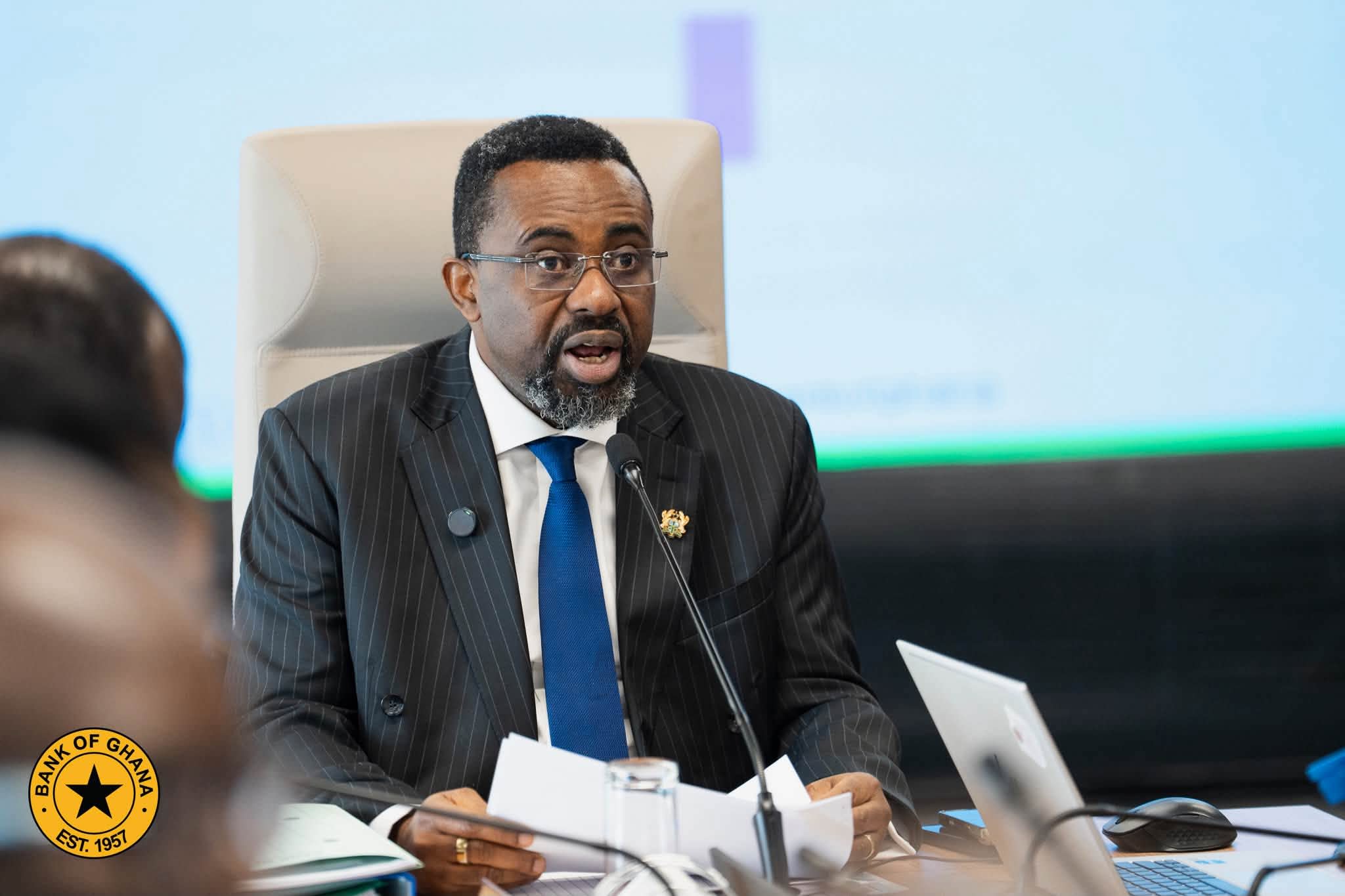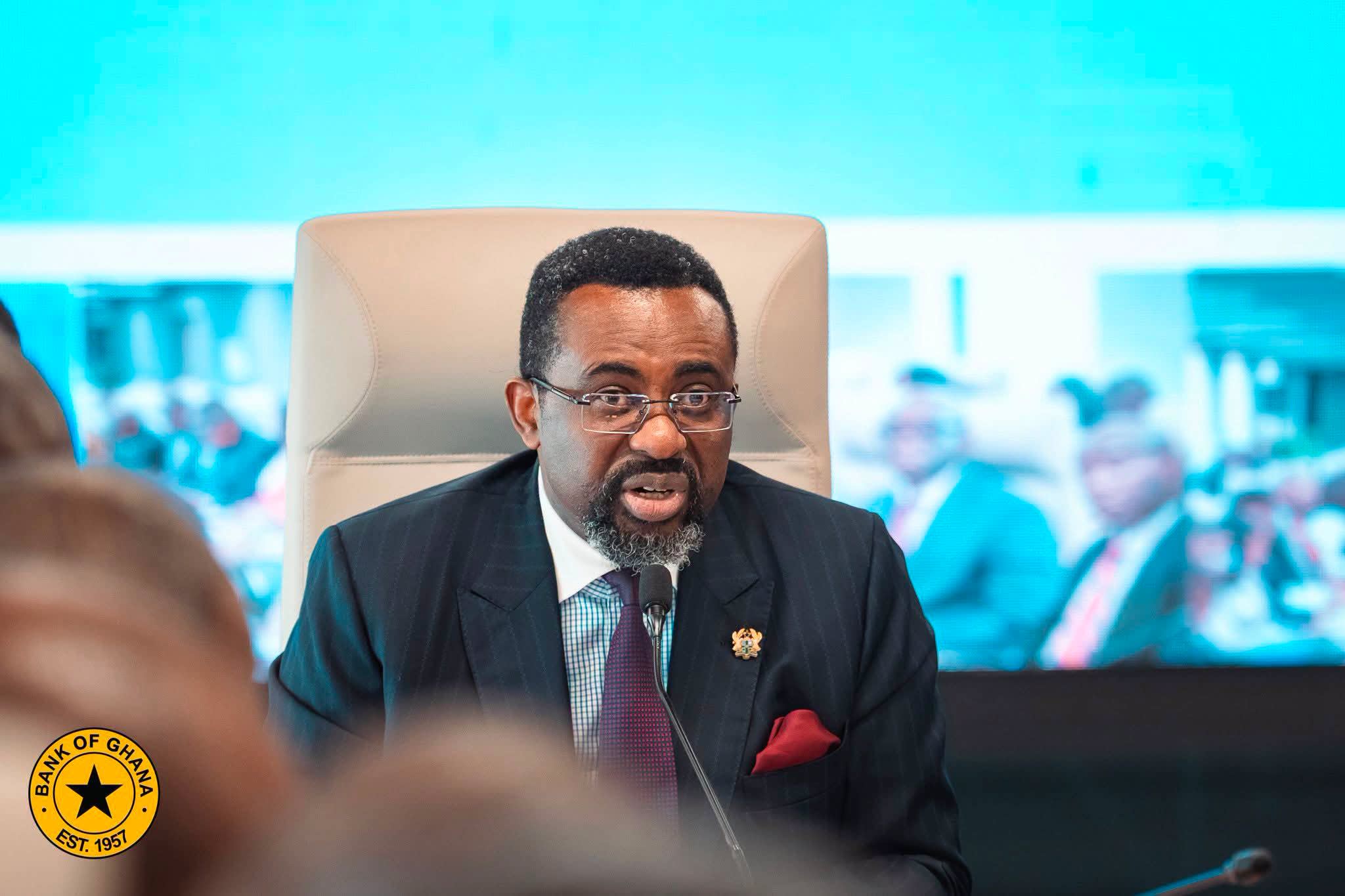
Bank of Ghana Governor Dr Johnson Pandit Asiama has urged the International Monetary Fund to deepen support for Africa digital sovereignty, warning that weak regulation, cybersecurity gaps and limited financing could leave the continent further behind as artificial intelligence reshapes the global economy.
Speaking at the 2026 Annual Meetings African Caucus Meeting with the IMF Managing Director in Bangkok, Thailand, Dr Asiama said African economies could not afford to remain passive users of technologies designed and governed elsewhere.
“Without urgent and coordinated action, the continent risks falling even further behind,” he said.
His intervention focused on artificial intelligence and digital transformation as tools for structural economic change, but also on the risks created when technology advances faster than the institutions meant to regulate it.
Africa Needs Capacity to Shape AI
Dr Asiama said Africa has already made significant progress in digital payments, financial technology, digital identification and AI enabled financial services.
Those gains have allowed some economies to expand financial access and work around longstanding infrastructure barriers.
The next phase, he argued, requires something deeper: the institutional capacity to determine how data, artificial intelligence and digital platforms are governed within African economies.
Digital sovereignty, in that sense, is not about cutting Africa off from foreign technology or insisting that every digital tool must be built locally. It is about ensuring governments and regulators have enough expertise, infrastructure and authority to shape how technology operates in their markets.
“We first call upon the Fund to scale up tailored capacity development and to support a stronger Africa’s voice in shaping global digital norms,” Dr Asiama said.
That support, he suggested, must reflect the very different conditions across African economies.
Countries with sophisticated financial markets and stronger data systems face different challenges from those still struggling with expensive connectivity, unreliable electricity and limited supervisory capacity.
Cybersecurity Risks Growing With Digital Finance
The Governor also placed cybersecurity high on the agenda.
As payment platforms, fintech companies and public digital systems become more connected, weaknesses in one institution can quickly create risks elsewhere.
A major attack on a payment provider, telecommunications network or government digital platform could disrupt financial transactions and expose users to fraud, identity theft or service failures.
The concern is particularly important as more people who previously operated outside formal financial systems move onto digital platforms.
Dr Asiama’s position is that financial inclusion should not expand faster than the security architecture needed to protect users.
African regulators, he argued, need stronger incident reporting systems, common security standards and better cross border cooperation to deal with threats that rarely respect national boundaries.
IMF Asked to Bring AI Into Economic Surveillance
Dr Asiama’s second major request was for the IMF to strengthen its analytical work around artificial intelligence and macro financial stability.
He called for AI related risks and opportunities to be incorporated into the Fund’s regular economic surveillance and Financial Sector Assessment Programmes.
That would expand the traditional focus on banking soundness and financial regulation to include newer risks created by machine learning systems, digital platforms and the concentration of technological infrastructure.
“The skills and systems required to manage these changes cannot be treated as secondary,” his intervention suggested.
Artificial intelligence could improve productivity, reduce transaction costs and help financial institutions assess customers more efficiently.
But it also raises questions around employment, operational risk and access.
Workers performing routine tasks could face displacement before new opportunities emerge. Banks and fintech firms could use algorithms to expand credit, but poorly designed systems may also exclude customers whose financial histories do not fit conventional data models.
Data Rules Could Shape African Tech Growth
The Governor also called for greater policy coherence on data governance, digital trade and cross border AI regulation.
Fragmented rules could become a major obstacle for African technology companies trying to expand across multiple markets.
A fintech firm operating in several countries, for example, could face entirely different requirements for data storage, customer identification and AI use in each jurisdiction.
That raises compliance costs and limits the scale advantages African firms are expected to gain from deeper continental economic integration.
Dr Asiama wants international institutions, including the IMF, to support African governments in building frameworks that protect users without suffocating innovation.
His message in Bangkok was that digital transformation is no longer separate from mainstream economic management.
AI now affects productivity, financial stability, employment and competitiveness. For African countries, the issue is whether they will participate in shaping those systems or simply adapt to rules written elsewhere.
The Governor’s appeal places the IMF in that debate not only as a lender or macroeconomic adviser, but as a partner in helping African states build the regulatory and institutional capacity required for a more digital economy.
READ ALSO: GRA Clarifies Digital VAT System Not a New 20% Tax