Ghana's economy is showing stronger signs of recovery than many expected at the start of the year, with growth accelerating, inflation easing sharply and public finances moving closer to long-term sustainability.
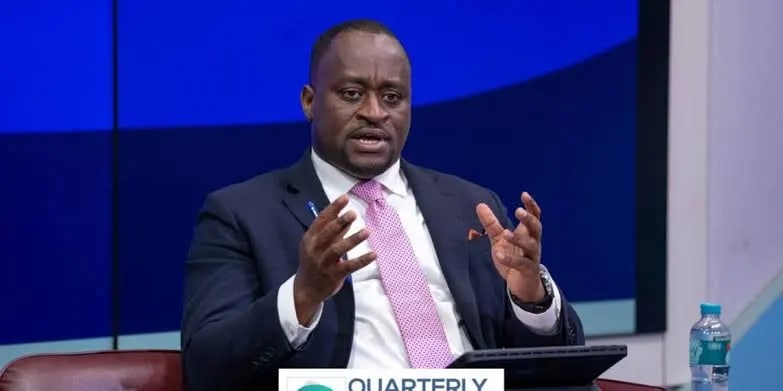
That is one of the central conclusions drawn by economist and political risk analyst Dr Theophilus Acheampong following the presentation of the 2026 Mid-Year Budget Review.
According to his assessment, the latest fiscal update paints a picture of an economy that has regained momentum without relying on additional taxes or a supplementary budget.
Government maintained its original expenditure ceiling while reallocating resources to priority sectors. At the same time, it abolished several taxes, including the Electronic Transfer Levy, Betting Tax, COVID-19 Levy, Emissions Levy and VAT on motor insurance.
Yet tax revenue continued to improve.
Dr Acheampong noted that non-oil tax revenue increased from 12.6 per cent of GDP in 2024 to 13.1 per cent in 2025, suggesting that stronger compliance and tax administration are beginning to replace higher tax rates as the main driver of revenue growth.
Growth Extends Beyond Gold
Economic expansion also exceeded official expectations.
Real GDP grew 6.4 per cent during the first quarter of 2026, comfortably above the government's full-year minimum target of 4.8 per cent.
Growth was broad enough to include services, industry and agriculture, although Dr Acheampong cautioned that activity remains concentrated in only a handful of sectors.
Services expanded by 7.1 per cent, industry by 6.9 per cent and agriculture by 4 per cent.
He also pointed to a sharp decline in the GDP deflator, from 23.9 per cent to 4.1 per cent, arguing that current growth reflects higher production rather than simply rising prices.
Inflation and Debt Show Improvement
Perhaps the most noticeable shift has been in inflation.
Headline inflation declined from 13.7 per cent in June 2025 to 5.3 per cent in June 2026, after touching a seven-year low of 3.2 per cent in March.
Lower inflation has eased pressure on household budgets, although services inflation remains elevated, driven largely by transport costs.
The fiscal picture has also strengthened.
Dr Acheampong observed that Ghana recorded a primary surplus of 0.9 per cent of GDP during the first half of the year and remains on course to meet its full-year target of 1.5 per cent.
The country's debt-to-GDP ratio stood at 45 per cent in June 2026, effectively reaching the government's statutory target years ahead of schedule.
Interest payments also came in GH¢6.9 billion below target, while GH¢5.3 billion in inherited arrears were cleared without accumulating fresh obligations.
Recovery Must Lead to Jobs
Despite the encouraging numbers, Dr Acheampong argues that the next stage of Ghana's recovery will depend on whether macroeconomic gains translate into broader economic opportunities.
"The bottom line: Ghana's macroeconomic indicators have improved markedly.
"The next phase is turning these lower borrowing costs into more private investment, translating compliance technology into more revenue, and project allocations into fully completed infrastructure, enhanced exports and more jobs." - Dr Acheampong
For him, stabilising the economy is only part of the story. Sustaining growth that creates employment and expands productive sectors will determine whether the recovery becomes lasting.