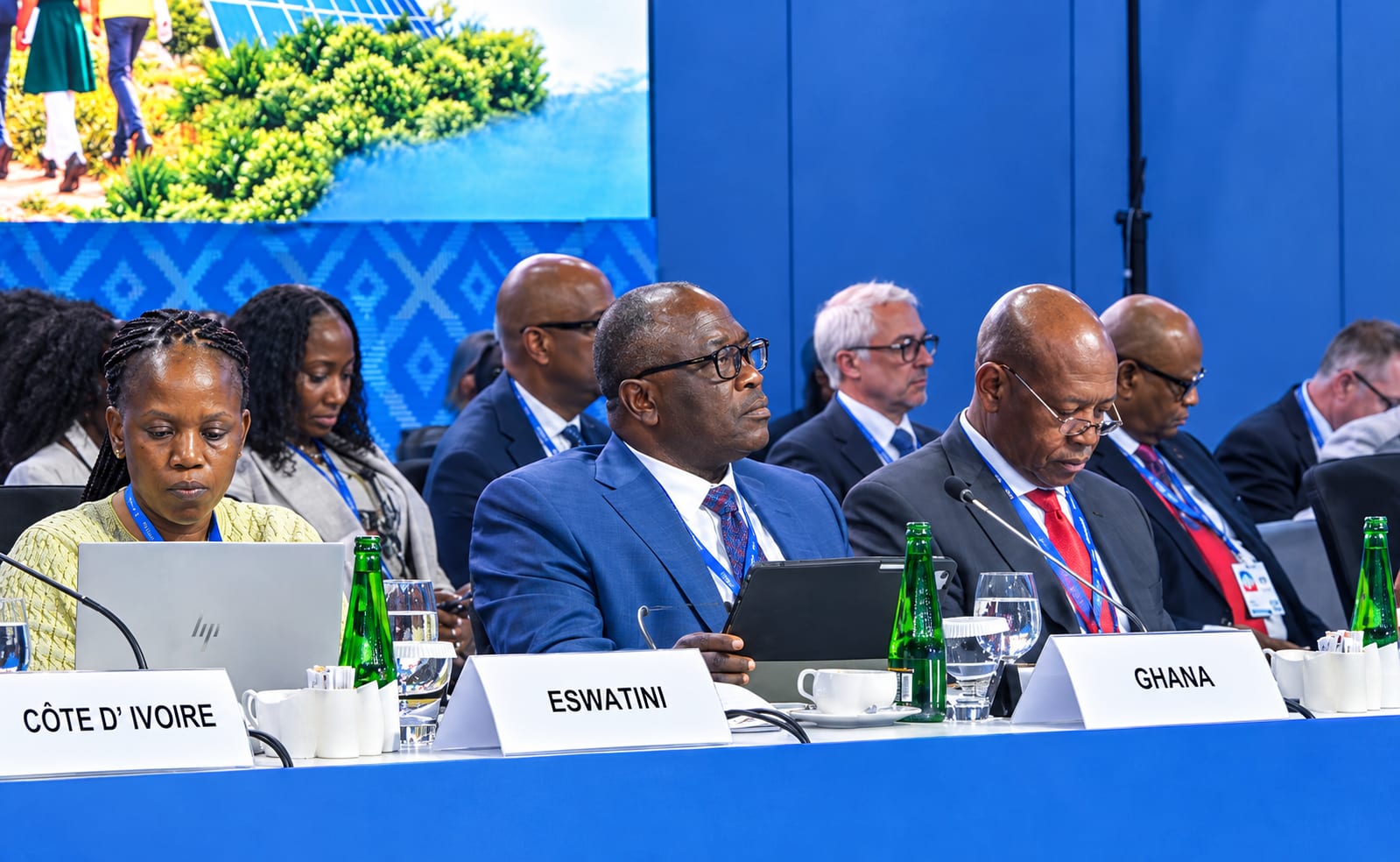
Ghana used its platform at the 17th V20 Ministerial Dialogue in Bangkok to make a case that's become familiar in climate finance circles but still hasn't found enough traction: countries that take the hard road on economic reform shouldn't get punished for it.
Hon. Seidu Issifu, Ghana's Minister of State for Climate Change and Sustainability, told the gathering, held alongside the 2026 IMF and World Bank Annual Meetings, that nations undergoing debt restructuring need continued access to concessional financing, not less of it.
"Doing the difficult but necessary thing should open doors, not close them," he said, pushing for flexible financing terms, longer repayment windows and sovereign credit ratings that actually reflect reform efforts rather than punishing them.
Debt Tools With Climate Built In
Issifu went further than the usual appeals for sympathy, calling for specific mechanisms like debt-for-resilience conversions and climate-resilient debt clauses.
He also wants resilience investments factored properly into debt sustainability assessments, a technical ask but one that could shape how climate-vulnerable countries are treated by creditors going forward.
Ghana reaffirmed its support for the proposed V20 Lifeline Fund, with Issifu urging both V20 members and G7/G20 partners to get the fund off the ground. He also pressed for expanded direct access to climate finance, pointing specifically to the Green Climate Fund as one avenue that needs widening.
The dialogue drew Barbados Prime Minister and CVF-V20 Chair Mia Amor Mottley, along with other ministers and development partners, as talks moved forward on the Vulnerability to Viability Compact.
Issifu closed with a line that summed up the overall tone from vulnerable economies at the table: these countries, he said, are looking for genuine investment partnerships, not charity, to build the kind of resilience that lasts beyond the next crisis.
READ ALSO: Trump Threatens to Cut Ukraine Intelligence Sharing Over Energy Strikes