Government is exploring a corporate street adoption in Ghana programme that would allow banks and other large businesses to finance the greening and maintenance of urban roads in exchange for branding and possible co-naming rights.
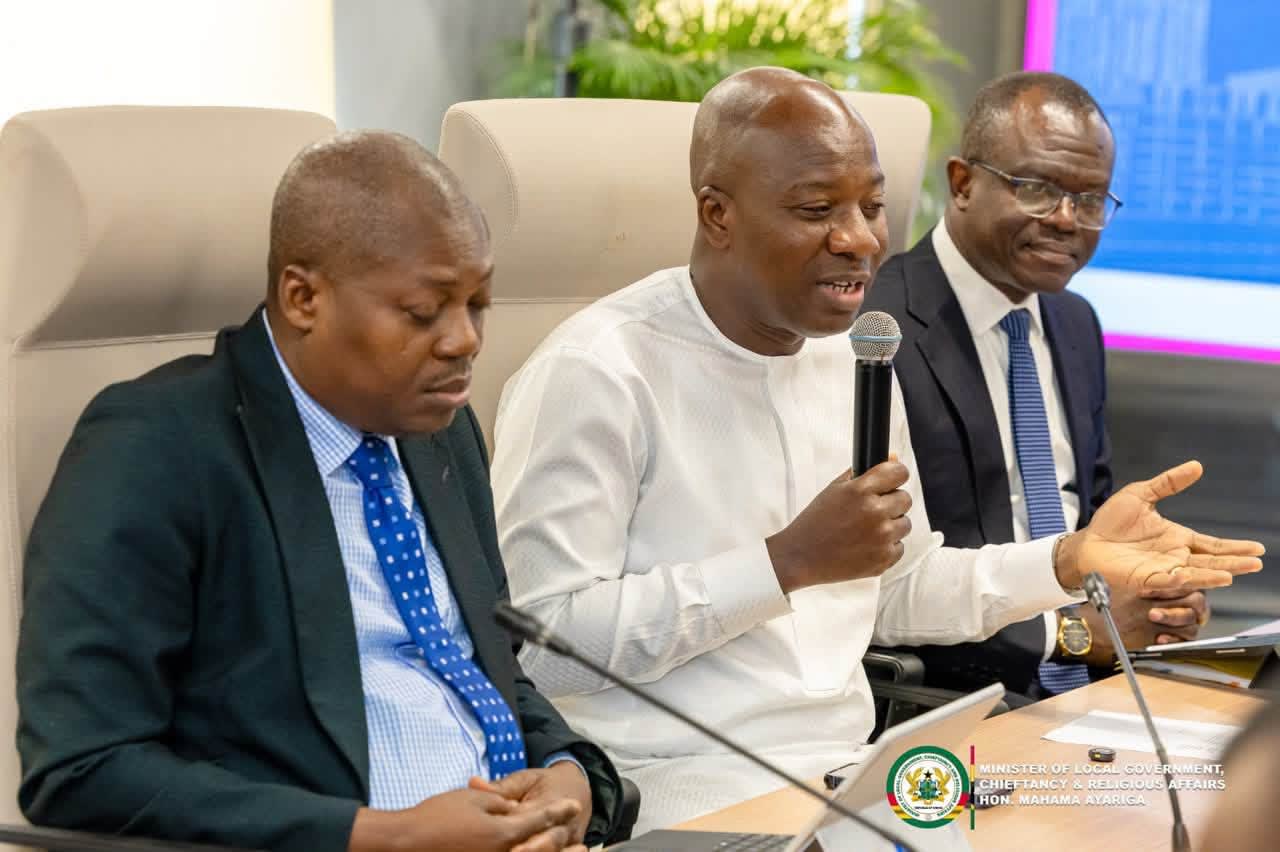
Minister for Local Government, Chieftaincy and Religious Affairs, Mahama Ayariga, presented the idea to chief executives of banks and financial institutions at a meeting convened by the Bank of Ghana.
The proposal would turn the existing practice of companies maintaining roundabouts and small public spaces into a more organised programme covering defined sections of major roads.
“I have driven around the city and I see banks adopt certain spaces in the city, redesigning them, decorating them nicely, beautifying them and branding it in the image of that bank,” Mr Ayariga told the executives.
The government wants to take that model further.
Companies Could Take Responsibility for Entire Road Sections
Under the proposal, banks, insurance companies, manufacturers, construction firms and logistics businesses could take responsibility for selected stretches of urban roads.
Their obligations could include planting and maintaining trees, grass and flowers, as well as other landscaping works intended to improve the appearance and condition of public spaces.
“Can we just make it a daily routine that we assign streets to banks?” Mr Ayariga asked. “And not just banks. The idea is to assign them to corporate Ghana, all companies that can afford.”
The scale of each commitment could depend on a company’s financial strength and geographical reach.
A large institution, for instance, could adopt several kilometres of road in Greater Accra while maintaining smaller stretches in the Ashanti Region and other regional capitals where it operates.
Government believes companies could fund the programme through existing advertising or corporate social responsibility budgets rather than treating street maintenance as an entirely separate expense.
That would provide municipalities with a more predictable stream of private financing at a time when local authorities are under pressure to maintain roads, drainage, walkways, lighting and public greenery.
Corporate Names Could Be Attached to Existing Roads
The proposal also introduces a more unusual incentive: co-naming rights.
Mr Ayariga suggested companies that take long-term responsibility for important roads could have their names attached to existing road names while the historical designation is retained.
“If Obasanjo Highway and Obasanjo and his family is not helping me to maintain the street, and Access Bank is willing to maintain the street, I will shift Obasanjo’s name small and then it will be Access Bank Obasanjo Highway." - Mr Ayariga
The minister’s reference to Access Bank was given as an example and did not suggest the bank had already agreed to maintain the road.
The idea is straightforward. Roads with heavy daily traffic provide considerable visibility. Government wants to convert some of that commercial value into maintenance money.
Instead of companies spending their entire marketing budgets on temporary advertising campaigns, part of that expenditure could support public spaces that residents use every day.
Rules Will Matter as Much as the Funding
The proposal raises questions that would have to be settled before implementation.
Government would need to determine how roads are assigned, which companies qualify, how long branding arrangements last and what level of maintenance each sponsor must provide.
The treatment of existing road names could also become important, particularly where they carry historical or cultural significance.
Clear rules would be needed to ensure corporate branding does not create confusion around official road names, signs, navigation or emergency response.
There is also the question of accountability.
If a company is given visibility in exchange for maintaining a road, public authorities would need measurable standards covering landscaping, replacement of damaged plants, cleanliness and the frequency of maintenance.
Without enforceable agreements, the programme could end up producing highly publicised beautification exercises that fade once the initial campaign ends.
Mr Ayariga said government would continue discussions with the Ghana Association of Banks on an implementation roadmap.
Ayariga Sees Jobs in Urban Greening
The Local Government Minister also sees an employment opportunity in the proposal.
“You create jobs for young people. You expand the Parks and Gardens Department, and then subcontractors that you will engage,” he said.
A wider programme could increase demand for landscaping workers, horticultural services and maintenance contractors.
The benefits government is considering are not limited to appearance. Better maintained greenery could improve the quality of commercial districts and public spaces, while trees and landscaped areas may also help with shade, dust and stormwater management.
Mr Ayariga pointed to cities abroad where well-maintained public spaces form part of the appeal of the urban environment.
“What you see when you travel to Singapore, what you see when you travel to all the countries that we like to send our families on vacation, simply because they have created that environment.” - Mr Ayariga
BoG Governor Backs Further Talks
Bank of Ghana Governor Dr Johnson Pandit Asiama encouraged the banking industry to examine the proposal and identify an arrangement that works for both companies and the public.
“Let’s see how we can make it a win-win so that we beautify our environment,” Dr Asiama said. “We don’t have to be relying on central government budget for everything.”
The street adoption proposal forms part of a broader attempt to find alternative sources of funding for urban infrastructure and maintenance.
Its appeal is clear: companies receive sustained visibility, while cities gain private support for public spaces that often struggle for regular upkeep.
The harder part will be designing contracts strong enough to make those commitments last.
If the government gets the allocation rules, branding limits and maintenance standards right, the programme could turn part of corporate Ghana’s advertising spending into long-term investment in cleaner and greener cities.
READ ALSO: PURC Replaces 10 Transformers to Ease Central Region Power Outages