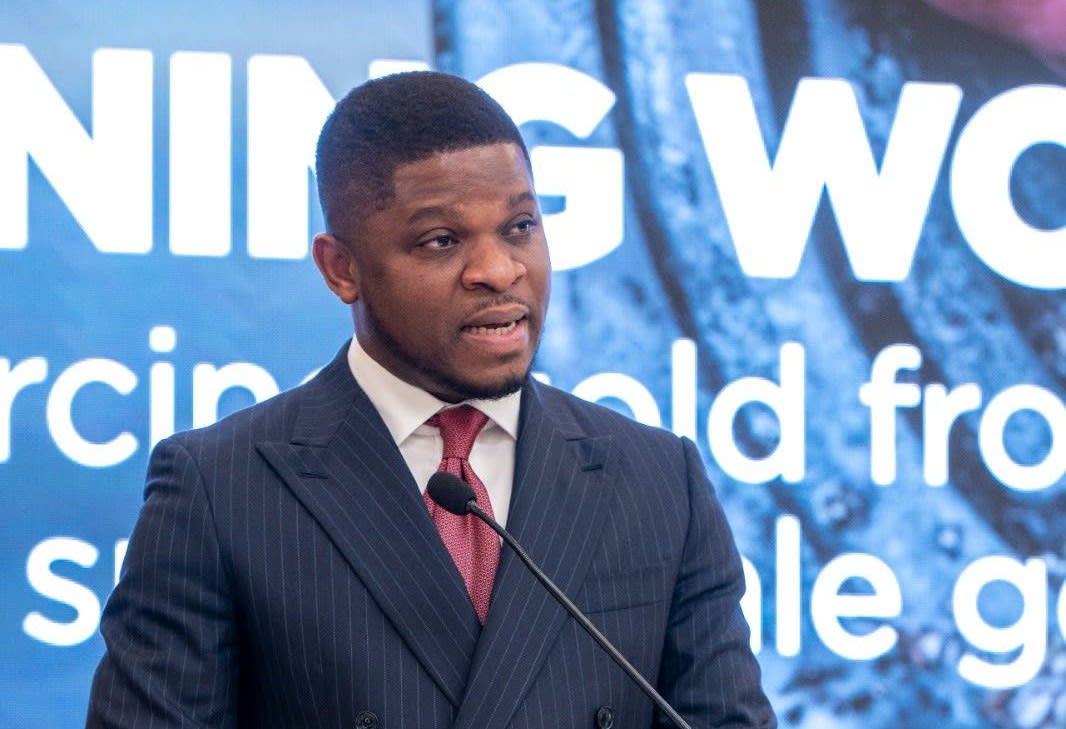
President John Dramani Mahama has thrown his weight behind Ethiopia's 2028 AFCON bid, telling African leaders gathered in Bahir Dar that the country's football infrastructure has come far enough to deserve another shot at hosting the continent's premier tournament after more than fifty years away.
Mahama made the remarks after walking through the newly renovated Bahir Dar International Stadium alongside Ethiopian Prime Minister Abiy Ahmed and other heads of state attending the 12th Tana High-Level Forum on Security in Africa.
"This is a very impressive stadium, a 52,000-capacity stadium, and it's already CAF-certified," Mahama said, pointing to the facility that has allowed Ethiopia's Walyas to finally return home after years of playing international fixtures in Morocco and Tanzania.
Ethiopia hasn't hosted AFCON since 1976, a tournament it also won in 1962 on home turf. Mahama argued that history, paired with the country's recent infrastructure push, makes a strong case for giving Ethiopia another turn at the podium.
But his endorsement, however symbolically weighty, doesn't settle anything. CAF alone decides the 2028 host, and it has built a competitive bidding framework covering technical, commercial, financial and security benchmarks, with PwC and independent advisers brought in to keep the process credible.
Ethiopia submitted its final bid in August 2026 and is up against proposals tied to Morocco and southern African nations.
One Stadium Isn't Enough
The tournament Ethiopia once hosted bears little resemblance to today's version. Back in 1976, eight teams competed. Now AFCON fields 24, demanding multiple CAF-compliant stadiums, functioning transport networks, enough hotel rooms, broadcast capability and tight security coordination across several cities at once.
A CAF technical delegation toured six proposed venues in October, spread across Addis Ababa, Bahir Dar, Dire Dawa, Hawassa and Jimma, along with the planned tournament headquarters.
That visit was a fact-finding exercise, not a seal of approval. Ethiopia has a documented history of falling short on venue readiness, which is exactly why its team ended up playing "home" matches abroad in the first place.
Perhaps the trickiest hurdle for Ethiopia's bid is security. Bahir Dar sits in the Amhara Region, an area that has seen unrest alongside Oromia in recent years.
Any credible bid will need to show CAF that players, officials and fans can move safely across host cities for the duration of the tournament, something that can't be papered over by a single gleaming stadium.
Fairness Versus Readiness
Mahama's intervention touches a broader debate about how Africa spreads its marquee sporting events. Handing tournaments repeatedly to the most construction-ready nations keeps risk low, but it also locks out countries that could use a World Cup-style project to fast-track their own development.
Ethiopia's pitch leans heavily on that fairness argument, bolstered by its status as home to the African Union headquarters and the continent's second-largest population.
Still, sentiment won't build stadiums. CAF's job is to pick a host that can actually deliver, not simply one with the most compelling backstory.
The 2028 edition also marks a shift to a four-year AFCON cycle, following the 2027 tournament co-hosted by Kenya, Tanzania and Uganda from June 19 to July 17. That change raises the commercial stakes for whoever wins hosting rights in 2028.
Mahama's words give Ethiopia a respected ally in the room, but as one African leader's endorsement, it carries political weight rather than technical authority.
Bahir Dar Stadium proves Ethiopia can deliver when it commits. Whether that can be repeated across five more cities before 2028 is the question CAF still has to answer.
READ ALSO: Ghana's Upstream Petroleum Sector Shows Signs of Recovery