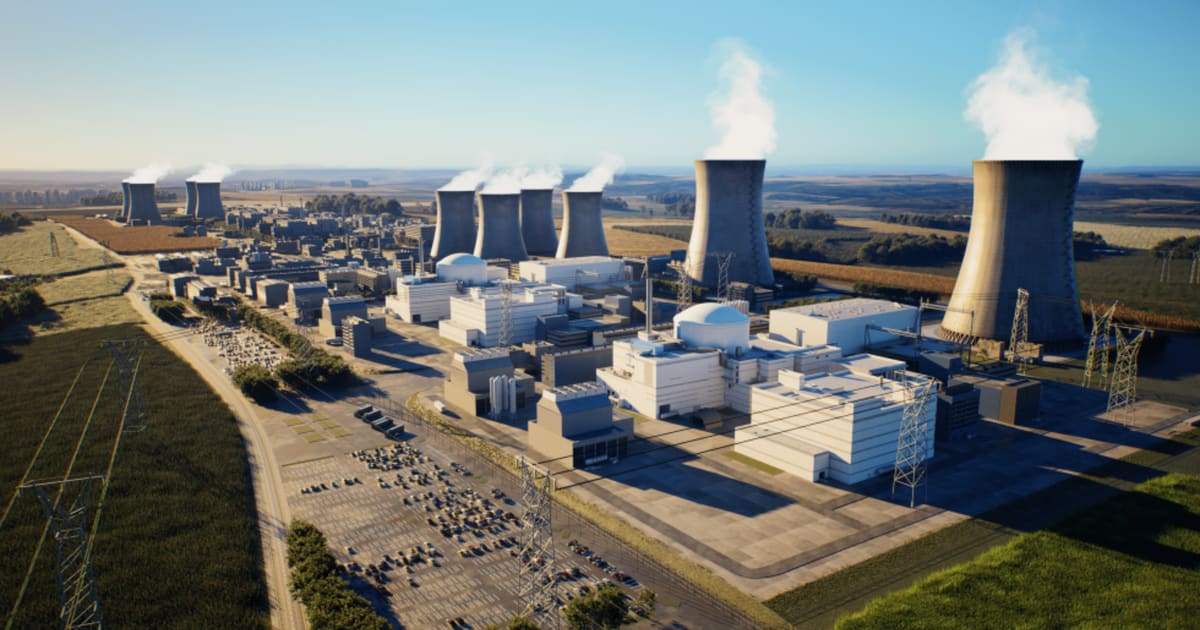
Russia has agreed to work with Ghana towards developing a Ghana nuclear power plant with a proposed capacity of 2,000 megawatts, as Accra looks for dependable electricity to support industrialisation and long-term energy security.
Foreign Affairs Minister Samuel Okudzeto Ablakwa announced the commitment following bilateral talks between President John Dramani Mahama and Russian President Vladimir Putin on the sidelines of the Third Russia-Africa Summit in Moscow.
“Russia has agreed to work with Ghana to establish a 2,000 megawatts nuclear power plant to guarantee energy security and anchor industrialisation,” Mr Ablakwa said in outlining the outcomes of the talks.
The commitment gives Ghana’s nuclear ambitions fresh political backing, but it is not yet a construction agreement.
No project cost, financing structure, selected site, reactor configuration or construction timetable has been announced. Neither has government disclosed that a final investment decision has been taken.
Those details will determine whether the proposal can move from diplomatic agreement to an operating power station.
Rosatom Talks Move Ghana’s Nuclear Plan Forward
President Mahama had disclosed a day earlier that Ghana had opened discussions with Russia’s state nuclear corporation, Rosatom, for the country’s first commercial nuclear power station.
“We have initiated discussions with Rosatom on the establishment of Ghana’s first nuclear power station,” he told the Russia-Africa gathering.
Rosatom subsequently confirmed that Russia was discussing large nuclear projects with Ghana, Uganda, Ethiopia and Egypt as Moscow expands its energy partnerships across Africa.
The latest announcement therefore moves the conversation beyond Ghana’s general interest in nuclear power by placing a 2,000MW capacity figure on the proposed cooperation.
What remains unclear is whether the Russian engagement fits into Ghana’s existing nuclear power procurement process or represents a separate development arrangement.
That distinction matters because a nuclear project requires years of technical studies, licensing, financing negotiations and infrastructure preparation before electricity can be generated.
Financing and Electricity Cost Will Be Critical
For Ghana, additional generation on this scale could make a significant contribution to electricity supply, particularly if industrial demand expands.
But capacity alone will not determine the value of the project.
The eventual financing terms, ownership structure and price at which electricity is delivered to the grid will be central to assessing its economic case.
A nuclear plant requires large upfront investment and long construction periods. Any agreement would therefore have to establish how much financing comes from Russia, what commitments Ghana assumes and how construction and cost-overrun risks are shared.
The government would also have to explain how the plant fits into Ghana’s broader generation mix alongside hydro, thermal and renewable energy.
For manufacturers, the main attraction would be predictable baseload electricity at a price that keeps production competitive.
President Mahama has repeatedly linked Ghana’s nuclear ambitions to industrialisation, arguing that reliable electricity will be necessary if the country is to expand manufacturing and process more of its natural resources locally.
Nuclear Deal Part of Wider Russia-Ghana Package
The nuclear proposal formed part of a broader set of commitments following talks between Mahama and Putin.
According to Mr Ablakwa, the two countries also agreed to revive their Permanent Joint Commission for Cooperation, with Moscow expected to host the next meeting.
Russia has also committed to expanding agricultural cooperation in grain production and fertiliser supply, increasing scholarships for Ghanaian students and pursuing a new defence cooperation arrangement.
Mr Ablakwa further said Putin agreed that Ghanaians should no longer be recruited to participate in Russia’s war in Ukraine, whether through irregular recruitment or voluntary enlistment. That assurance has so far been publicly reported through the Ghanaian minister’s account.
For the nuclear project, however, the next signs of progress will be more technical than diplomatic.
Ghana will need clarity on the project developer, site, reactor technology, financing model, approvals and timeline before the 2,000MW proposal can be assessed as a firm investment.
For now, the Moscow commitment gives Ghana a potential partner and a headline capacity. Turning that into electricity for factories and households will require much more detailed work.
READ ALSO: Lebanese Authorities Seize 46.7kg Cocaine From Passenger Arriving From Accra