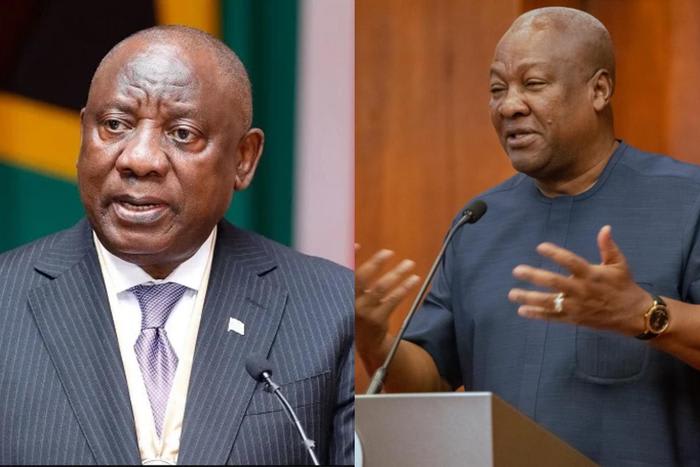
A planned South Africa state visit by President Cyril Ramaphosa has been shelved after the Ghanaian government raised concerns over the killing of a Ghanaian national and the reported targeting of foreign nationals during demonstrations in South Africa.
Government sources say the decision reflects growing unease about the safety of Ghanaians living in South Africa, following the death of 40 year old Bashiru Isak during unrest on June 30.
President Ramaphosa had been expected in Accra during the first week of August for talks aimed at deepening bilateral cooperation. Those plans have now been put aside as both countries grapple with sharply differing accounts of what happened.
According to Ghanaian authorities, Mr. Isak was shot and killed during what they described as anti immigrant demonstrations linked to renewed xenophobic attacks in Khayelitsha, a township in Cape Town.
The government has formally protested the incident through diplomatic channels, insisting that the protection of Ghanaian nationals abroad must remain a priority.
Officials say the postponement of the visit sends a clear message that concerns over citizens' safety cannot be separated from broader diplomatic engagement.
The planned visit had been expected to strengthen cooperation in trade, investment and regional affairs. Instead, attention has shifted to calls for accountability and assurances that similar incidents will not recur.
South Africa Rejects Ghana's Version
South African authorities have strongly disputed Ghana's account of the incident.
In a statement, Justice Minister Mmamoloko Kubayi said claims surrounding Mr. Isak's death were "factually incorrect" and maintained that no deaths were recorded during the June 30 demonstrations, which drew thousands of protesters.
"It is concerning that Ghanaian authorities continue to communicate false information about South Africa regarding developments on irregular migration," she said.
She also rejected suggestions that the protests reflected widespread xenophobia.
"The spread of false information to perpetuate the false narrative that South Africa is xenophobic is unacceptable," the minister added.
The disagreement has placed unexpected strain on relations between two countries that have traditionally enjoyed close diplomatic and economic ties.
While officials on both sides continue to engage, the contrasting narratives surrounding Mr. Isak's death have become the central issue.
For Ghana, the immediate priority is securing stronger protection for its citizens living in South Africa. For Pretoria, correcting what it considers misinformation has become equally important.
Whether the postponed state visit is rescheduled may ultimately depend on how both governments navigate the dispute and restore confidence in a relationship that has long been regarded as one of the continent's strongest.
READ ALSO: GARID Funds: Finance Ministry Says $4.2 Million in Covid-19 Spending Remains Unretired