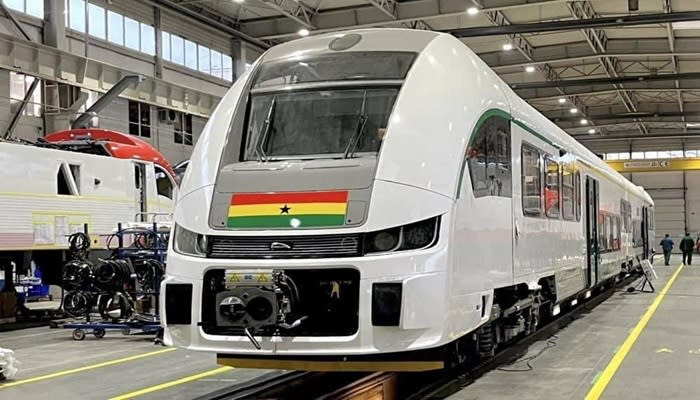
The Tema–Mpakadan railway is set for a major operational upgrade after Ghana secured a €20 million grant from the European Union to install a modern digital signalling system expected to transform how trains move along the corridor.
The funding, equivalent to about US$21 million, has been awarded to the Ghana Railway Development Authority to finance the installation of the European Train Control System Level 1, a technology designed to improve train coordination, increase safety and expand the line's freight capacity.
For a railway that has already attracted significant public investment, the upgrade could prove to be the missing link between infrastructure and commercial performance.
Since becoming operational, the Tema–Mpakadan standard gauge line has faced one persistent limitation. The absence of an advanced signalling system has restricted train movements, reducing service frequency and limiting the volume of cargo the railway can handle.
The new system is expected to change that.
By allowing multiple trains to operate safely on the same corridor, the technology should improve scheduling, strengthen operational reliability and increase the railway's carrying capacity for both freight and passengers.
The development comes as Ghana seeks greater returns from investments made in transport infrastructure over the past several years.
Supporting Trade and Logistics
The Tema–Mpakadan corridor occupies a strategic position within Ghana's transport network because it connects directly to the Port of Tema, the country's busiest maritime gateway.
Improving rail operations is expected to encourage more businesses to move cargo by train instead of relying almost entirely on road transport.
That shift could ease congestion on major highways, reduce road maintenance costs and improve the movement of goods between the port and inland destinations.
Beyond domestic transport, the railway also forms the first phase of the proposed Ghana–Burkina Faso rail corridor, a project intended to strengthen trade across West Africa under the African Continental Free Trade Area.
If expanded successfully, the corridor could provide landlocked countries with a more efficient route to international markets while reinforcing Ghana's position as a regional logistics hub.
The nature of the funding is as significant as the project itself.
Unlike commercial borrowing, the European Union's support comes as a grant, allowing Ghana to modernise critical infrastructure without adding to its sovereign debt burden.
That matters at a time when the country continues implementing fiscal reforms following its debt restructuring programme.
For policymakers, grant financing offers room to invest in growth enhancing infrastructure while preserving debt sustainability.
Implementation Will Determine Success
Industry observers say the signalling system alone will not guarantee the railway's commercial success.
Reliable freight services will also depend on trained personnel, effective maintenance, cargo handling facilities and close coordination with port operations.
Private sector users are likely to judge the railway on one thing above all else: consistency.
If trains run on schedule, cargo moves efficiently and costs remain competitive, businesses could gradually shift bulk freight from road to rail.
The €20 million investment therefore represents more than a technical upgrade. It offers Ghana an opportunity to turn the Tema–Mpakadan railway into a productive economic corridor capable of supporting trade, industry and regional competitiveness for years to come.
READ ALSO: TOR Strengthens Partnership with GNPC to Advance Domestic Crude Refining