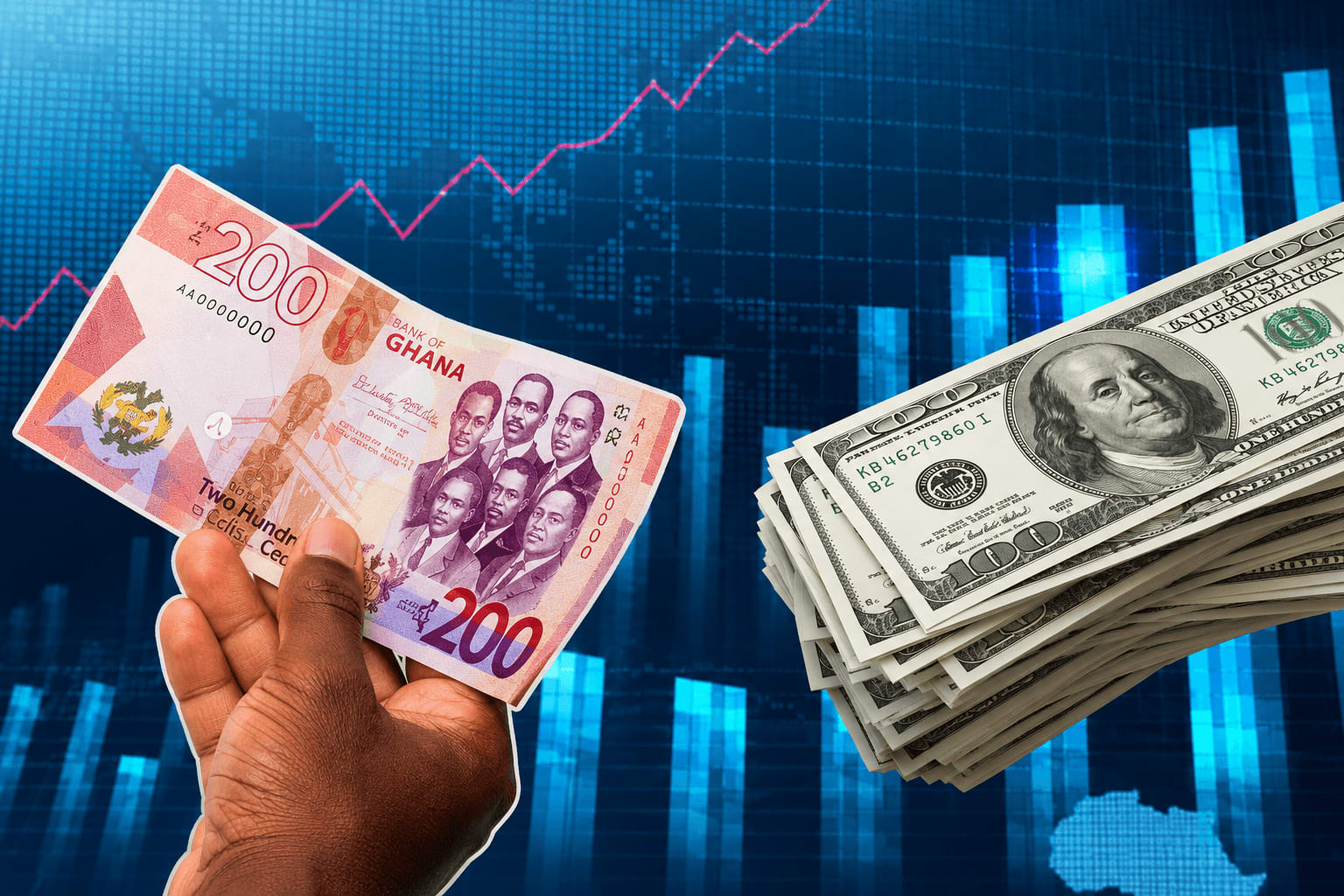
The Bank of Ghana bills auction attracted strong demand on Monday, with the central bank selling GH¢14.42 billion in its latest short-term liquidity management operation.
The sale involved the Bank of Ghana's 14-day bill, a monetary policy instrument designed to absorb excess liquidity from the financial system rather than finance government expenditure.
The securities, issued on July 6, will mature on July 20, giving banks and money market participants a short-term investment option while helping the central bank regulate cash levels in the economy.
Auction results showed that GH¢14,424.39 million, equivalent to GH¢14.42 billion, was allotted to investors.
The auction cleared at a weighted average discount rate of 10.46 percent, translating into an equivalent interest rate of 10.50 percent.
Investor pricing showed little variation. On an interest rate basis, successful bids ranged narrowly between 10.49 percent and 10.50 percent, suggesting broad agreement among market participants on prevailing short-term funding conditions.
The outcome reflects continued confidence in central bank securities, which remain a preferred destination for surplus liquidity held by commercial banks and institutional investors.
Liquidity Management Remains the Priority
Unlike Treasury bills issued by the Ministry of Finance to support government borrowing, Bank of Ghana bills serve a different purpose. They are issued primarily to withdraw excess cedi liquidity from circulation, helping the central bank maintain stability in inflation, money market conditions and the foreign exchange market.
The latest auction indicates that the central bank continues to rely on short-term instruments to fine-tune liquidity while keeping market interest rates relatively stable.
The sizeable absorption also comes at a closely watched moment for financial markets.
The auction precedes the Bank of Ghana's 131st Monetary Policy Committee meetings, scheduled for July 20 to July 22, where policymakers are expected to assess inflation trends, liquidity conditions and the direction of interest rates.
Market participants will be looking for signals on whether the central bank intends to maintain its current monetary policy stance or adjust it in response to evolving economic conditions.
For now, the latest auction sends a familiar message. Liquidity management remains firmly on the Bank of Ghana's agenda, and short-term market rates continue to hover around the 10.50 percent mark, providing investors with a relatively stable short-term return while supporting broader monetary policy objectives.
READ ALSO: National Research Fund Must Deliver Real Impact, Vice President Tells Board