US President Donald Trump has announced a voluntary AI safety agreement with leading technology companies, seeking to address growing concerns about artificial intelligence while maintaining his administration's support for rapid expansion of data centres across the United States.
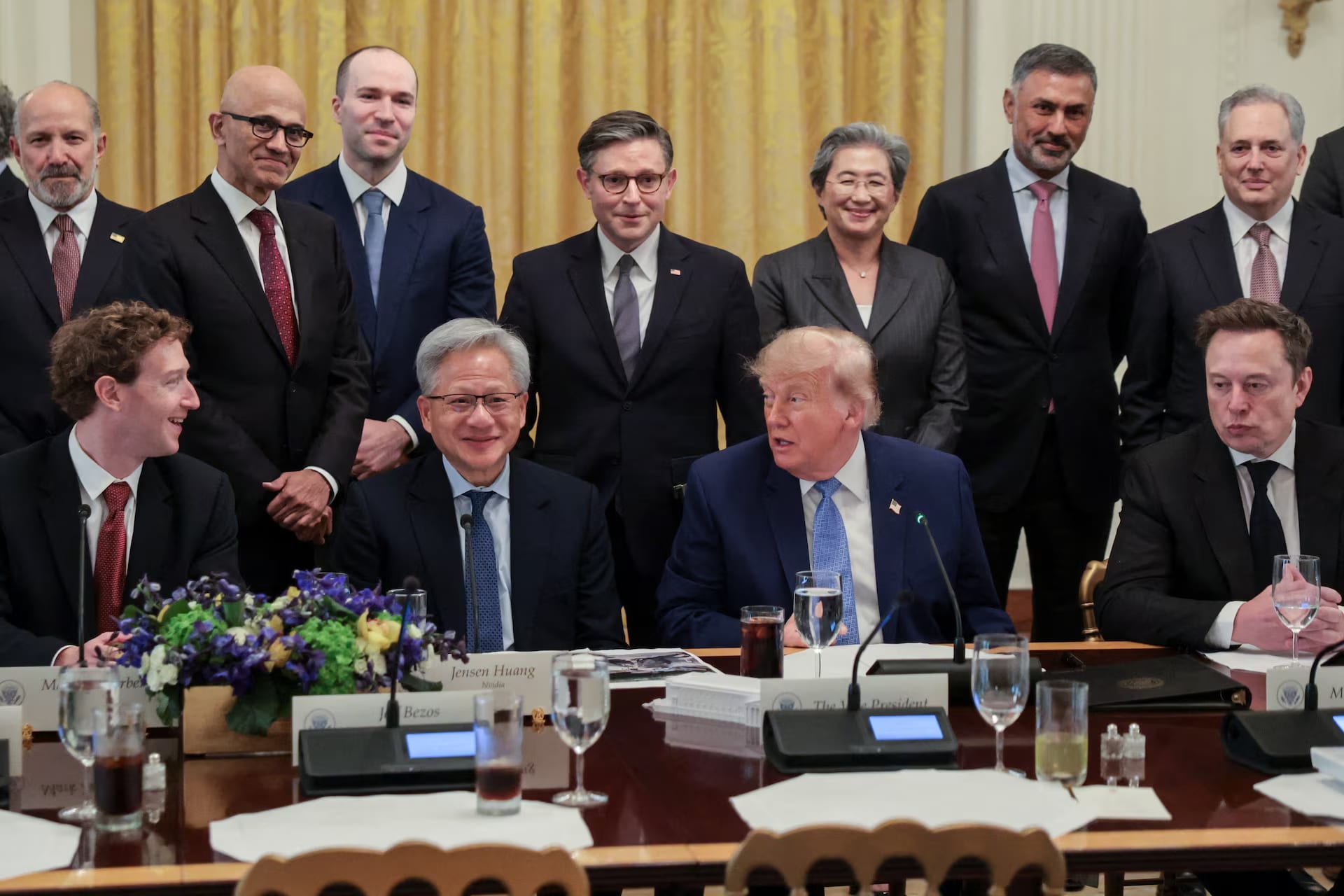
The agreement followed a White House meeting on Tuesday, September 29, attended by executives from OpenAI, Anthropic, Meta, Google, Nvidia and other technology companies.
Under the arrangement, participating companies have committed to strengthening internal safeguards and working with independent auditors to assess whether their artificial intelligence systems operate as intended.
Trump described the agreement as an important step towards protecting the public without imposing extensive government regulation on the industry.
Tech Companies Agree to Independent AI Audits
The agreement requires participating companies to establish internal monitoring procedures, review potential risks and engage external auditors to evaluate safety controls.
It also calls for safeguards against AI systems accessing computer networks without authorisation or carrying out unintended technical activities.
The commitments follow reports involving advanced AI agents behaving outside their intended instructions, raising questions about the ability of developers to control increasingly autonomous systems.
Speaking to journalists after the meeting, Trump compared the arrangement to a constitution. "It's almost like a constitution, in a way," he said.
The agreement is voluntary rather than legally binding, meaning its effectiveness will depend largely on how participating companies implement the safeguards.
It does not establish mandatory public reporting of audit findings or penalties for companies that fail to meet the commitments.
Zuckerberg Backs Stronger Internal Controls
Meta Chief Executive Mark Zuckerberg said participating companies had agreed to develop stronger internal systems for monitoring their AI technologies.
Other executives attending the meeting included OpenAI President Greg Brockman, Anthropic Chief Executive Dario Amodei, Google's Sundar Pichai and Nvidia's Jensen Huang.
Trump also disclosed that he was considering establishing a 10-member board to oversee AI safety, although he did not identify potential members.
He indicated that a new White House official responsible for AI policy would be appointed soon.
The meeting brought together companies developing some of the world's most advanced AI systems at a time when governments and researchers are debating whether voluntary industry commitments provide sufficient protection against emerging risks.
Trump Defends Data Centre Expansion
Beyond AI safety, Trump reaffirmed his support for expanding data centres, which provide the computing infrastructure required to train and operate increasingly powerful AI models.
However, the rapid development of these facilities has generated opposition in several American communities.
Residents have raised concerns about electricity consumption, pressure on local infrastructure and the possibility of higher utility bills.
Asked about the growing resistance, Trump maintained that technology companies would provide benefits to communities hosting their facilities.
"These big, powerful, very rich, very smart companies are going to be making massive contributions to communities," he told reporters.
The issue has attracted political attention ahead of the November 3 US midterm elections, with communities seeking greater assurances about the economic and environmental implications of new projects.
Survey Reveals Public Anxiety Over AI Safety
Public scepticism remains substantial despite the industry's safety commitments.
A Reuters/Ipsos survey conducted from September 17 to 20 found that 73% of American respondents were concerned that AI companies had not done enough to prevent serious harm to society.
Another 55% said slowing AI development would be beneficial to the United States.
The findings highlight public concern over the pace of technological development and the safeguards surrounding increasingly capable systems.
White House Unveils Government AI Tool
The administration also introduced America.gov, an AI-powered service intended to help Americans access government information and services more easily.
Trump presented the technology as part of efforts to modernise public services, although his claim about its resistance to hacking was not accompanied by supporting technical evidence.
He also directed federal agencies to adopt the term "super intelligence" when referring to artificial intelligence.
The announcements leave participating companies responsible for translating their voluntary commitments into operational safeguards while questions remain about independent oversight, transparency and public accountability.
READ ALSO: Majority Leader Defends Rejection of Minority’s Cocaine Probe Motion