President Donald Trump is set to arrive in Beijing on Wednesday for a closely watched summit with Chinese President Xi Jinping as global attention intensifies over trade disputes, rising geopolitical tensions, and the growing race for artificial intelligence dominance.
The visit marks one of the most significant diplomatic engagements between the United States and China in recent years, coming at a time of mounting uncertainty over the global economy, regional security, and the ongoing conflict involving Iran.
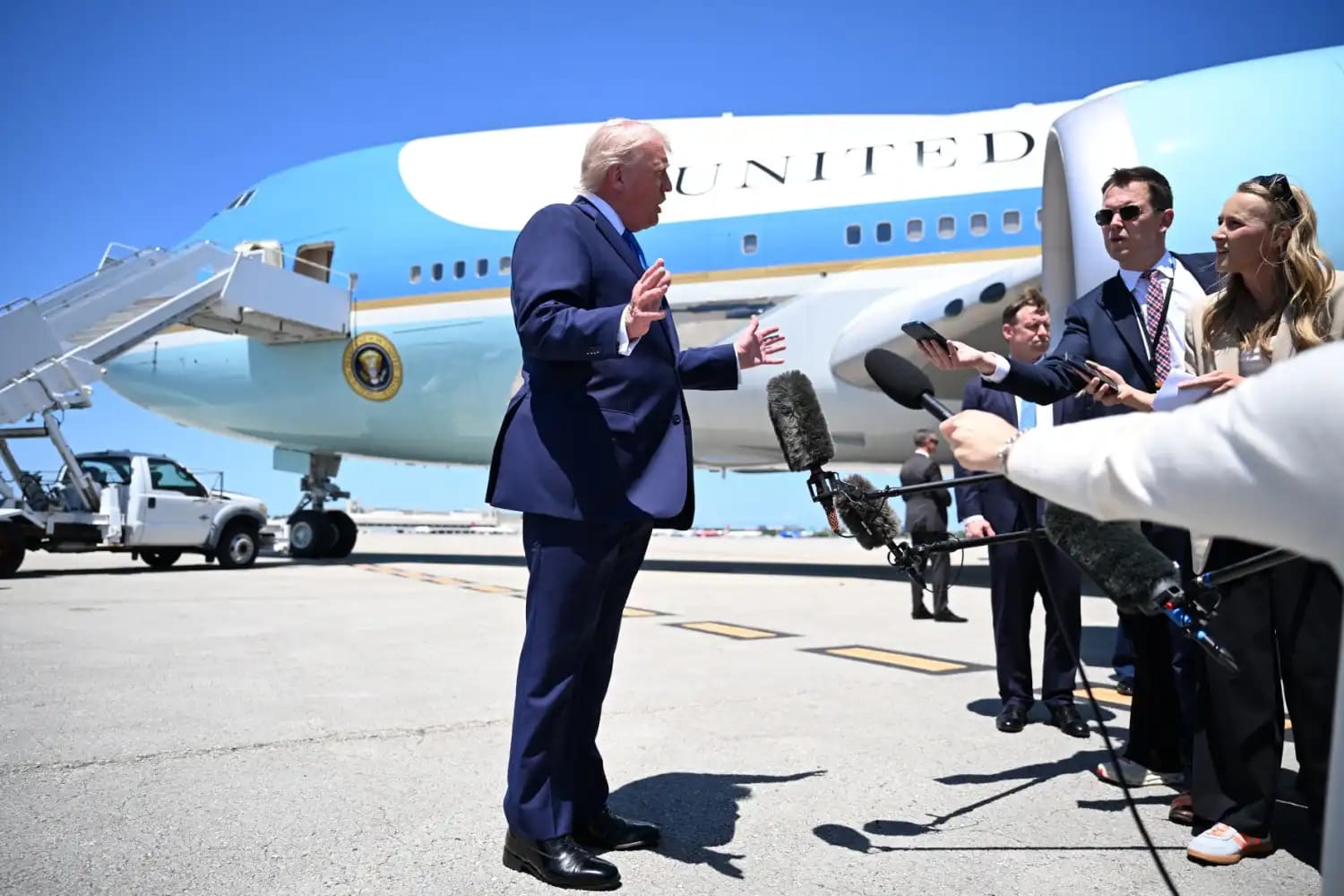
Speaking before departing Washington, Trump described the meeting as a crucial engagement between the world’s leading powers.
“We’re the two superpowers,” Trump told reporters. “We’re the strongest nation on Earth in terms of military. China’s considered second.”
Trade and Economic Issues Take Centre Stage
Trade negotiations are expected to dominate discussions between the two leaders as both countries seek to stabilize relations following years of tariff disputes and supply chain disruptions.
Trump said he intends to focus heavily on securing stronger commercial agreements for American businesses, particularly in agriculture and aviation.
“We’ll be talking about trade more than anything else,” the US president stated. The Trump administration is also expected to propose the creation of a new “Board of Trade” mechanism aimed at managing economic disagreements and preventing another escalation of the trade war that intensified after US tariff hikes last year.
China’s restrictions on rare earth mineral exports previously triggered tensions between the two economies before both sides agreed to a temporary truce in October.
Analysts say Beijing enters the summit from a relatively stronger negotiating position due to its influence over global manufacturing supply chains and critical minerals.
Scott Kennedy, a senior adviser at the Center for Strategic and International Studies, noted that China’s primary objective will likely be easing technology restrictions and reducing tariffs.
Taiwan and Artificial Intelligence Concerns
Taiwan is also expected to feature prominently during the summit amid growing tensions over US military support for the self-governing island.
Trump confirmed he plans to discuss an $11 billion weapons package for Taiwan that was approved last year but has not yet been fully implemented.
China has repeatedly warned Washington against strengthening military ties with Taipei. In a strongly worded editorial published ahead of the summit, China’s People’s Daily described Taiwan as “the first red line that cannot be crossed in China-U.S. relations.”
The issue carries additional significance because Taiwan remains central to the global semiconductor industry and the rapidly expanding artificial intelligence sector.
The US has increasingly sought to expand domestic chip manufacturing while maintaining access to advanced semiconductor technology.
Iran Conflict Adds Pressure to Talks
Although Trump downplayed Iran’s importance ahead of the meeting, the ongoing conflict in the Middle East continues to cast a shadow over global markets and diplomacy.
The effective disruption of shipping through the Strait of Hormuz has driven energy prices sharply higher, raising concerns about inflation and slowing economic growth worldwide.
Despite speculation that Washington may seek Beijing’s assistance in engaging Tehran, Trump insisted the issue was under control.
“We have Iran very much under control,” he said. China remains a major buyer of Iranian oil and has maintained diplomatic ties with Tehran throughout the conflict.
The White House also confirmed that Trump intends to revive discussions around a potential three-way nuclear arms agreement involving the United States, China, and Russia.
The proposal follows the expiration of the New START treaty earlier this year, ending formal limits on the world’s two largest nuclear arsenals for the first time in decades.
China has previously resisted joining such an agreement, arguing that its nuclear stockpile remains significantly smaller than those of Washington and Moscow.
According to Pentagon estimates, China currently possesses more than 600 operational nuclear warheads and could exceed 1,000 by 2030.
Despite the tensions surrounding trade, Taiwan, and global security, Trump expressed optimism about long-term relations with Beijing.
“We’re going to have a great relationship for many, many decades to come,” he said ahead of his arrival in the Chinese capital.
READ ALSO: Africa Loses $90 Billion Annually to Illicit Financial Flows