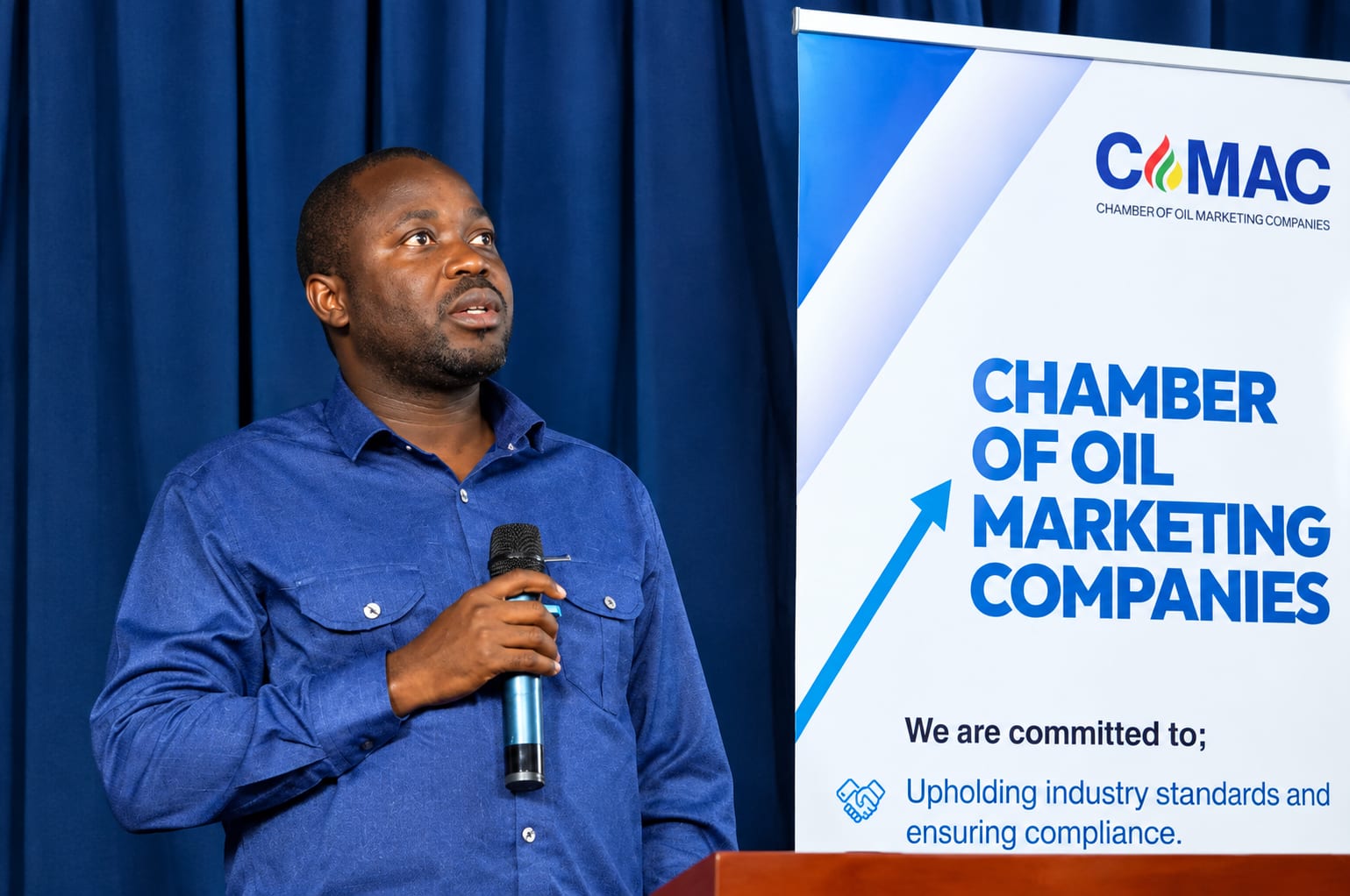
The Chamber of Oil Marketing Companies is calling for a temporary freeze on fuel taxes and levies, arguing that reducing the tax burden could provide a more sustainable way of cushioning consumers as high international oil prices continue to put pressure on Ghana’s downstream petroleum market.
COMAC Chief Executive Officer Dr Riverson Oppong said government’s intervention in diesel pricing was welcome, but maintained that the debate over subsidies should distinguish between petroleum pricing margins and revenues that directly affect the national budget.
“The real subsidy, the real pain that will affect government budgets, is the taxes and levies,” Dr Oppong said.
Oppong Wants Temporary Tax Relief
Dr Oppong renewed COMAC’s call for government to temporarily suspend or reduce some petroleum taxes to ease the burden on motorists, businesses and downstream operators.
“How many times have we been preaching about this one cedi to be frozen for some time?” he asked.
COMAC has previously opposed additional fuel taxation, arguing that taxes, levies and regulatory margins make up a substantial component of petroleum prices paid by consumers.
Dr Oppong nevertheless welcomed the government’s current intervention. “We are happy for the government intervention. It’s good. We appreciate that,” he said.
His concern, he explained, is whether repeated interventions can be sustained without creating financial difficulties elsewhere in the petroleum value chain.
“I care because I care about the industry. Anything that will bring operations or the industry to a halt, I’m against it.” - Dr Oppong
COMAC Clarifies Uniform Pricing Fund
The COMAC CEO also argued that the Uniform Pricing mechanism should not simply be treated as a direct loss of government revenue.
He said its core function is to ensure that location does not create large differences in petroleum prices across Ghana.
“The uniform pricing policy fund is to ensure that irrespective of where you buy fuel, whether Tamale, Kumasi, etc., the price is the same,” he said.
The arrangement effectively helps spread petroleum transportation costs so consumers farther from major supply points are not automatically charged substantially higher prices.
Use Oil Windfall to Support Downstream Sector
Dr Oppong also wants government to consider redirecting part of any additional petroleum revenue resulting from higher crude oil prices towards the downstream industry.
He argued that Ghana, as an oil producing country, could explore a mechanism where revenue above budgeted projections helps offset some of the pressure experienced by fuel distributors and consumers.
“Because the downstream is crying, upstream is laughing,” he said.
COMAC says such an approach should be discussed with government and industry stakeholders rather than leaving the upstream sector to benefit from elevated crude prices while downstream companies absorb higher import and operating costs.
For Dr Oppong, the immediate question is how Ghana can protect consumers without weakening the companies responsible for keeping petroleum products available across the country.
READ ALSO: SSNIT Raises Stake in Société Générale Ghana to 24.36%