Ghana's worker productivity increased by about 240% over three decades, but workers have not received a proportionate improvement in wages or job quality, according to a new report from the Ghana Statistical Service.
The increase means the average worker now produces more than three times the output recorded at the beginning of the study period.
Yet nearly eight in every 10 workers remain in informal employment, where earnings are often low and job security is limited.
Government Statistician Dr Alhassan Iddrisu said the contrast raises an uncomfortable question.
“If we are producing so much more, why doesn’t every worker feel it in their pockets?” he asked.
The findings are contained in the Productivity, Employment and Growth Report, produced by the GSS and the International Labour Organization.
The study examines national productivity and employment trends from 1991 to 2022, with additional analysis covering 17 economic subsectors.
Growth delivered real gains
The numbers are not all bleak.
Ghana’s economy expanded faster than the average for sub Saharan Africa over extended periods. Incomes rose and poverty declined from 51.7% in 1991 and 1992 to 23.4% in 2016 and 2017.
“This is real, hard won progress, and we should be proud of it,” Dr Iddrisu said.
Productivity measures how much output an economy generates from the resources used in production. Dr Iddrisu explained it using the example of a baker who produces more bread with the same flour, oven and working hours.
At the national level, rising output per worker can support stronger wages, greater tax revenue and better living standards. Those benefits are not automatic, however.
They depend on the type of jobs being created, the sectors attracting labour and how the additional income is shared. That is where Ghana’s record becomes uneven.
Investment drove growth more than efficiency
The report found that much of Ghana’s growth came from adding capital, workers, buildings and machinery rather than using existing resources considerably more efficiently.
“Most of the growth came from adding more money, more machines, not from using what we already have more wisely,” Dr Iddrisu said.
Labour productivity captures output per worker. Multifactor productivity goes further by assessing how efficiently labour and capital are combined through better technology, skills, management and innovation.
Ghana broadly matched other lower middle income countries in productivity performance but fell behind upper middle income economies, where efficiency improvements contributed more strongly to growth.
The distinction matters. An economy can expand by continuously purchasing equipment and adding workers, but that approach becomes costly and difficult to sustain.
Stronger efficiency allows businesses to produce more without increasing every input at the same rate.
Informal employment remains stubborn
The labour market offers the clearest sign that economic transformation is incomplete.
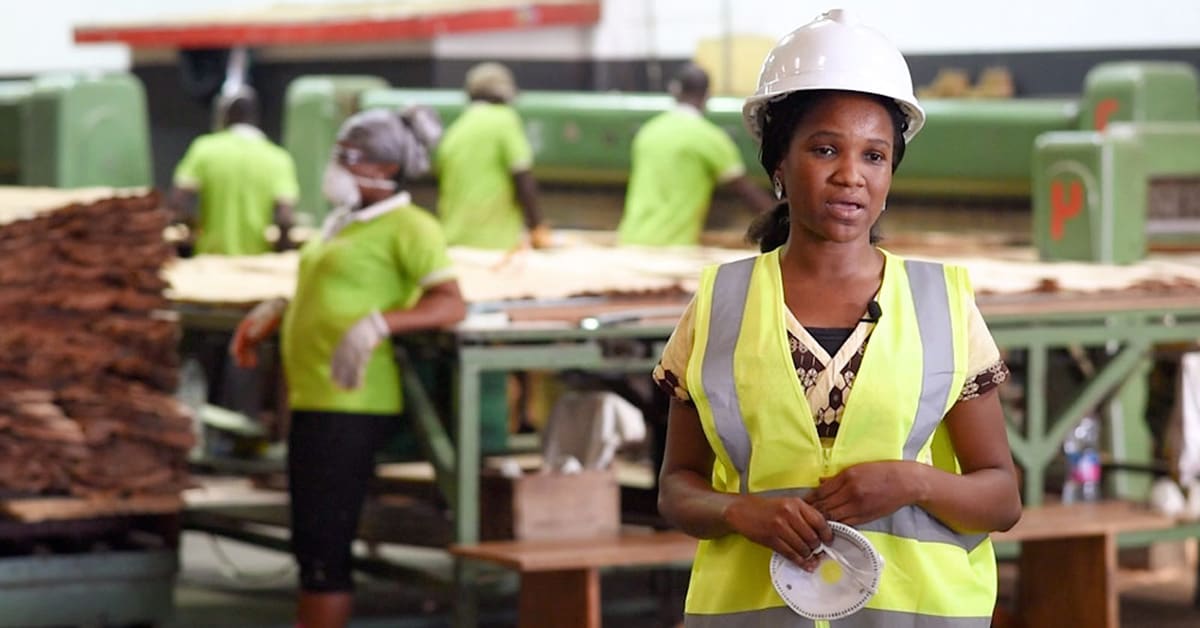
About 80% of Ghanaian workers remain in informal employment, although the informal economy generates only about a quarter of national output.
Many workers leaving agriculture have also moved into low productivity services and construction rather than higher value industrial activities.
“Too many workers are moving into lower productivity work, not higher,” Dr Iddrisu said.
Industry recorded the fastest productivity growth over the study period, supported heavily by mining and petroleum. Those activities, though, did not create jobs on the scale of their output expansion.
Services became Ghana’s largest source of employment, but much of that growth occurred in small, informal enterprises. Manufacturing’s capacity to absorb labour remained limited.
The International Labour Organization said productivity growth alone would not deliver decent work unless it generated quality employment, fair wages and shared prosperity.
Workers capture less of the gain
Pay increased more slowly than productivity across most sectors, widening the distance between what workers produce and what they earn.
“The gap between what workers produce and what they earn keeps widening,” Dr Iddrisu said.
That finding will feed directly into debates over the national minimum wage, public sector base pay and private sector compensation.
Productivity can provide evidence for wage negotiations, but questions about living costs, business profitability and accumulated wage losses will remain part of the argument.
Employers also face a choice. Investment in technology can lift output, but without parallel investment in skills and better working conditions, it may not produce broadly shared gains.
Productive sectors offer a way forward
The report identified manufacturing, utilities and commercial agriculture among sectors where employment and productivity have grown together.
“The bright spots are already there,” Dr Iddrisu said. “We simply need more of that.”
Directing finance, infrastructure and skills towards those activities could move workers into more productive jobs while helping informal businesses become stable, registered enterprises.
Organised labour, meanwhile, has been encouraged to ground wage negotiations in evidence about productivity and fairness. Government policy must also address technology adoption, workforce skills and the barriers preventing capital and labour from moving into higher value activities.
“Ghana already works hard,” Dr Iddrisu said. “The next step is to work smarter and to make sure every worker shares in the rewards.”
Ghana may already be working harder and producing more. The next stage is trickier: making the economy more efficient and ensuring workers receive a fairer share of the value they create.
READ ALSO: Dangote Refinery Expansion Targets 1.4m Barrels Daily