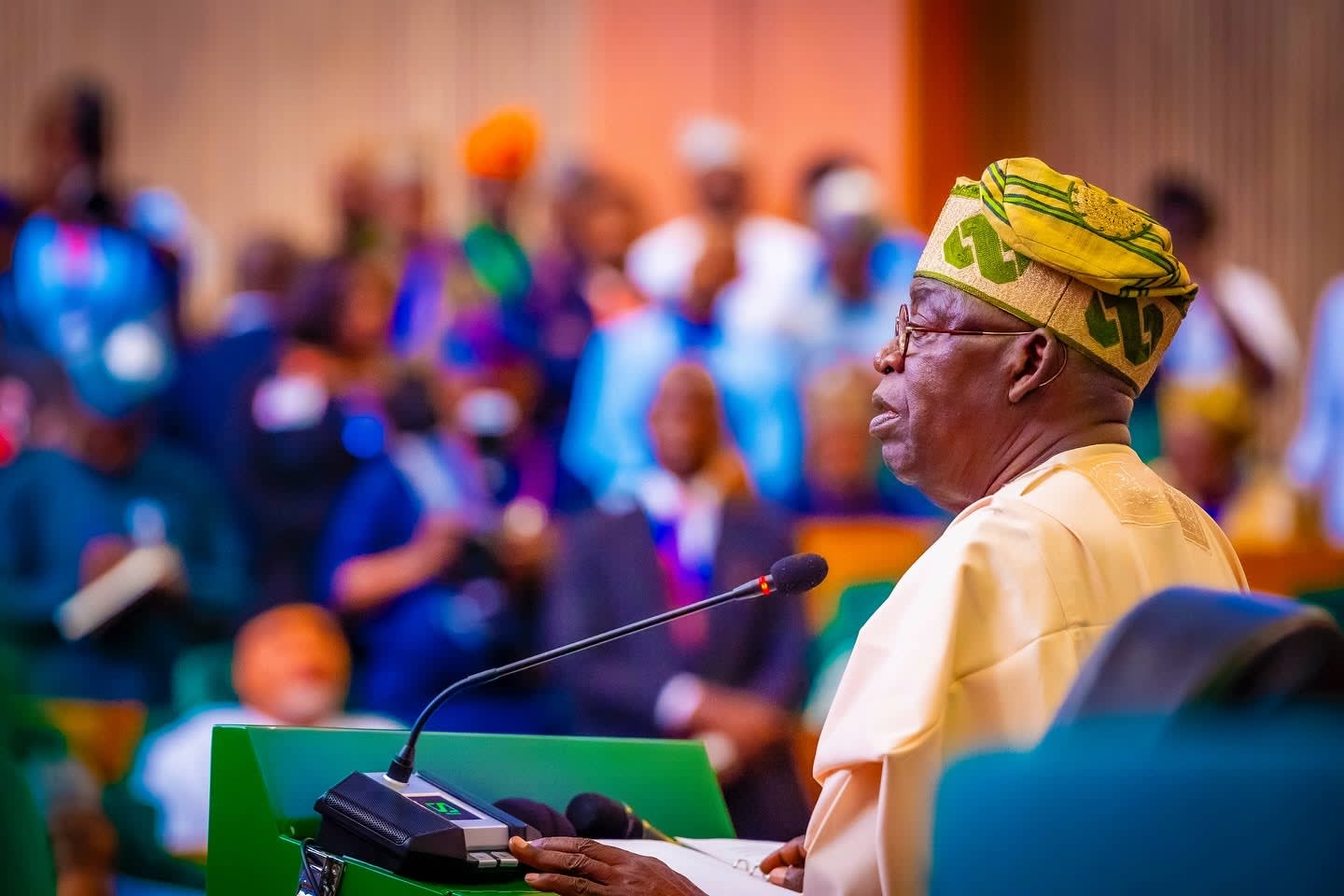
President Bola Ahmed Tinubu says reducing the Nigeria cost of living will now be a central priority of his government, with agriculture, transport infrastructure, energy and industrial production forming the backbone of a new economic push.
In his 66th Independence Day address on Thursday, October 1, Tinubu said stabilising the wider economy would mean little to households unless the cost of food, transportation and everyday necessities begins to fall.
“Our priority is to bring down the cost of living,” he said.
The President argued that government would pursue that goal by reducing the cost of producing and transporting goods rather than relying primarily on price controls.
Agriculture Takes Centre Stage
Tinubu said the administration would expand mechanised irrigation and dry season farming while improving farmers’ access to seeds and fertiliser.
Storage and transport infrastructure are also expected to receive additional attention as government seeks to reduce losses between farms and markets.
Nigeria, he said, has both the land and human resources required to produce more of the food its population consumes.
The government’s calculation is that greater agricultural productivity, lower post harvest losses and cheaper transport could eventually ease pressure on consumer prices.
“When a farmer produces more cheaply, when fewer crops are lost between the farm and the market, when a manufacturer spends less on electricity, when a truck reaches its destination faster... all those savings will ultimately find their way into the price of goods in the market.” - President Tinubu
Whether those savings are ultimately passed through to consumers will depend on production conditions, market competition and implementation.
Roads, Railways and Ports in the Plan
Infrastructure is another major part of the President’s strategy.
Tinubu said his government was building and completing roads, railways and ports intended to connect farms and factories more efficiently to domestic and export markets.
Poor transportation networks add costs at almost every stage of Nigeria’s supply chain, particularly for food and manufactured goods moving long distances.
The administration wants improved logistics to lower those costs.
Energy also features prominently in the plan. Tinubu said Nigeria would use more of its gas resources to power industries and support efforts to revive factories in major industrial centres.
Jobs and Industry Move Up the Agenda
Tinubu linked the cost of living challenge to employment, arguing that cheaper goods alone would not create prosperity if households lacked productive income.
“We are therefore placing jobs, enterprise, and industrial growth at the heart of our government’s policies,” he said.
The government also plans to expand digital connectivity, invest in workforce skills and improve access to infrastructure and finance for Nigerian businesses.
Tinubu said he wanted more locally manufactured products, stronger domestic supply chains and Nigerian companies selling goods internationally. “I want to see more Nigerians making things,” he said.
The policy direction represents the administration’s attempt to move from macroeconomic stabilisation towards production.
Its success will ultimately be judged less by the number of programmes announced and more by whether Nigerians see food become more affordable, factories expand and employment opportunities become easier to find.
READ ALSO: Bank of Ghana Sells GH¢6.53bn in 14-Day Bills to Absorb Excess Liquidity