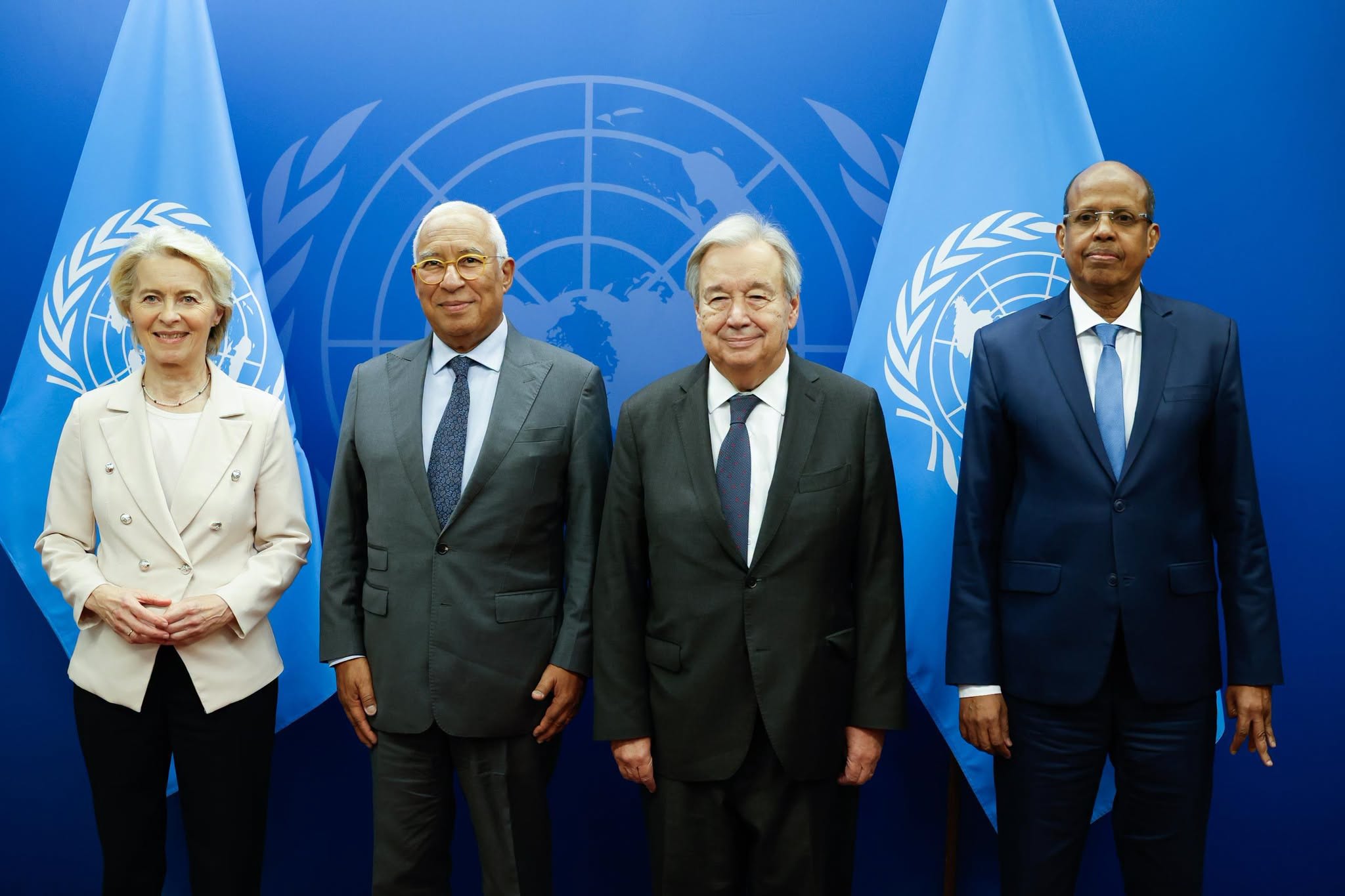
African Union Commission leadership joined United Nations Secretary-General António Guterres, European Council President António Costa, and European Commission President Ursula von der Leyen in New York for high-level AU-EU-UN trilateral talks to strengthen multilateral cooperation on the sidelines of the 81st UN General Assembly.
The talks stressed the need for collective action and respect for international law as geopolitical tensions test relations between Africa, Europe and the wider international community.
Peace and security discussions focused heavily on the Horn of Africa and the Red Sea, where conflicts and maritime threats continue to unsettle trade routes and neighbouring states.
The leaders considered ways to prevent further escalation while strengthening regional dialogue, mediation and maritime security.
That agenda matters well beyond the immediate conflict zones. Disruption along major shipping corridors can raise freight costs, delay essential goods and deepen economic pressure on countries already struggling with debt and inflation.
Africa pushes financing reform
The meeting also examined reform of the international financial architecture and how African countries can secure affordable capital for development.
Proposals included wider use of guarantees and blended finance, stronger African financial institutions and the rechanneling of Special Drawing Rights through multilateral development banks.
Food security and climate resilience were also discussed. Cooperation could cover fertiliser production, supply corridors, climate smart agriculture and soil mapping.
The Galileo and Copernicus satellite systems were identified as possible tools for improving early warning systems across Africa, particularly as floods, droughts and other climate shocks become harder to predict.
The three institutions committed to “focused, innovative and measurable” cooperation, with follow up arrangements expected to assess progress and move agreed priorities towards delivery.
READ ALSO: Ghana Hits GH¢24.22bn Mining Revenue as ACEP Demands Expenditure Transparency